
Kraj Tirana
The central point of the Tirana region is undoubtedly Tirana – a dynamic metropolis full of contrasts between history and modern present. Albania’s capital will captivate you with its unique mix of Ottoman, Italian, communist and hyper-modern architecture and of course plenty of other historical and contemporary artifacts.
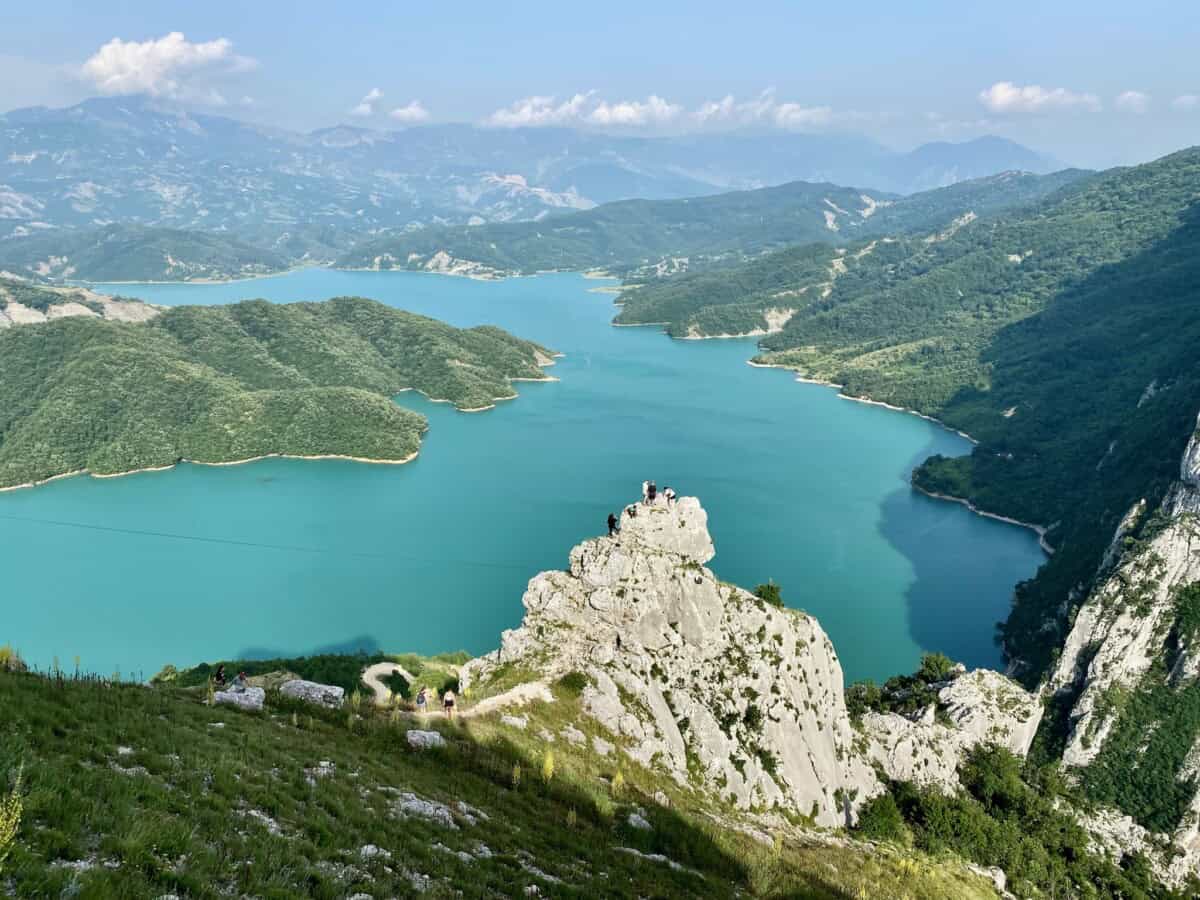
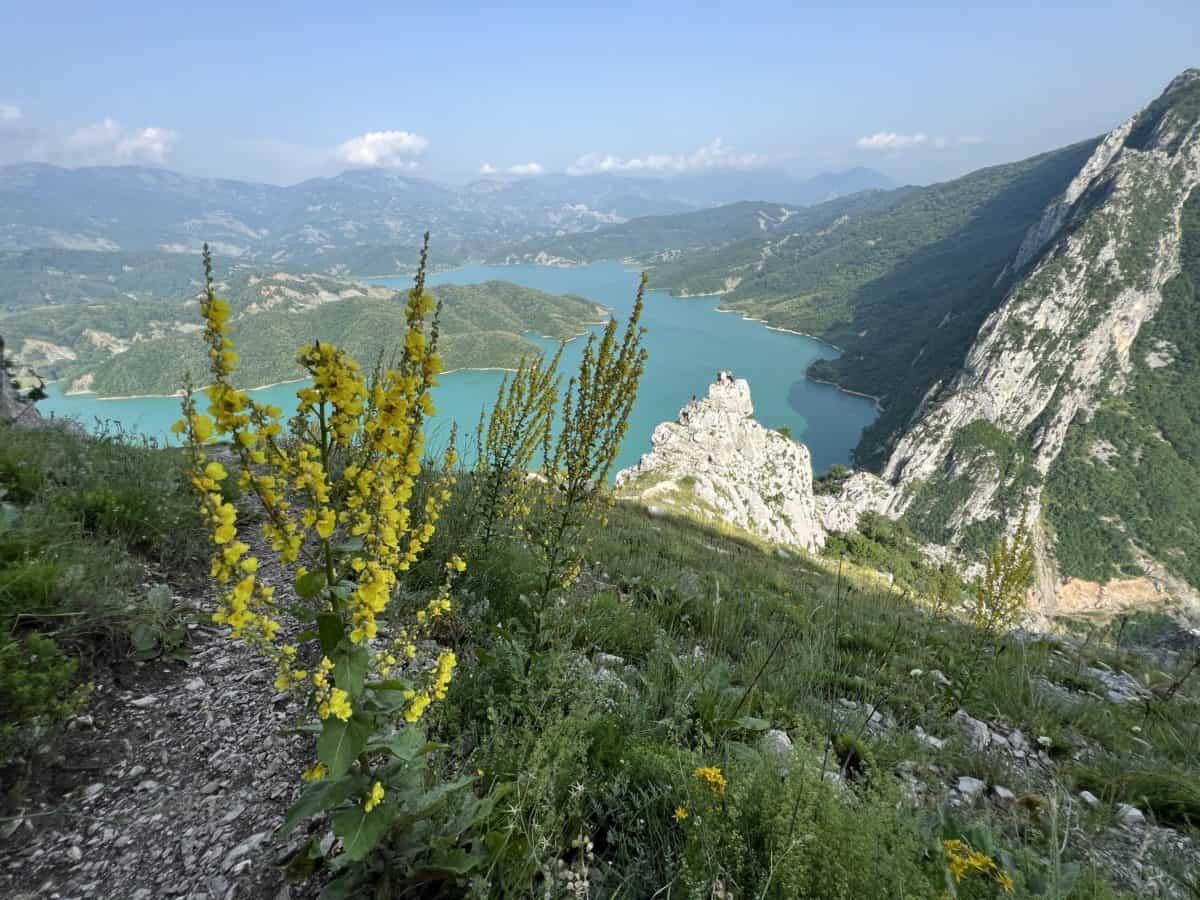
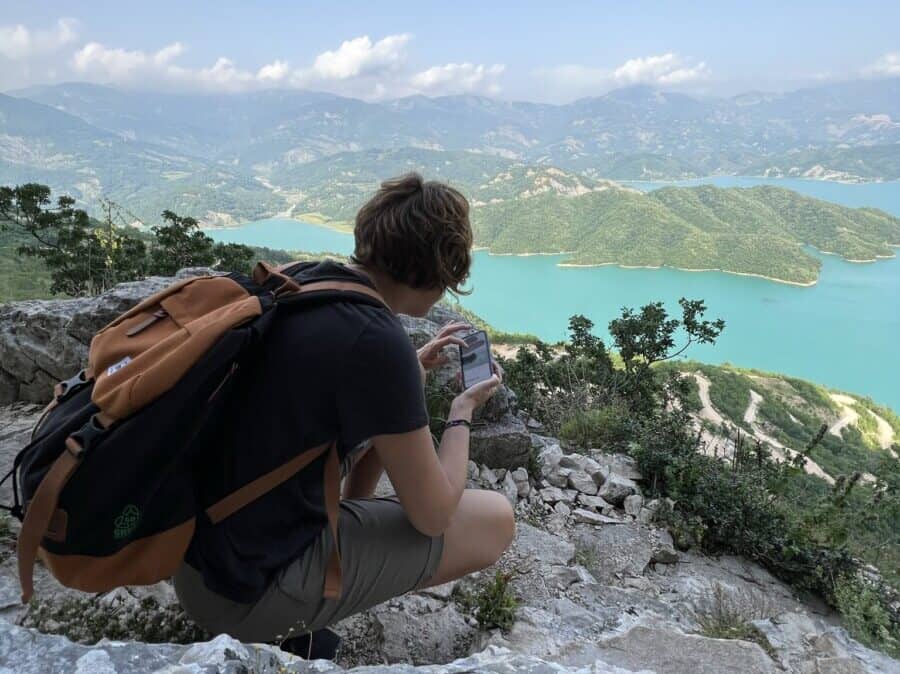
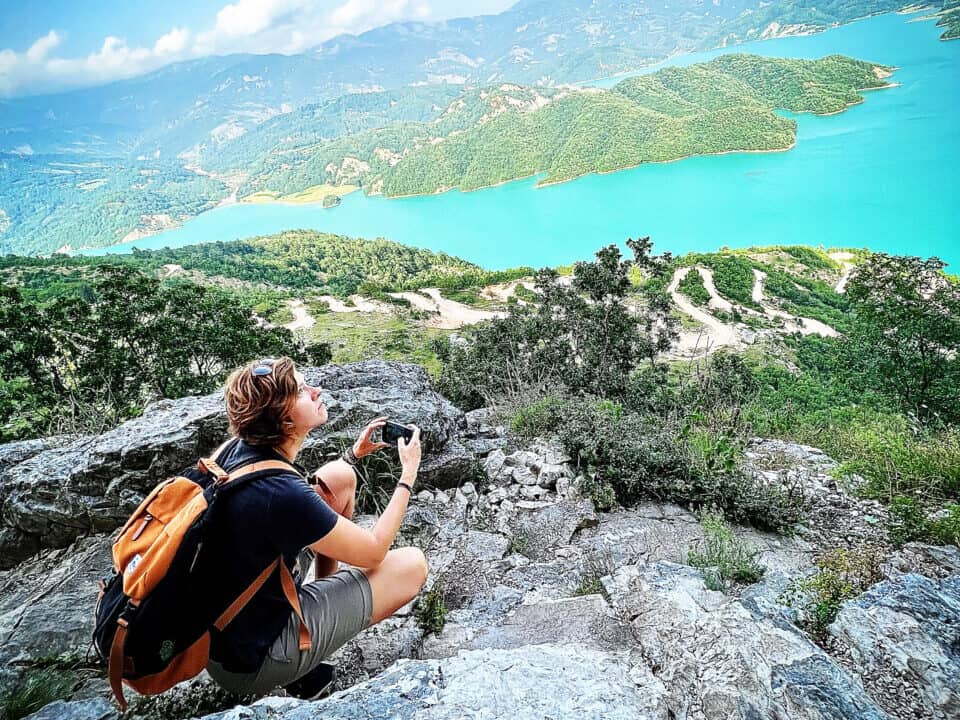
For nature lovers, the closest to Tirana is Mount Dajti, which can be reached by the Dajti Express cable car. The summit offers stunning views of the city and surrounding countryside. An iconic place is also the not too distant Lake Bovilla. Not having a selfie with the lake from here is an unforgivable sin.
You can breathe in a good piece of history in the nearby town of Krujë, which is historically connected with the national hero Gjerg Kastrioti Skanderbeg. In the surroundings of Tirana, you can also visit the castles of Prezë, Petrelë, or Bashtovë. The nearest sea swimming is available in the neighboring region near the city of Durrës. More natural conditions are offered by General’s Beach. In Tirana and its surroundings you will definitely not be bored.

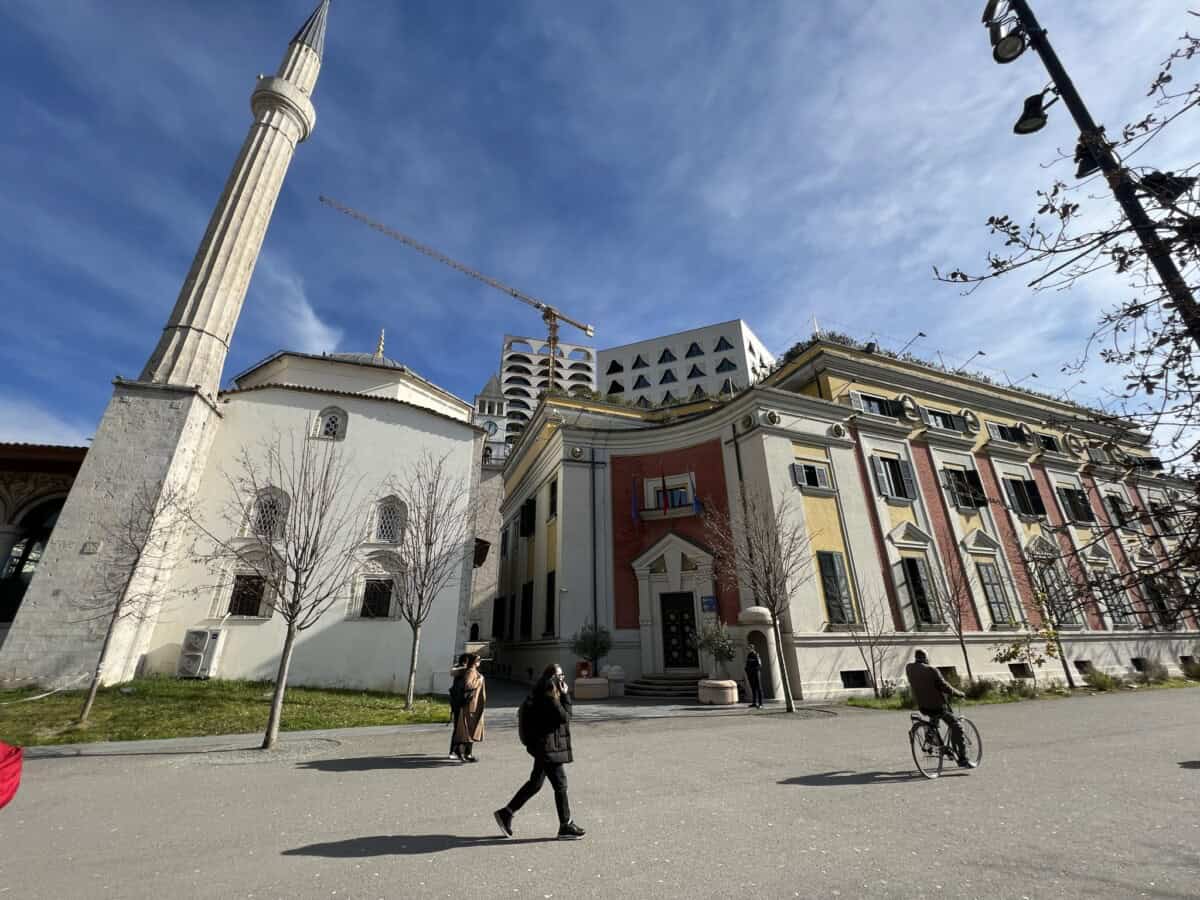

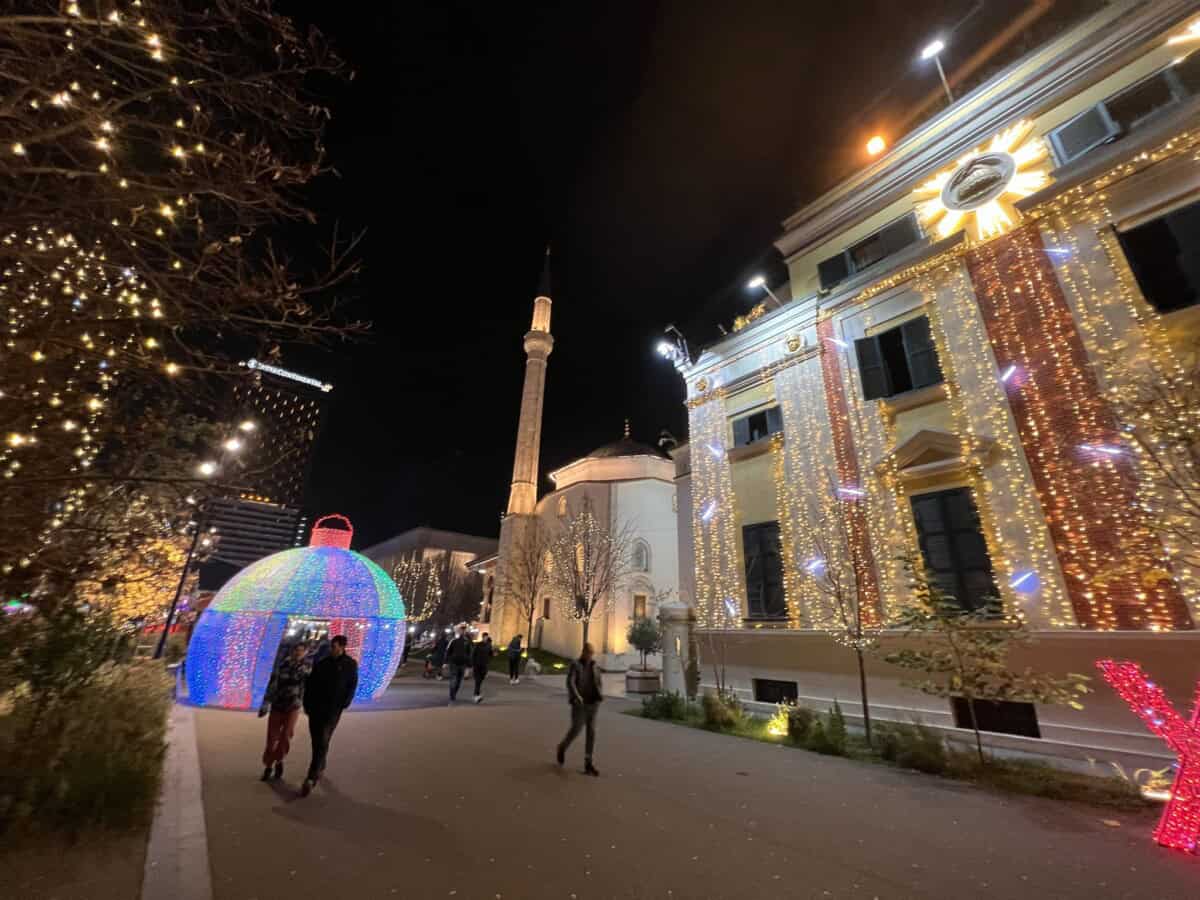
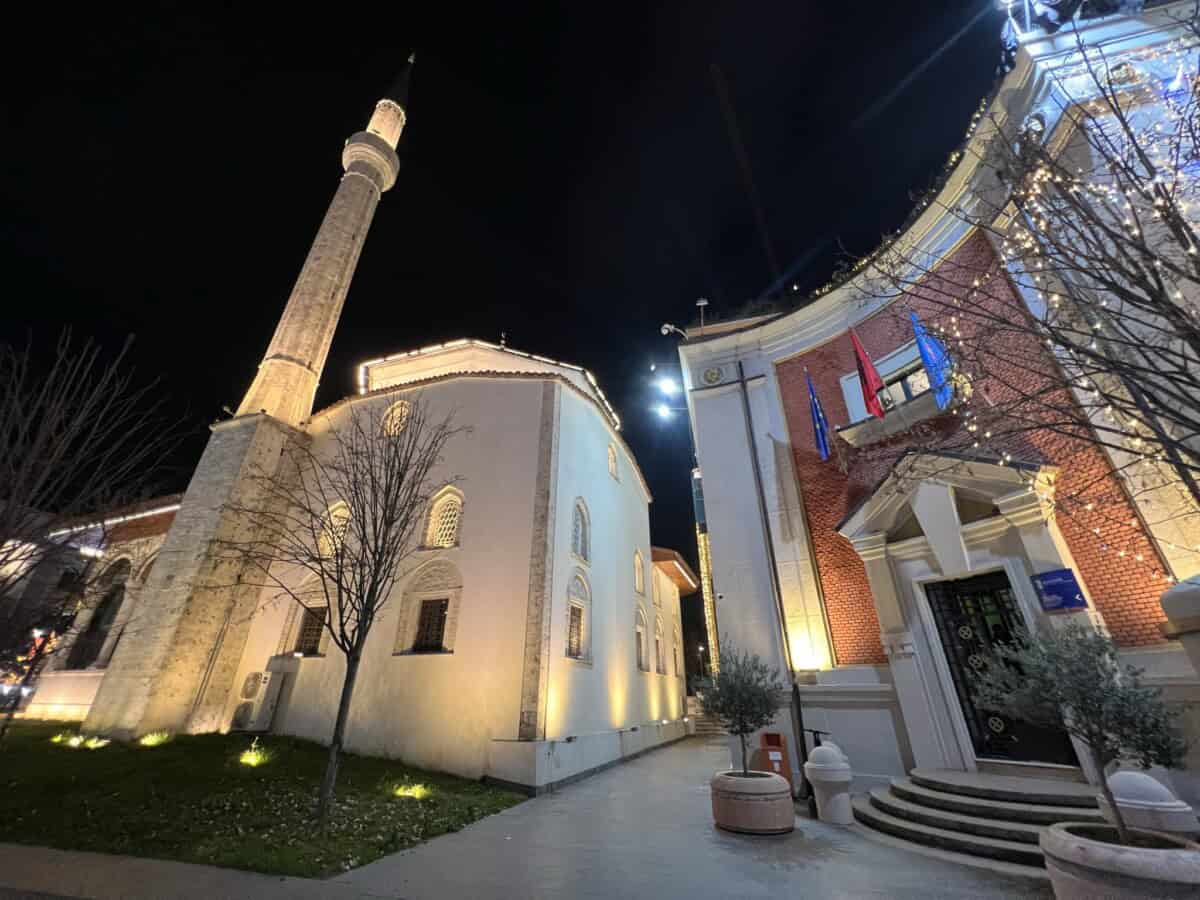


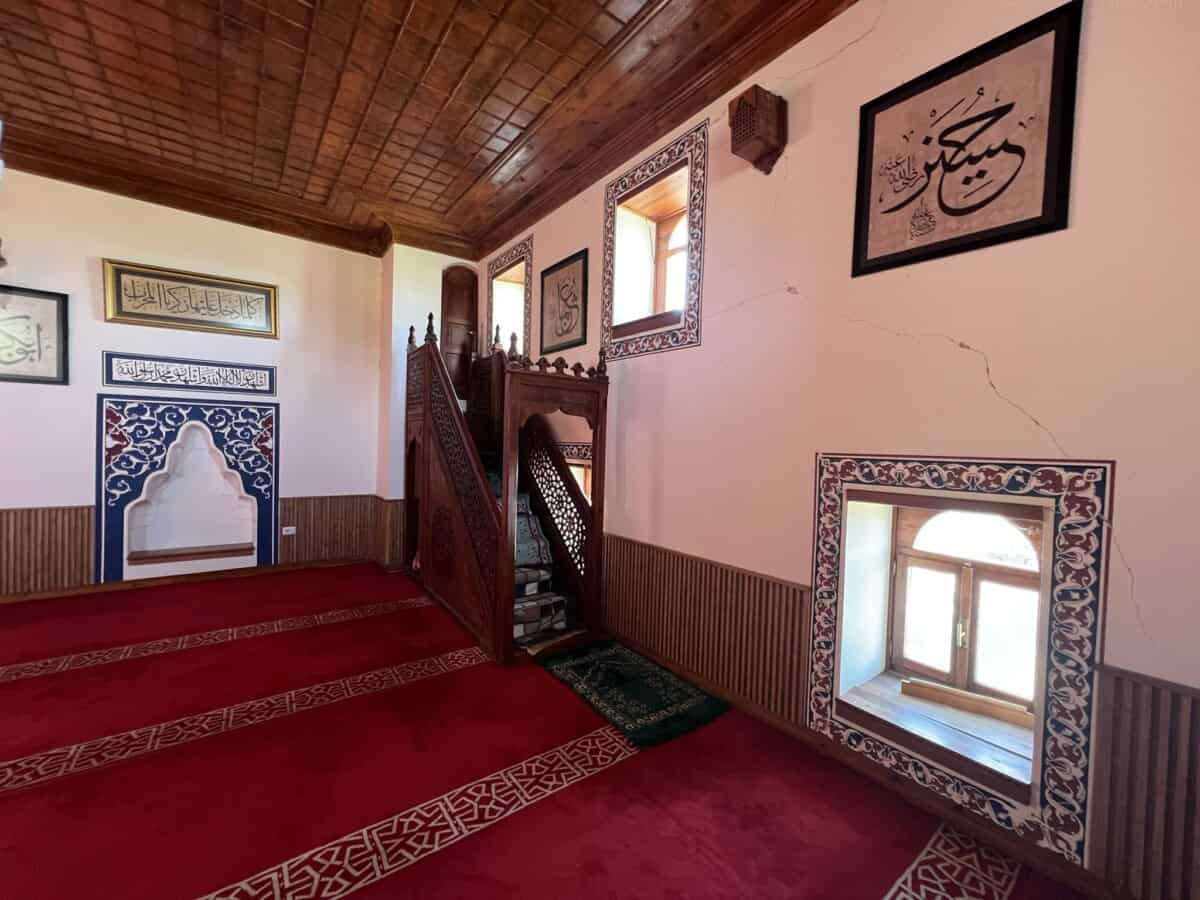
Mosque Et'hem Bey
Ethem Bey Mosque, located on the main square in Tirana, is one of the most important historical monuments of the city. The construction was begun around 1790 by Molla Bey and completed around 1820 by his son Haxhi Ethem Bey, who gave the mosque his name. By the way, he was the great-grandson of Suleyman Pasha Bargjini, a general, nobleman, governor of the Ottoman Empire and the man who was instrumental in the founding of Tirana in the Ottoman style.
Among the mosque’s most valuable art treasures is a collection of rare interior frescoes that create the illusion of fine, dreamlike landscapes. Their motifs gently circumvent the traditional Islamic prohibition on depicting living beings. It is precisely because of them that the interior of this Tirana sanctuary is unique.
Více o mešitě
Shortly after Albania declared independence in 1912, dozens of mosques fell in an effort to cut ties with the declining Ottoman power. Half a century later, during the rule of communist leader Enver Hoxha, Albania was declared the “world’s first atheist state” and hundreds of other religious buildings were razed to the ground. However, the Et’hem Bey Mosque survived all destructive tendencies. In 1991 it was reopened to thousands of believers during an emotional ceremony that marked the return of faith and freedom to Albania.
Now it stands on Tirana’s main square as a quiet witness to Ottoman times, but at the same time illustrates the resilience of a nation that, despite many upheavals, has managed to breathe again, and which now strives for its place among European democracies. Right next to the mosque stands the Clock Tower (Kulla e Sahatit), which dates from 1822. At the time of its construction, with a height of 30 meters, it was the tallest building in Tirana. Its height symbolized the growth and development of the city and served as a beacon of progress in the early 19th century. The first bell in the tower came from Venice. You can climb the tower for a small entrance fee of €2 and enjoy views of Tirana’s center.
Praktické
Opposite the tower, entry to the mosque is logically free, but voluntary donations are welcome. When entering, it is recommended to observe a more modest form of dress — shoulders and knees covered and women should cover their hair with a scarf (a scarf is available on site). Before entering the prayer hall, you need to remove your shoes. Tourists have the opportunity to visit it only during designated times outside of ceremonies. Every day except Friday: 9-11, 12.30-13.30, 14.30-16 and on Friday 9-10.30, 13-14. We definitely recommend visiting it, ideally in combination with a visit to the nearby new large mosque Xhamia e Namazgjasë, which opened in 2024.
Mapa
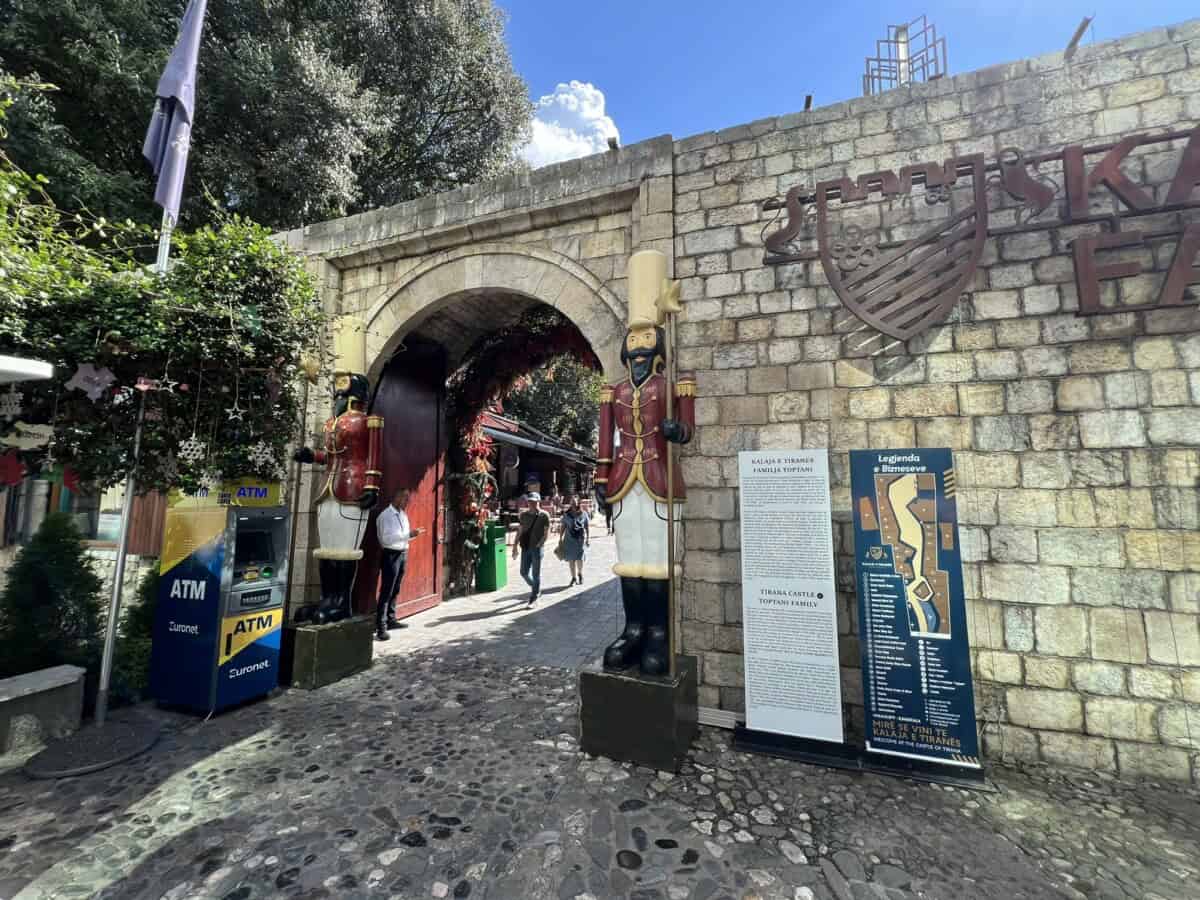
Hrad Kalaja e Tiranës
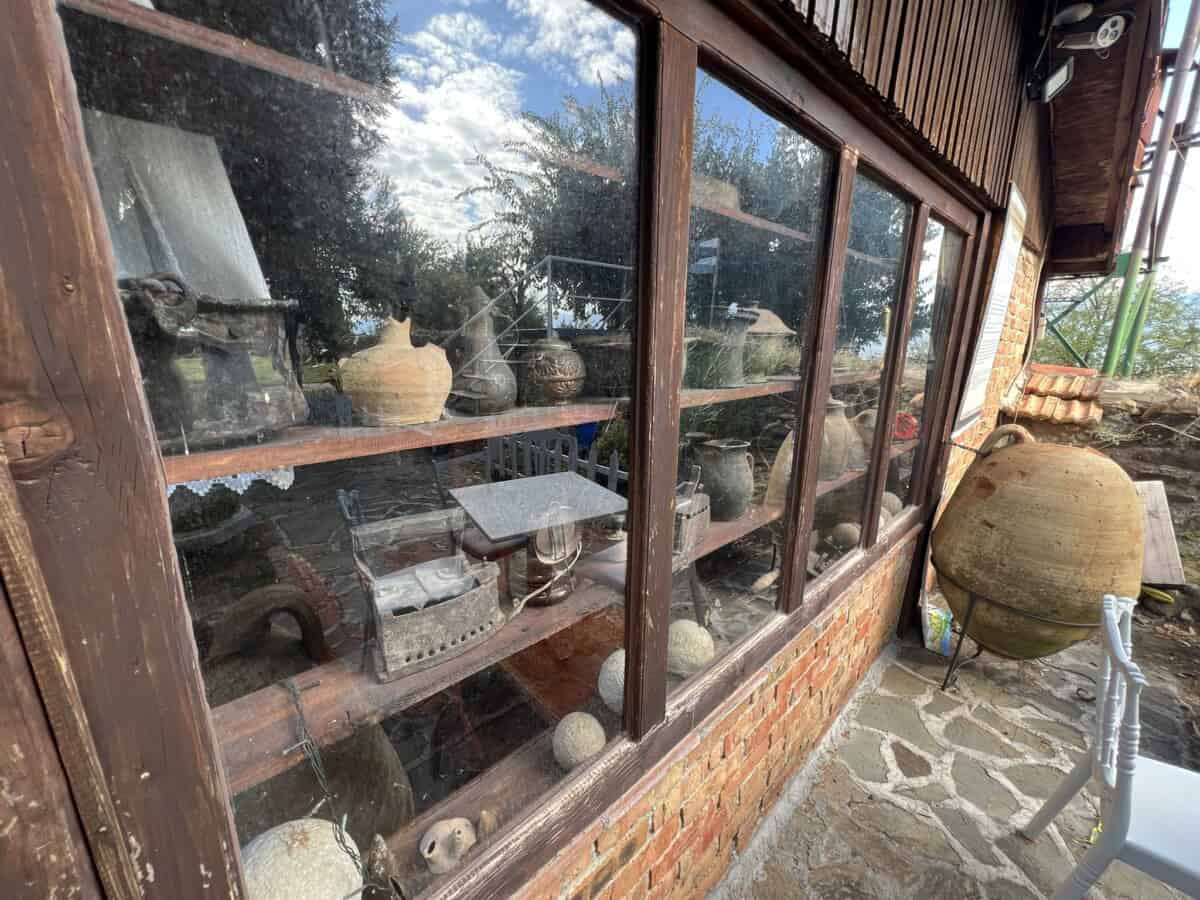
Kalaja e Tiranës, or Tirana Castle (sometimes also called Fortesa e Justinianit or Justinian’s Fortress), is one of the oldest preserved monuments of Albania’s capital. What remains of the fortress today are primarily the walls, which form the historic core of Tirana and are among the most visited places. The oldest traces of settlement in this area date back to the early Bronze Age around 2000 BC, but the fortress itself was built only in the 6th century AD, when Byzantine Emperor Justinian I had fortifications built as part of a defensive system against barbarian invasions.
Hence the name “Justinian’s Fortress”. The existence of the fortification is proven by archaeological finds of pottery and coins. In the 13th and 14th centuries the area was ruled by local Albanian families, such as the Topias. In 1614 the fortress was significantly expanded and rebuilt by the Ottomans, under the leadership of Suleyman Bargjini, who is considered the founder of modern Tirana in the Ottoman style.
Více o hradu
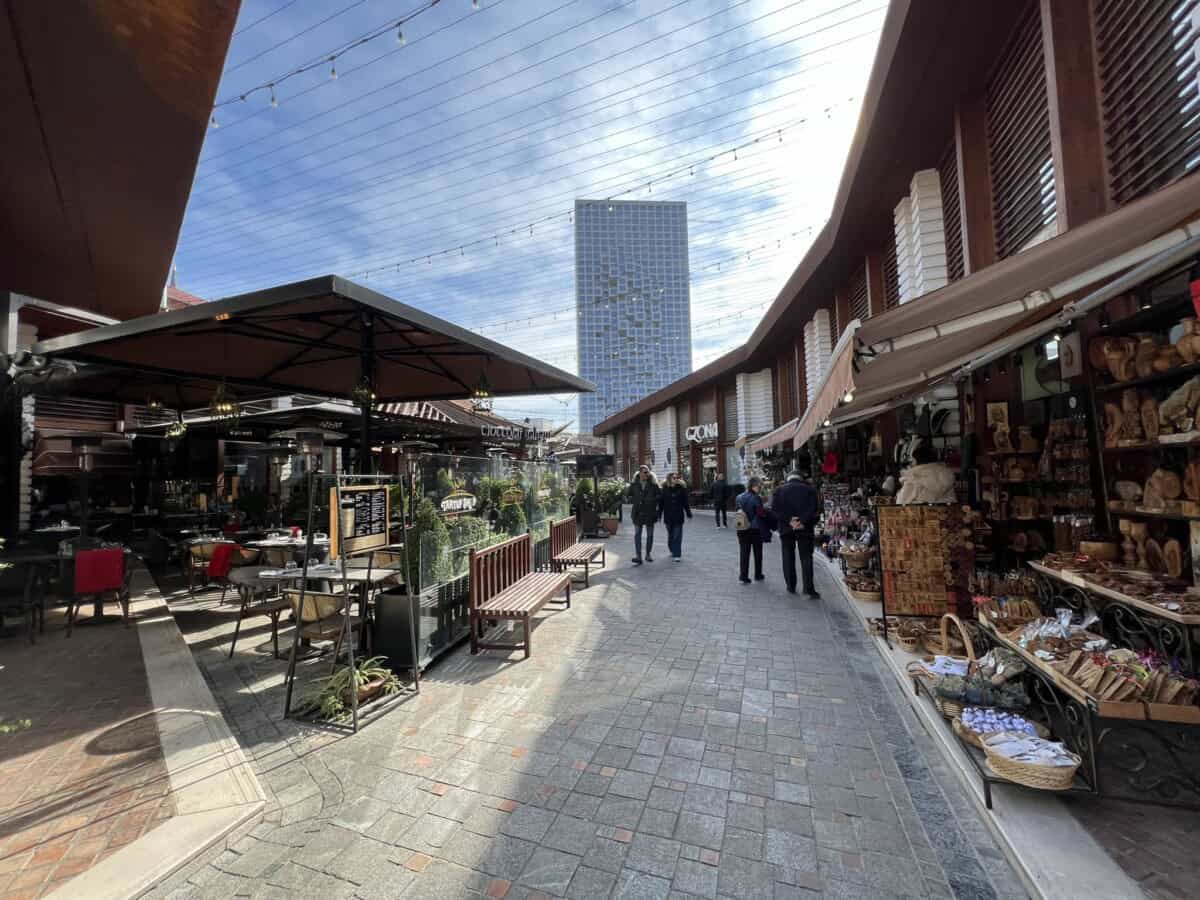
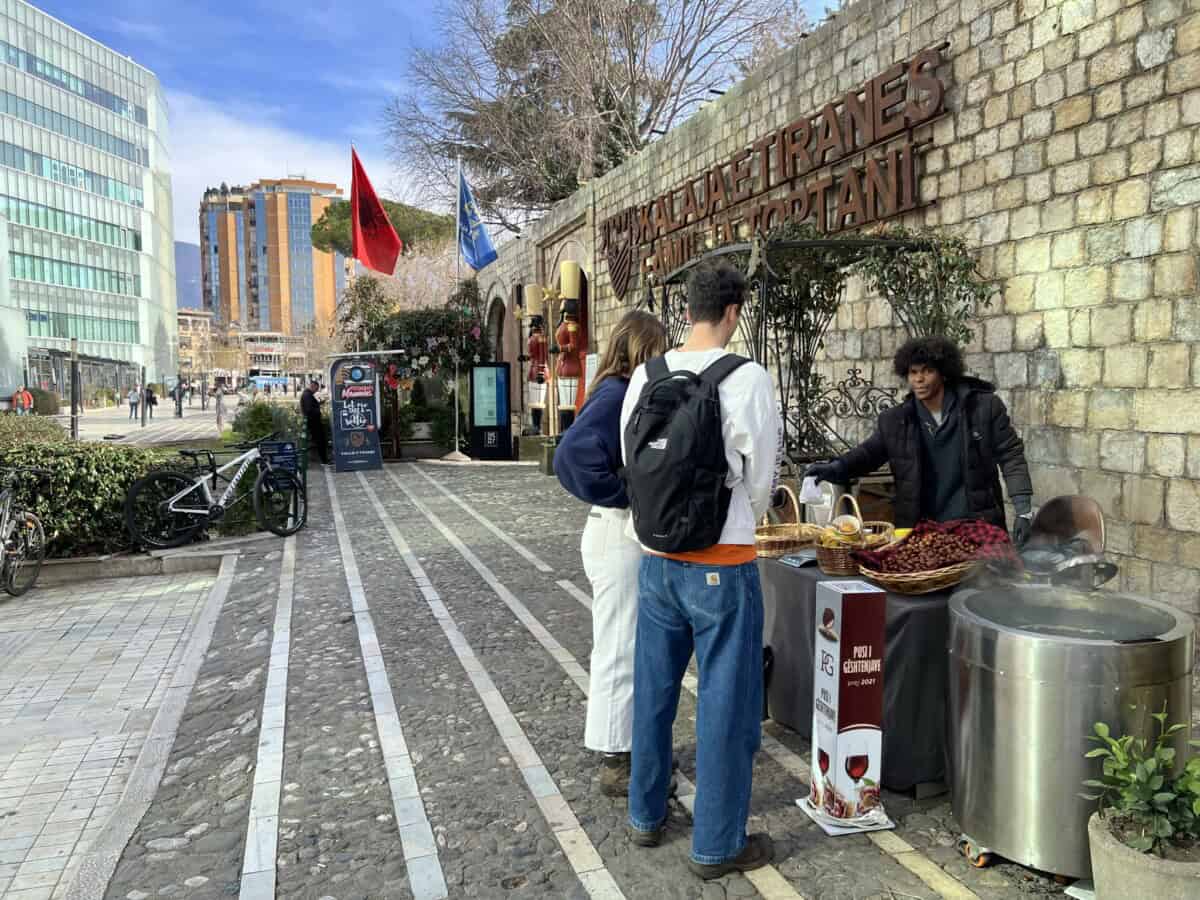
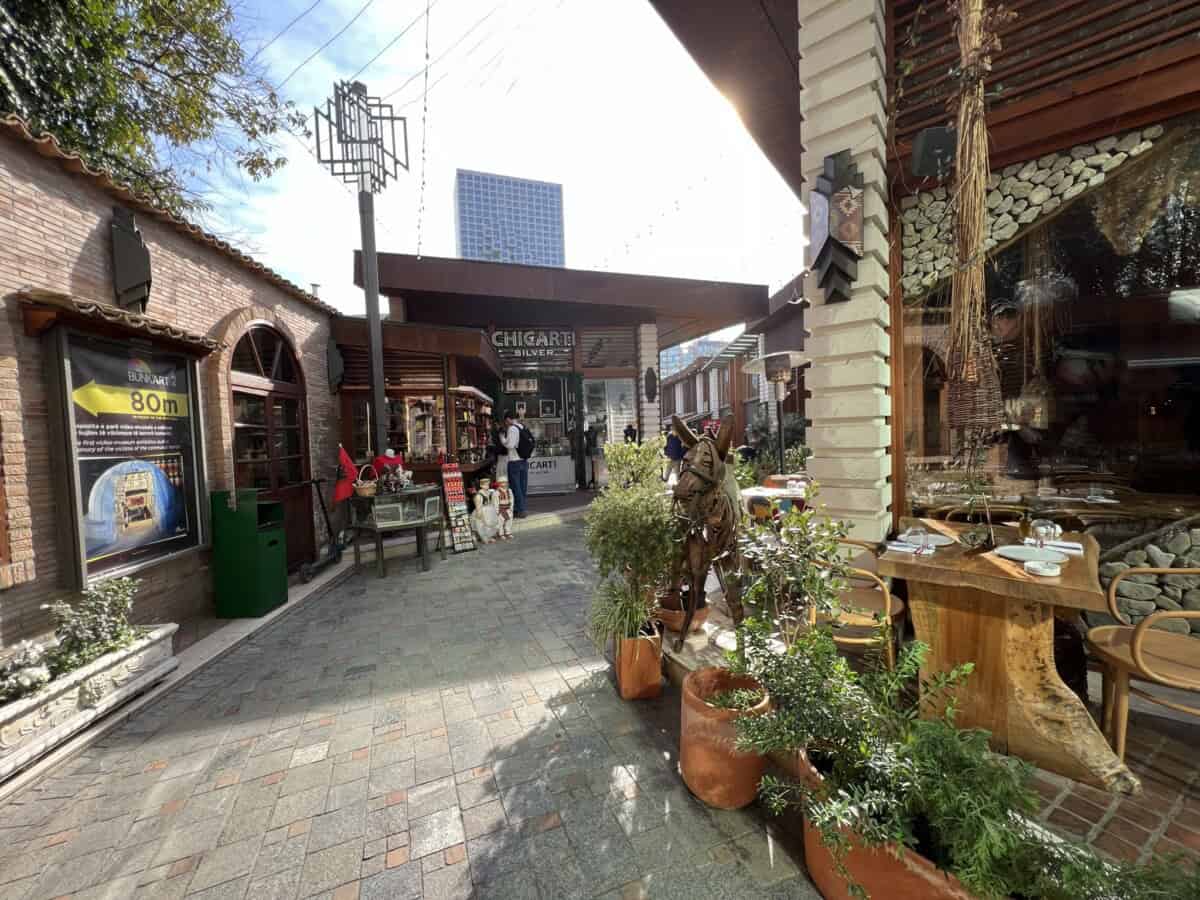
Thanks to Suleyman Bargini, Tirana became a center of Albanian art, culture and religion (especially Islam and Bektashi Sufism). At the end of the 18th century, the fortress came under the control of the Toptani family from Krujë. However, they were deprived of it by the communists after the war in 1945 and the family was persecuted. The communist regime, however, did not take good care of the fortress. After the fall of the dictatorial regime in 1991, Kalaja e Tiranës became the property of the descendants of the famous Toptani family and remains under their management to this day. Under their care, the Tirana castle and its surroundings became a beautifully restored zone with cobbled streets, restaurants, cafes, craft shops and souvenirs.
The Toptani family is connected with Kalaja e Tiranës and the history of the entire city practically continuously from the Middle Ages to the mid-20th century. The Toptani belong to the most powerful Albanian noble families that ever ruled in the Tirana and Krujë regions. In the 14th and 15th centuries they represented direct successors of the old Topia family, which dominated central Albania. After the Ottoman conquest of Albania, they became one of the most important local feudal families, owned most of the surrounding land and had a decisive influence on the city’s administration. The castle formally belonged to Ottoman power, but the Toptani had their residences and palaces directly within the walls or in immediate proximity.
In 1912, Abdi Toptani and Murade Toptani became signatories of the Declaration of Albanian Independence, thereby signing the Albanian independence. After the communist regime came to power in 1944, the descendants of the Toptani family, like all Albanian nobility, were deprived of their property, persecuted and many of its members had to emigrate. The name Toptani is inseparably connected with Tirana Castle, with Tirana in general, and thanks to its significant struggle for Albanian independence, with all of Albania. Their name is borne by, among other things, a shopping center near the main square.
Praktické
Road traffic in Albania is somewhat specific, but once you get used to it, you’ll find its logic entertaining. In Tirana, you must also expect denser and even more unpredictable traffic. There are more parking lots in Tirana, but we recommend the underground parking under the shopping center Toptani. For a relatively low fee, you can park here all day.
Another option is also the underground parking HERE in the immediate vicinity of the main square and all important tourist attractions. Equally far from the center is also the underground parking at the Namazgazh mosque.
Mapa






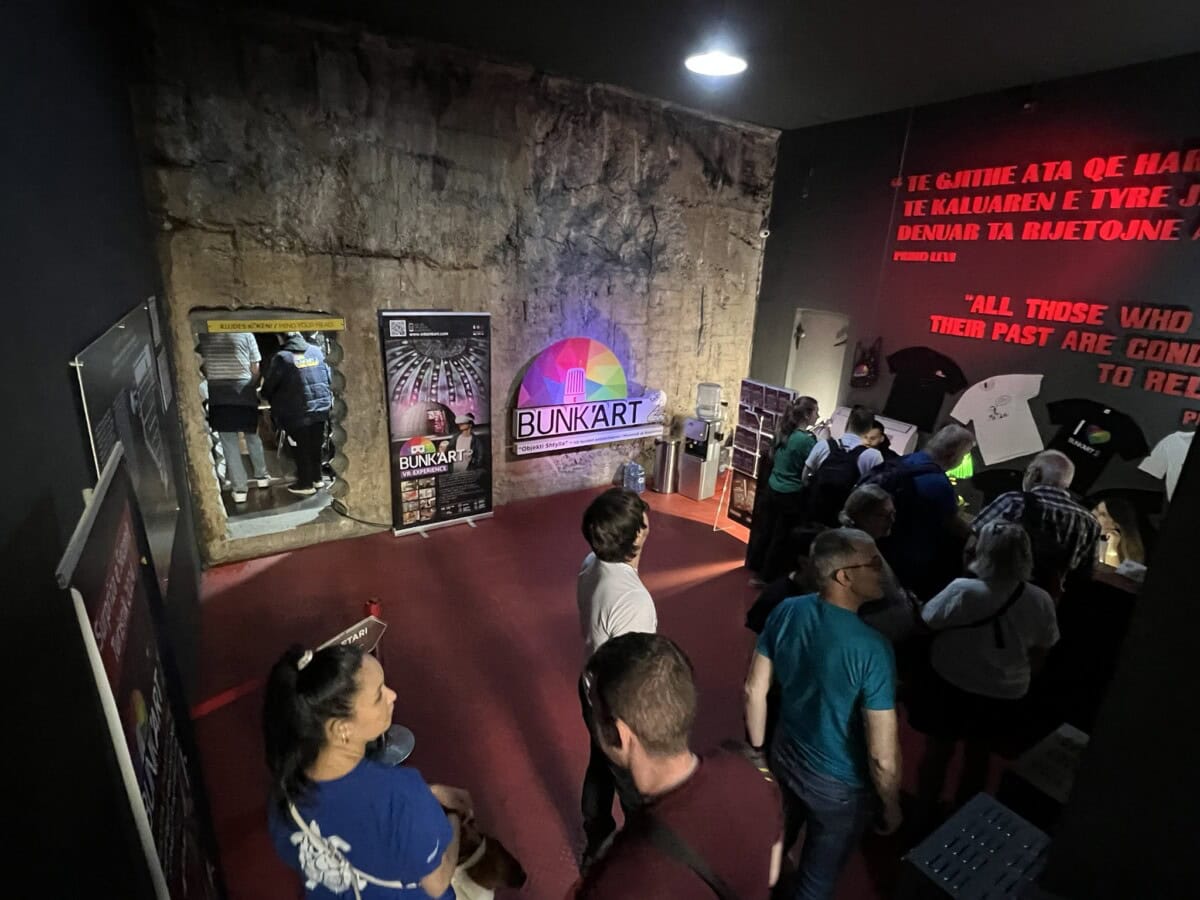
Muzeum Bunk'Art 2
Více o BunkArt2
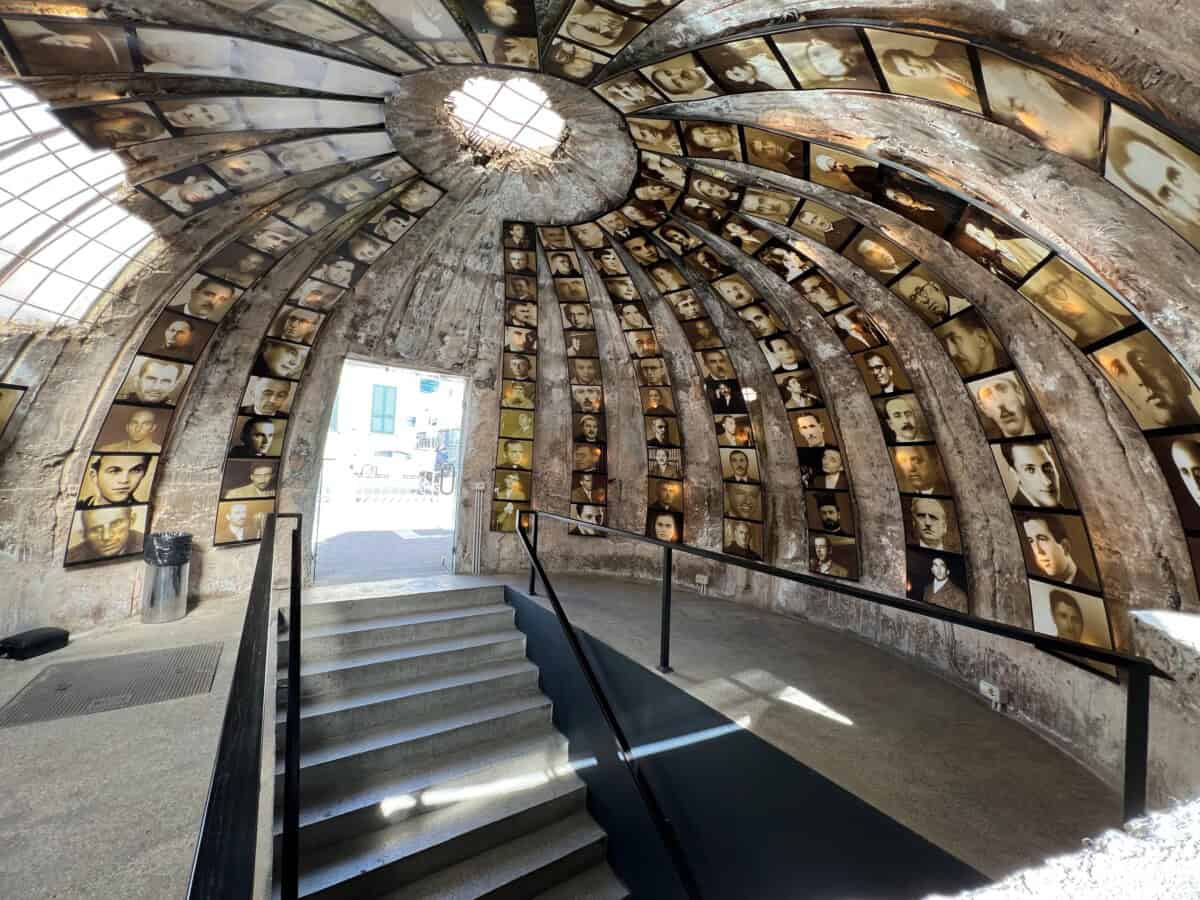
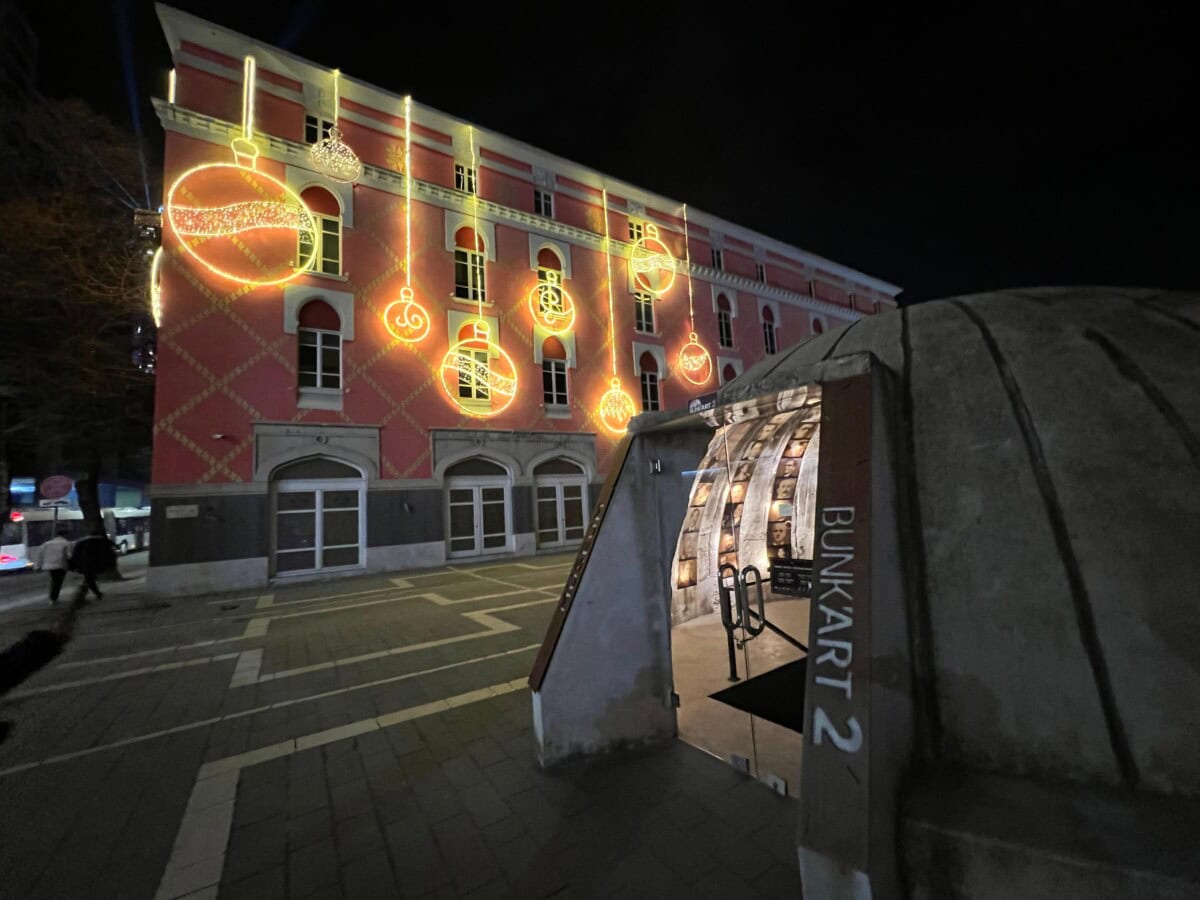
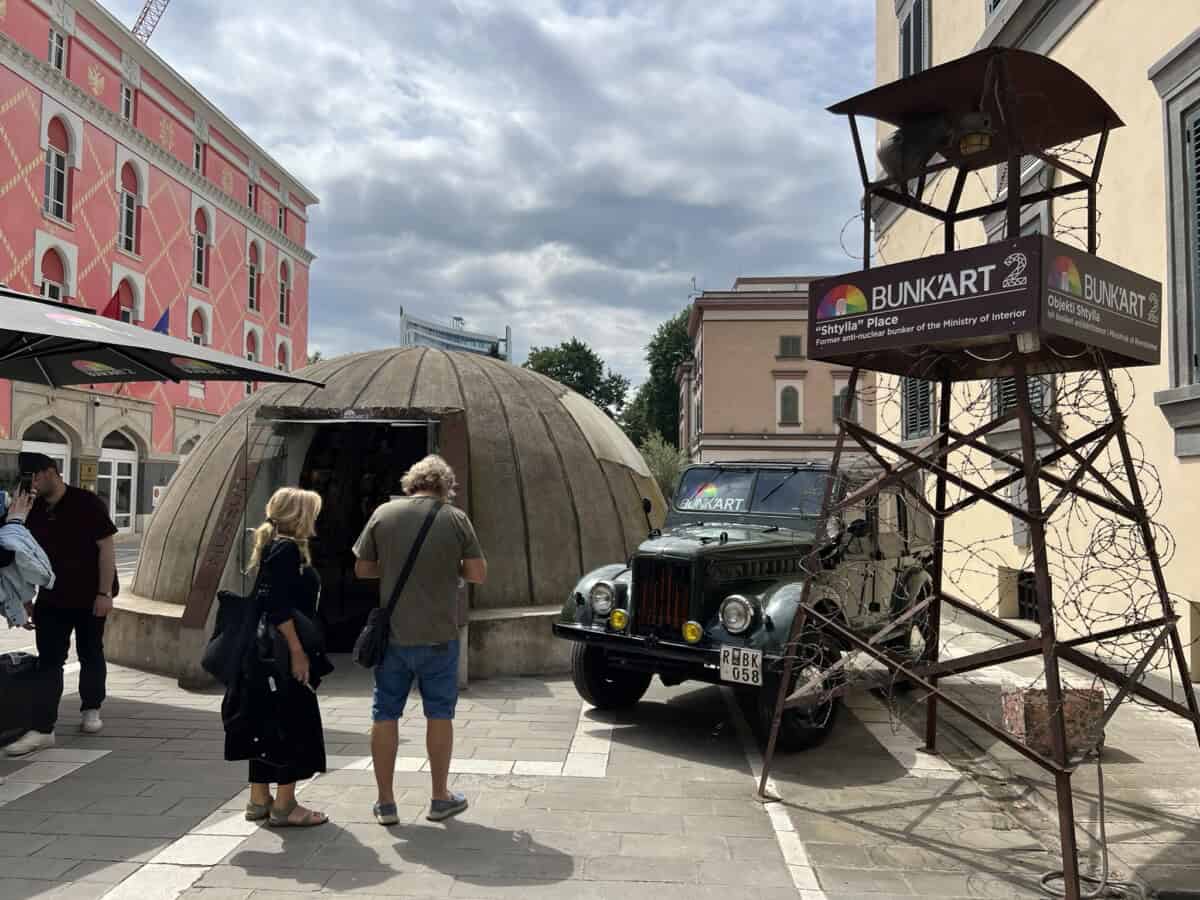
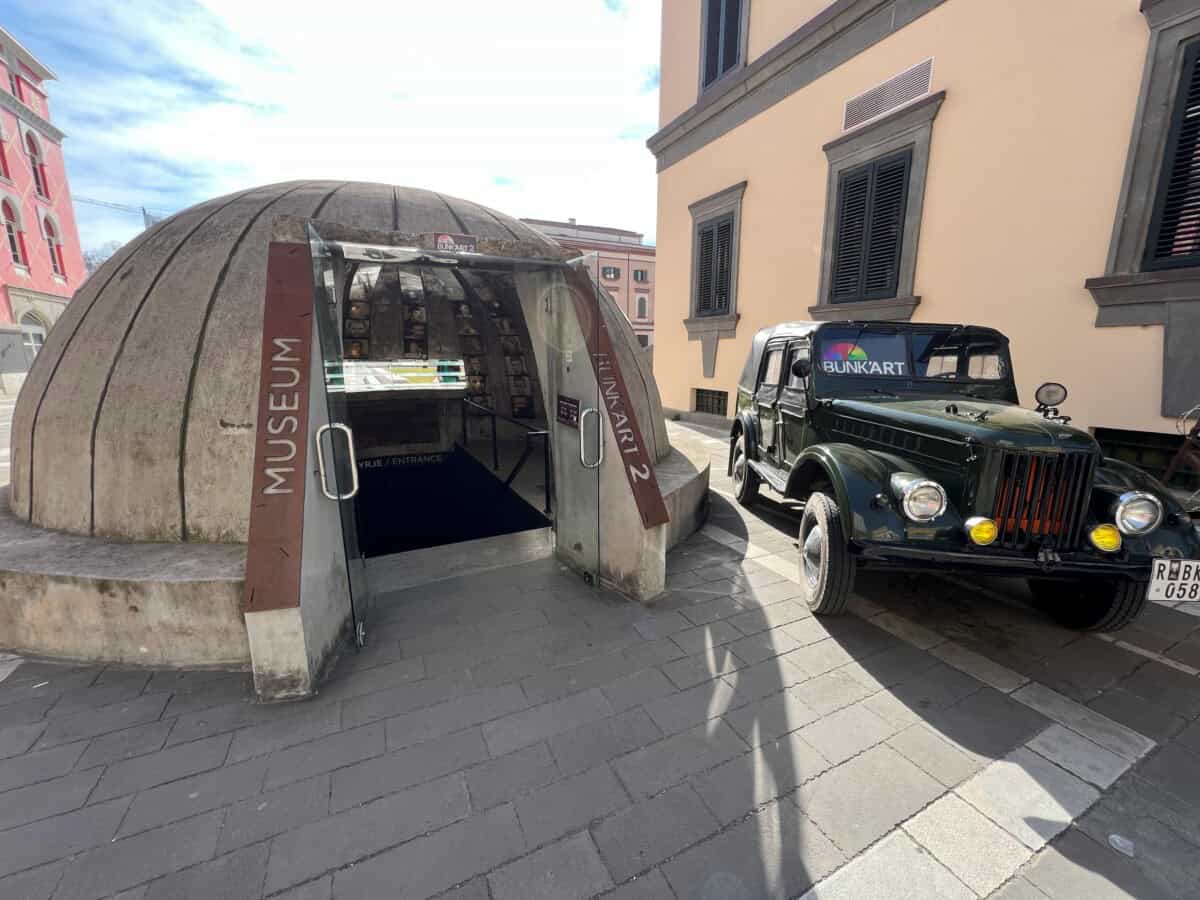
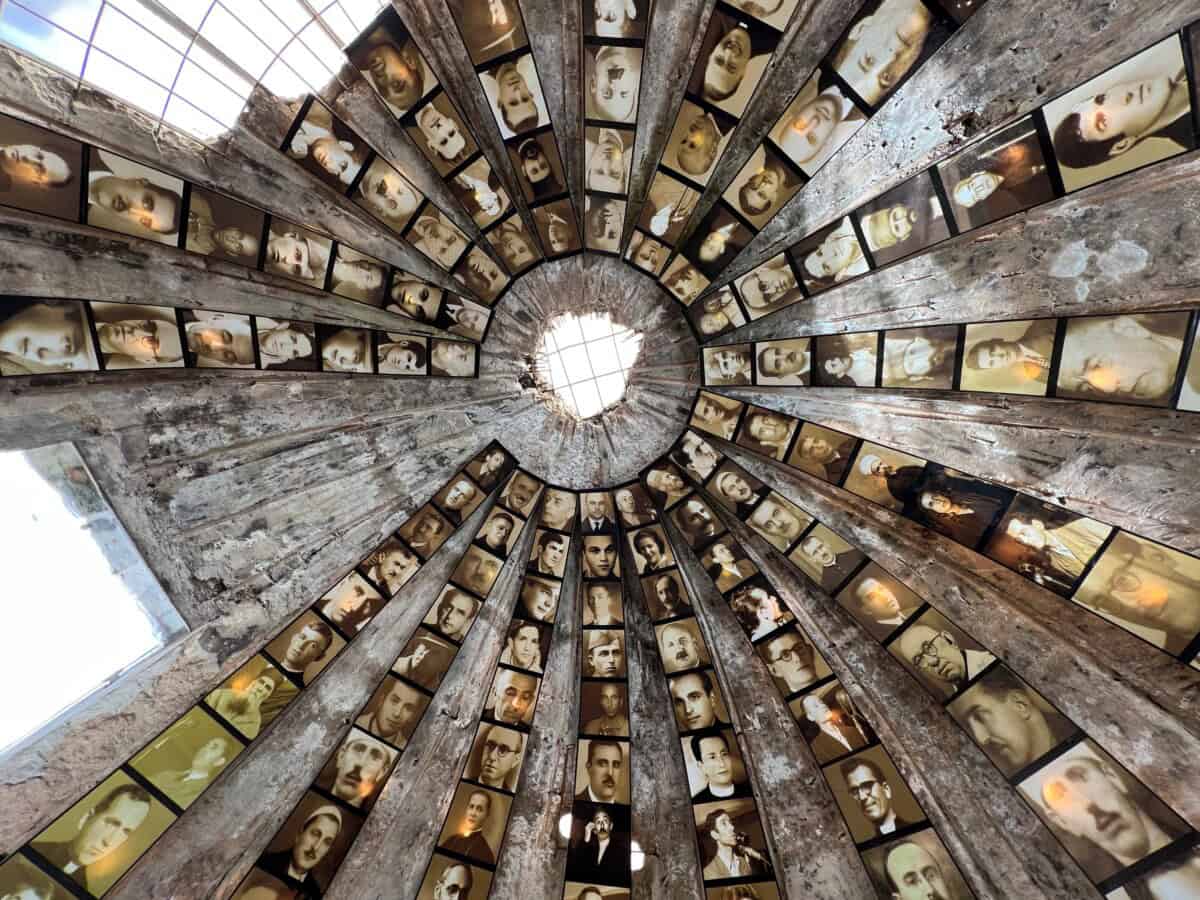
While BUNK’ART 1 is devoted to the history of the Albanian communist army and the daily life of Albanians during the regime, BUNK’ART 2 reconstructs the history of the Albanian Ministry of Interior from 1912 to 1991 and reveals the secrets of “Sigurimi”, the state police, which was a hard persecution weapon used by Enver Hoxha’s regime.
The underground museum occupies an area of 1000 square meters and consists of a series of rooms that map history through materials obtained from the State Archives and the Ministry of Interior. From room to room, the story unfolds from the creation of the first police stations, state security stations, People’s Police through camps with barbed wire to prisons, internments and deportations. A separate room is also dedicated to how foreigners living in Albania during the dictatorship were wiretapped. Microphones in lamps, cameras in flowers, recordings of every phone call.
It is not unlikely that by the end of the tour you will feel that someone is watching you. Bunk’Art 2 is not just a museum. It is a therapy that will make you think about how good we have it today, and after which you will gratefully breathe freedom in the fresh air of Skanderbeg Square.
Praktické
Mapa
Cathedral The Resurrection of Christ
Více o Katedrále
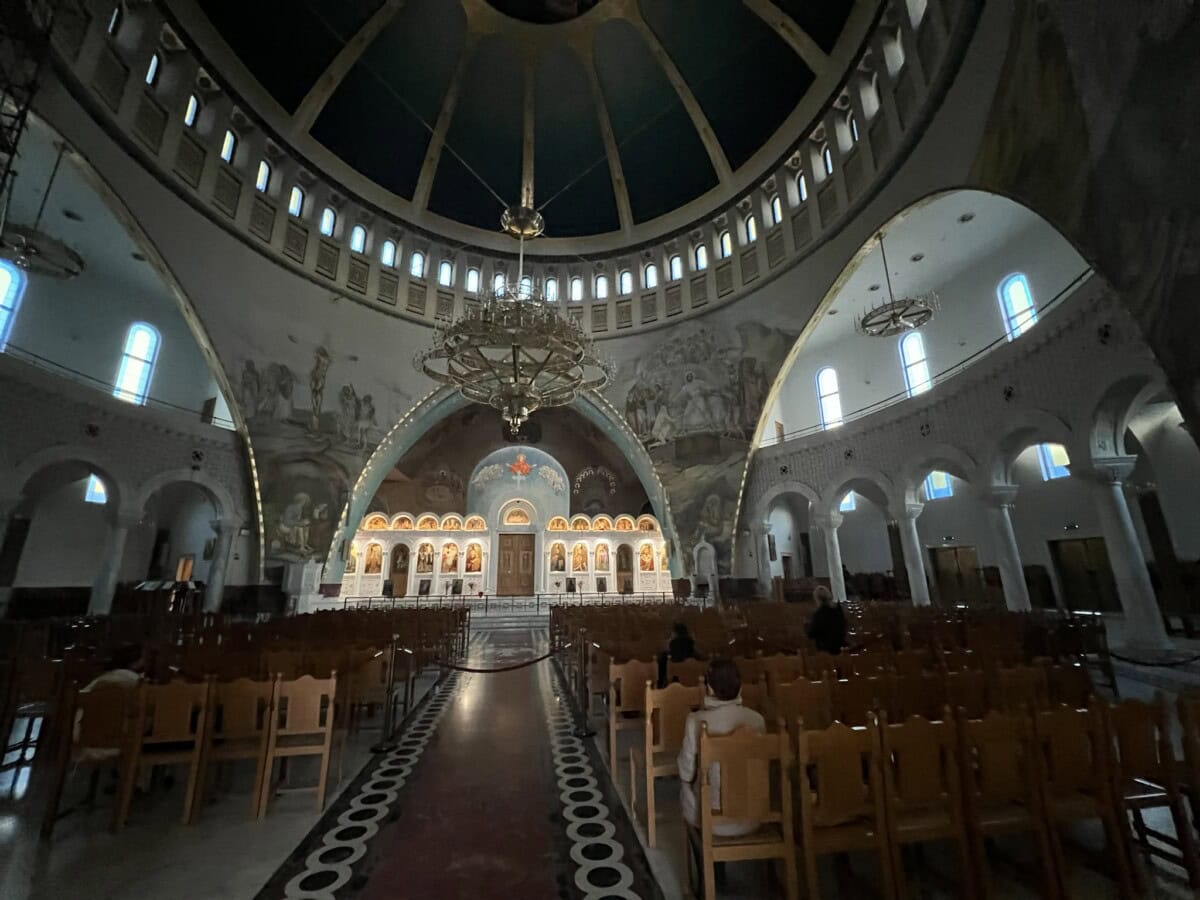
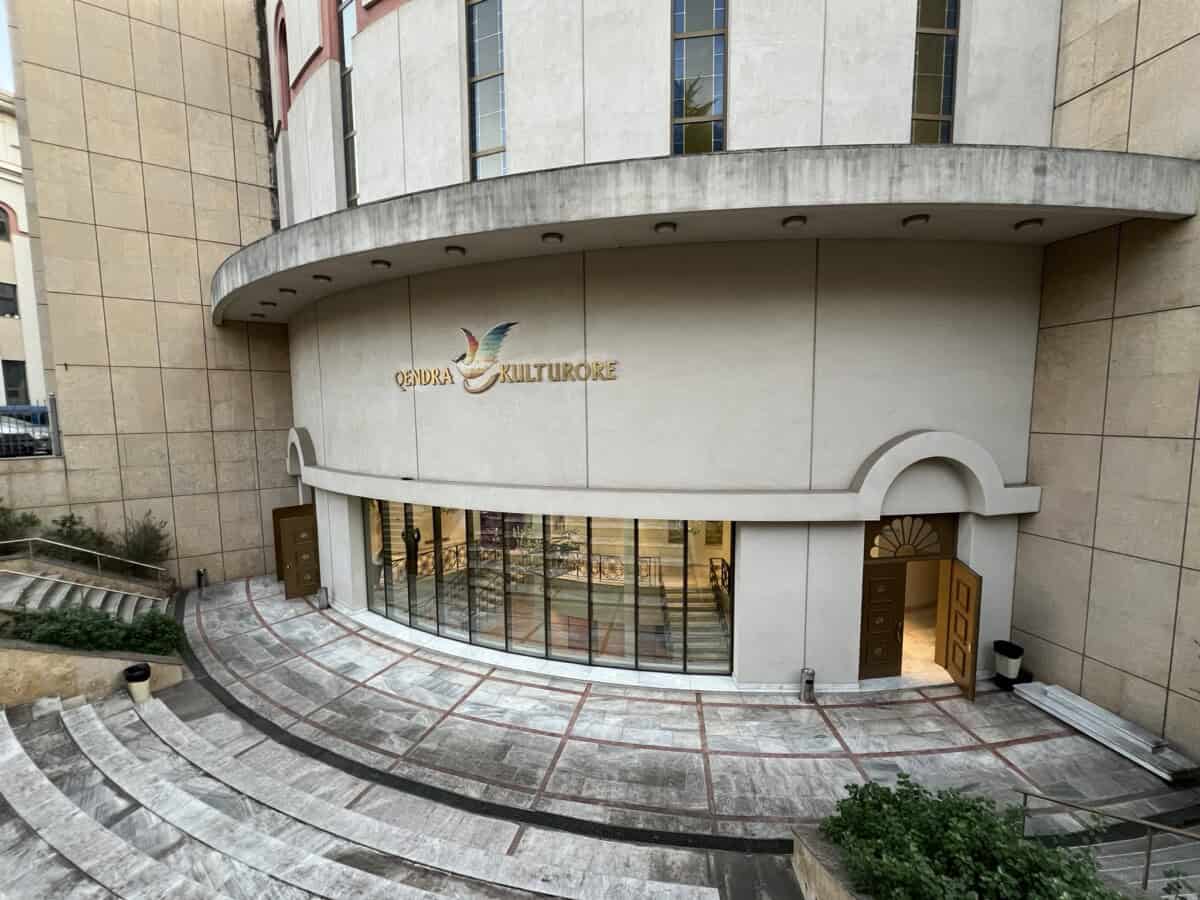
The complex includes spaces that serve the cultural needs of the church. The center has a hall with a capacity of 500-850 people, which can be used for lectures, performances and concerts.
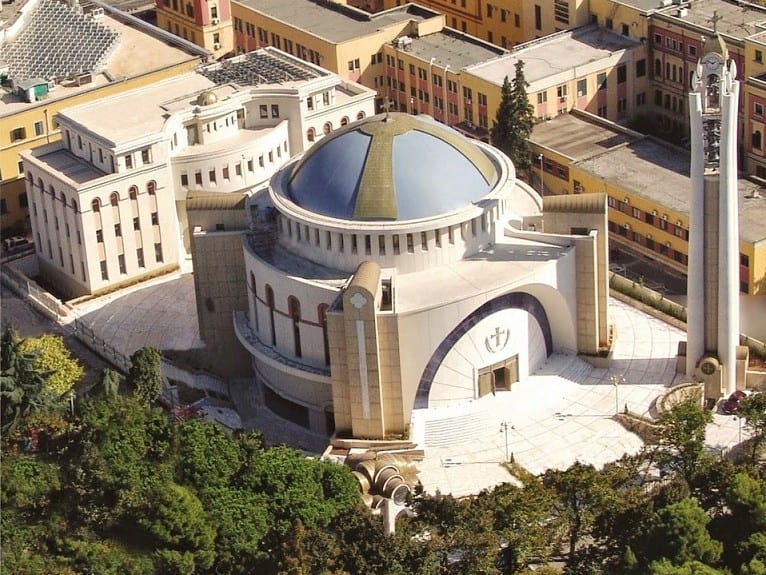
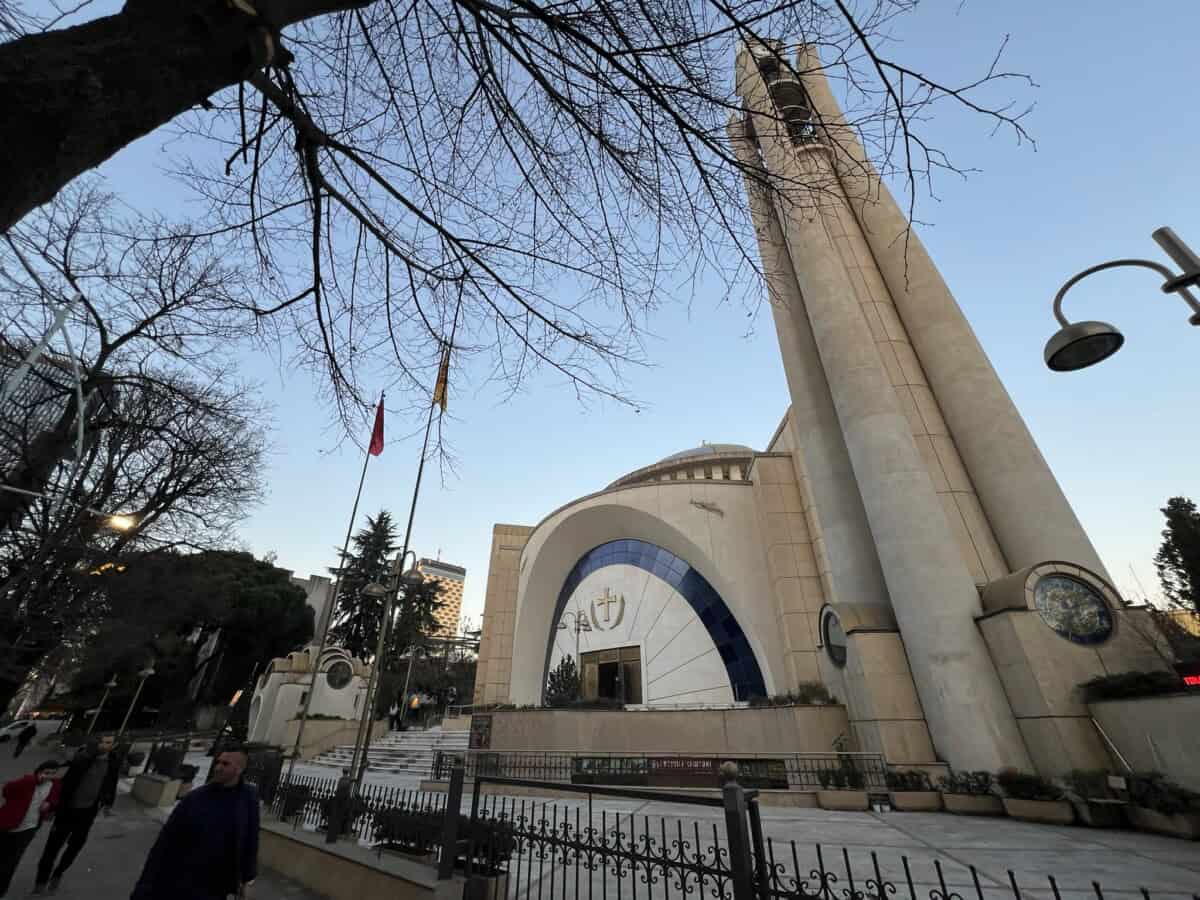
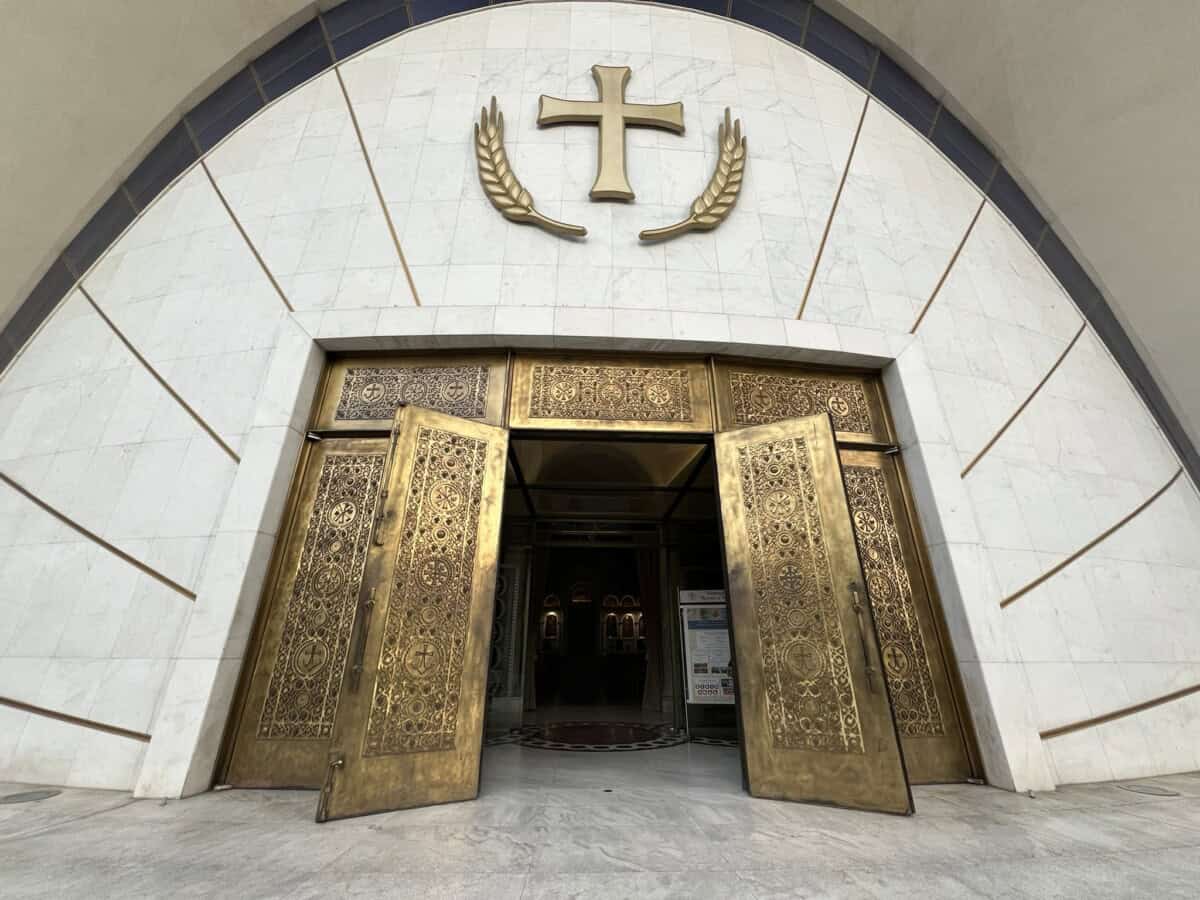
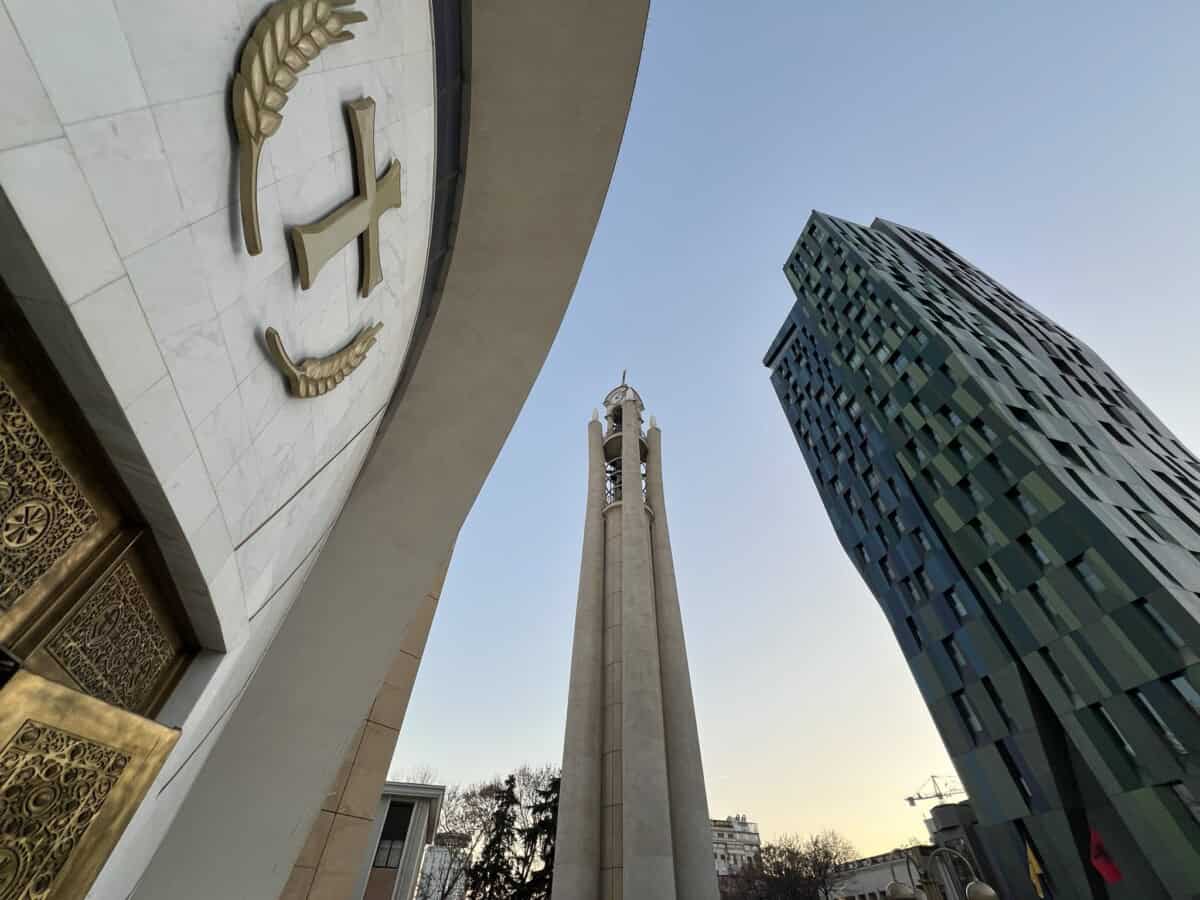
The cathedral is designed in the shape of a cross inscribed in a dome, which is a classic feature of Byzantine Orthodox churches. The iconostasis, the sacred barrier separating the sanctuary from the nave, is characterized by excellent craftsmanship. In the center of the dome is a magnificent mosaic depicting Christ Pantocrator, symbolizing Christ as the ruler of the universe. The central image is surrounded by other religious motifs that reinforce the theological narrative and spiritual significance of the church.
This architectural masterpiece, created with the contribution of architects from New York, has become the focal point of Tirana. It combines traditional Orthodoxy with modern design. Its monumental presence is not only evidence of religious devotion, but also a symbol of the harmonious coexistence of history and modernity.
Praktické
Mapa


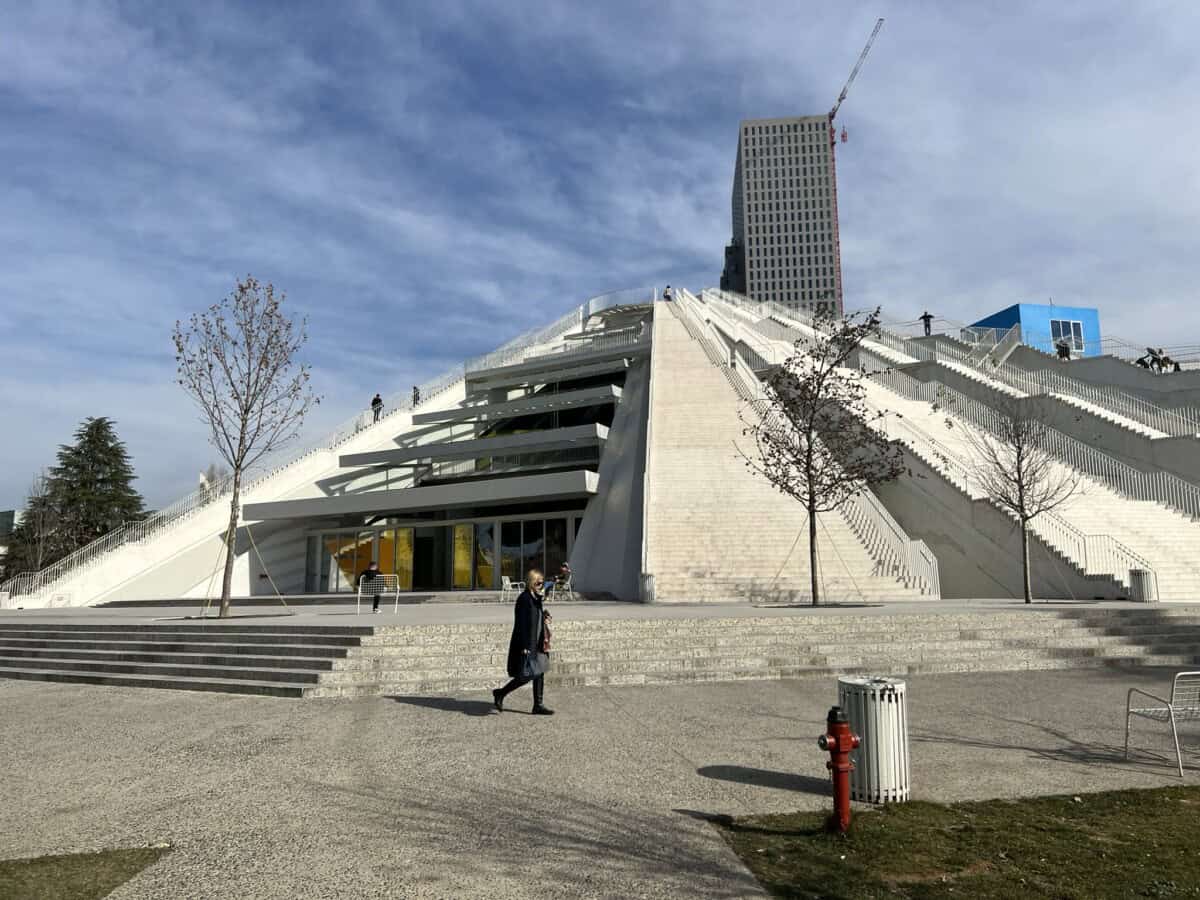


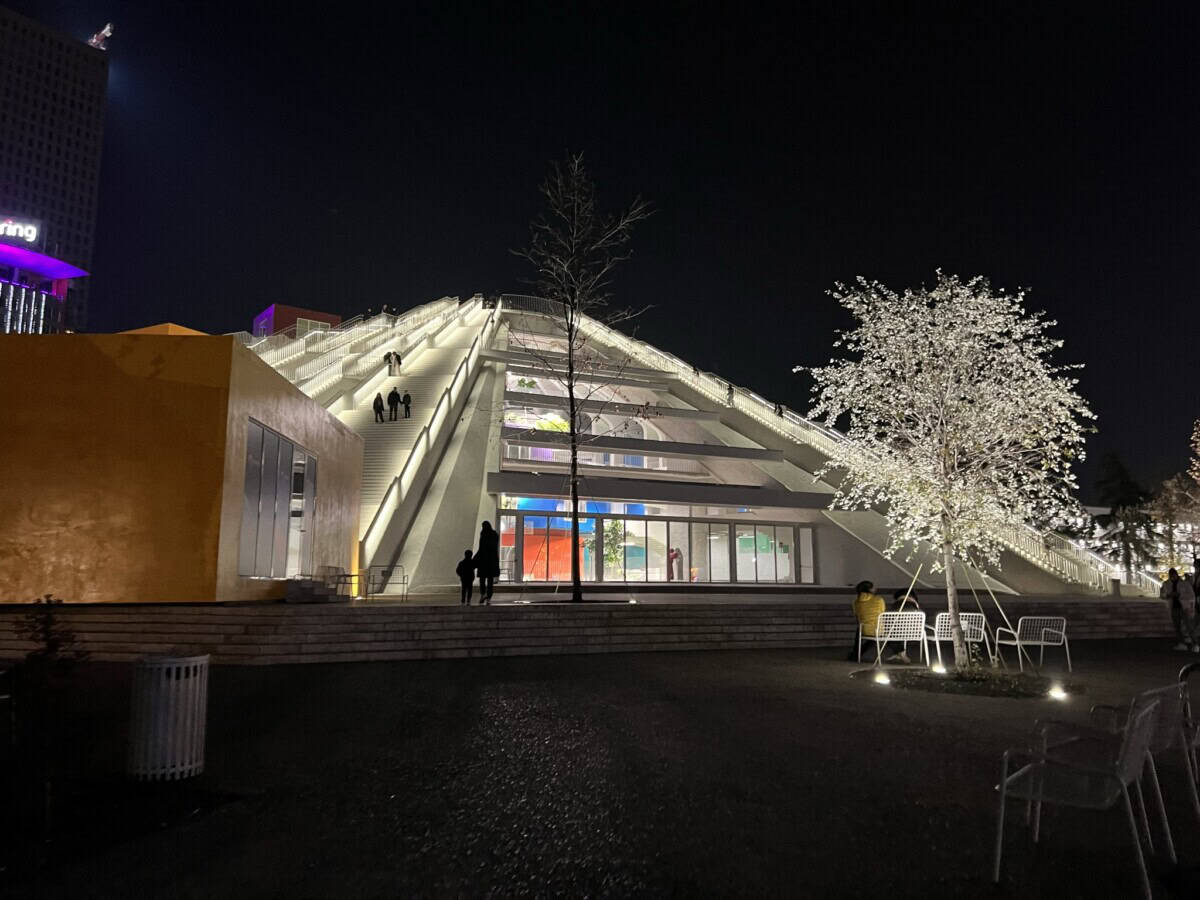


Pyramida e Tiranës
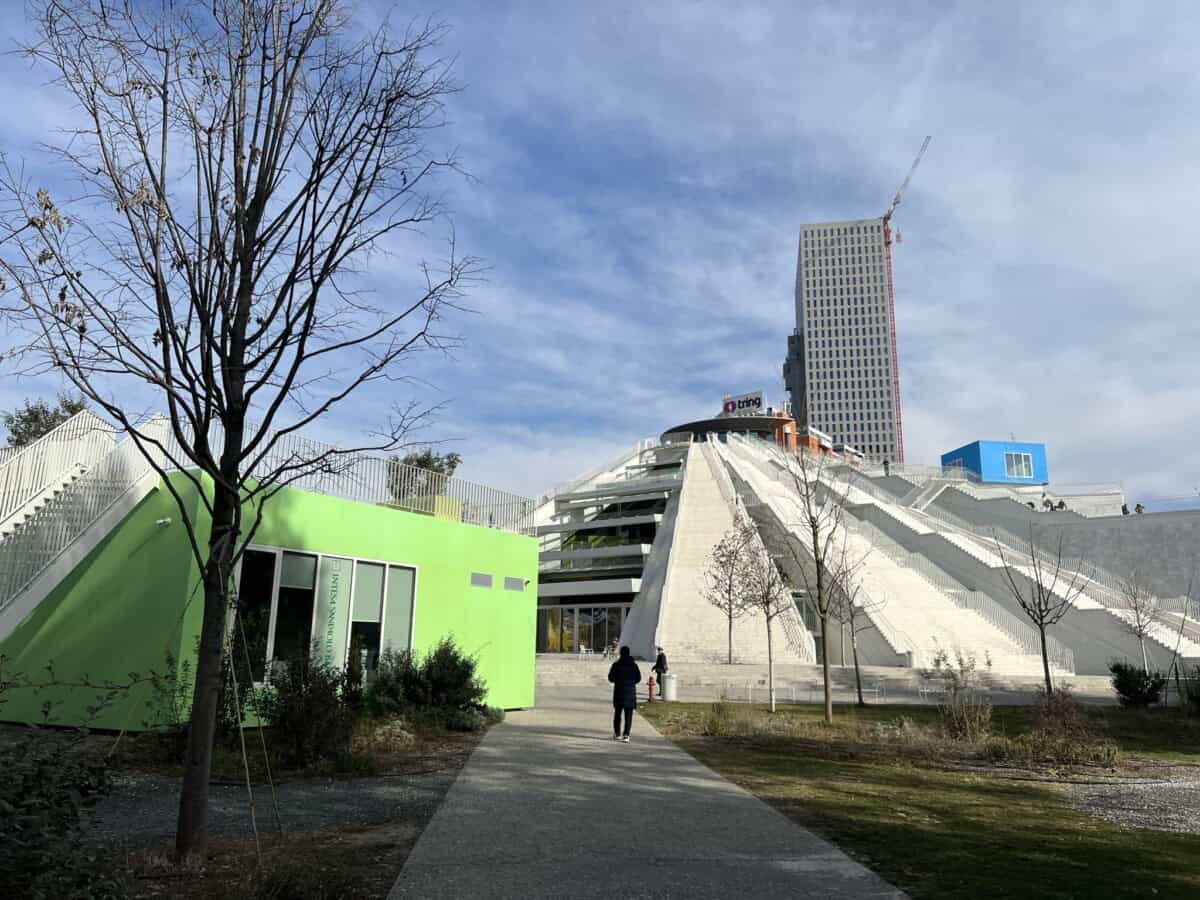
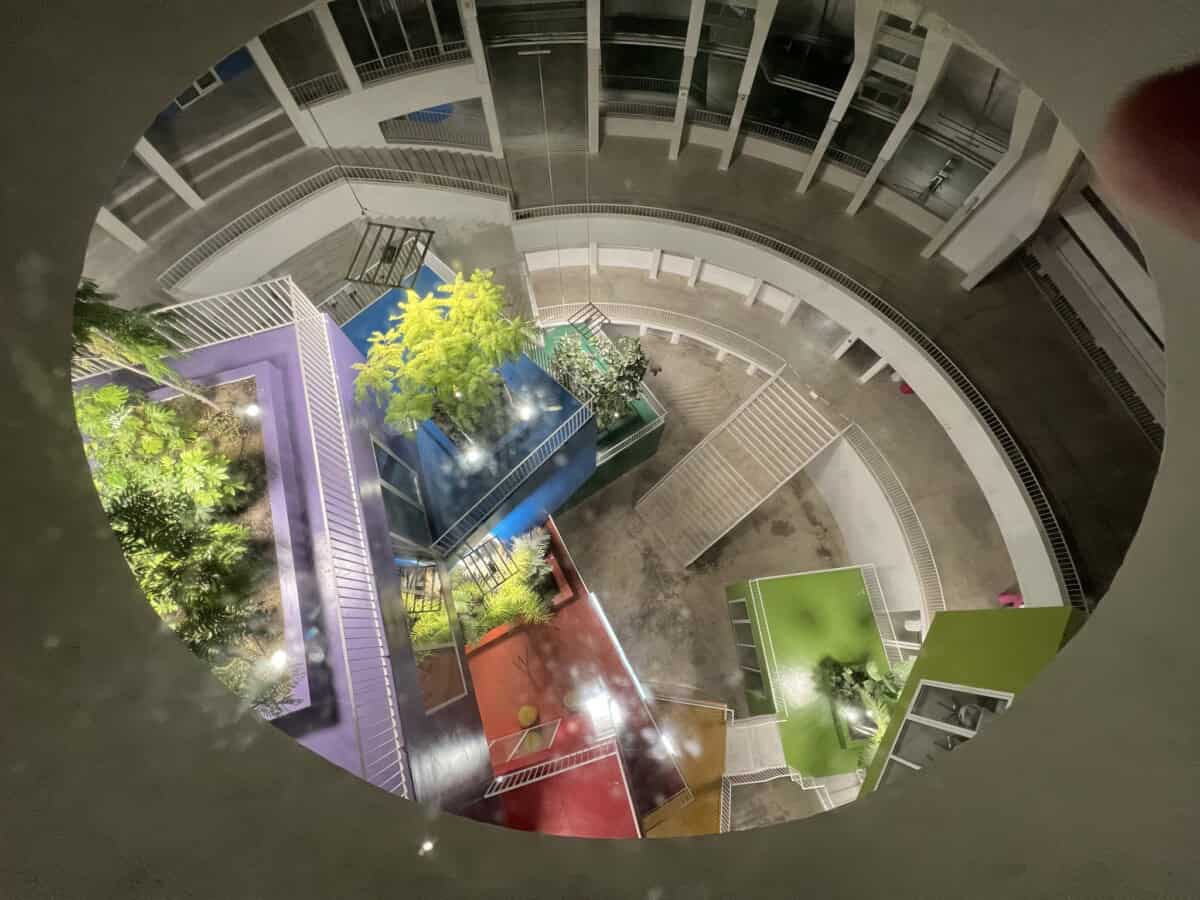
The Pyramid in Tirana (Piramida e Tiranës) was ceremonially opened on October 14, 1988 as a magnificent Museum of Enver Hoxha, which was meant to eternally celebrate the long-time dictator of communist Albania. Among the team of architects was Pranvera Hoxha, the daughter of Enver Hoxha himself. The building represents a prime example of late socialist modernism – monumental geometry, dramatically designed processional staircases and magnificent interior spaces perfectly embodied both the ideological grandeur of the regime and the brutally striking aesthetics of that era.
After its completion, the pyramid became the most expensive building in all of communist Albania, which seemed particularly glaring in a country where most inhabitants lived in deep poverty. The original plan also included a mausoleum for Enver Hoxha inside the object.
Více o pyramidě
Despite the fact that Hoxha died in 1985 – three years before the building’s completion – this plan was ultimately not realized. At that time, conditions in the socialist bloc were beginning to change rapidly and irreversibly. After the fall of the communist regime in 1991, came a complex process of finding new meaning for this controversial building – at one point, its complete demolition was seriously considered.
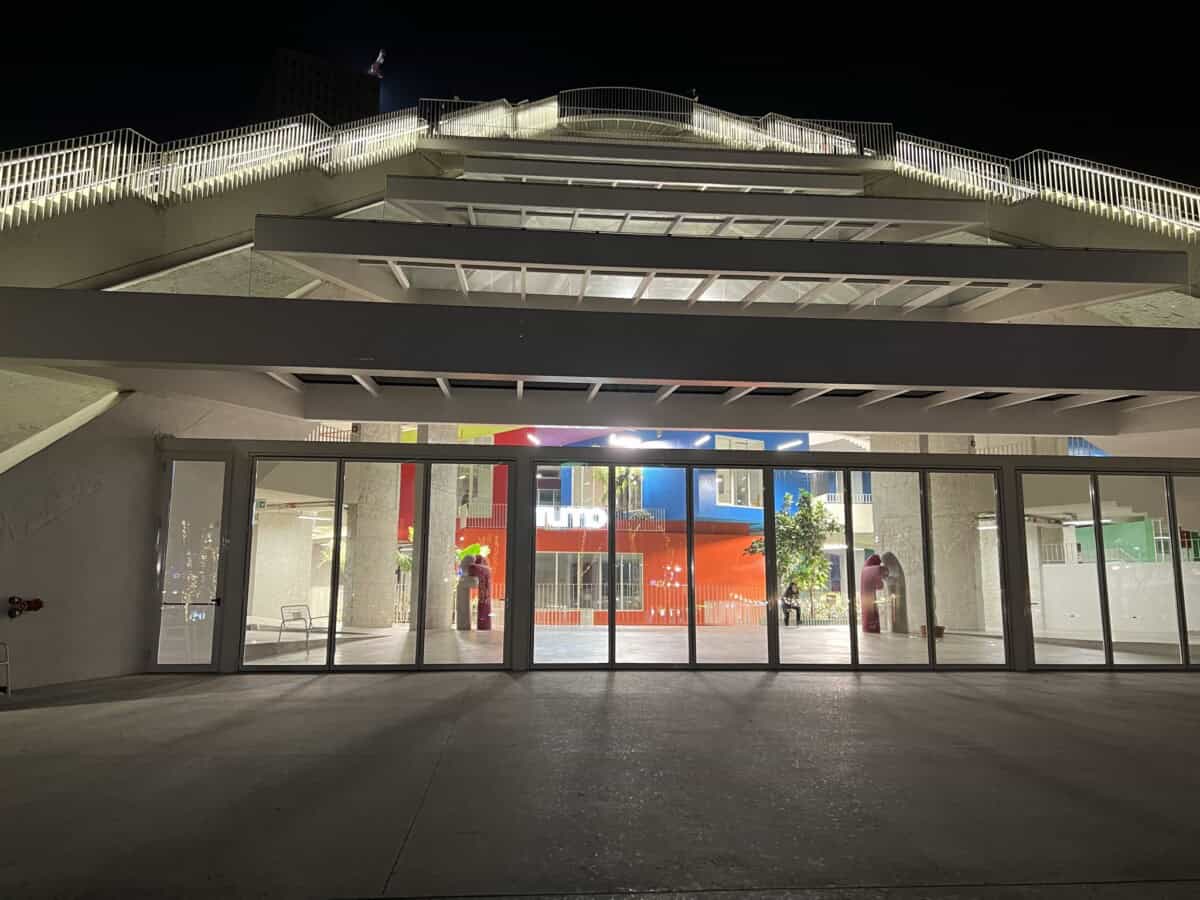
During the Kosovo War in 1999, the pyramid served as a NATO military base. After the conflict ended, from 2001 onwards, its spaces began to be used by leading Albanian media companies – Top Channel television and Top Albania Radio – as a broadcasting center. In 2018, a pivotal turning point came – an ambitious project was presented to transform the pyramid into a modern youth IT center focused on creative technologies, computer programming, robotics and startup support. The new complex was named TUMO Center Tirana. After extensive reconstruction, the building was ceremonially opened to the public in this form in May 2023.
The transformation of what was once a monumental symbol of totalitarian rule into a vibrant beacon of innovation and community life is one of the most striking examples of Albania’s social and cultural recovery after the fall of communism. The building’s survival and its radical new purpose demonstrate Tirana’s courage to face its own past head-on while also opening doors to dialogue, creativity and the future.
Today, TUMO Center offers free courses in technology, design, programming and other creative disciplines to young people aged 12-18. In addition to educational programs, art exhibitions, workshops, festivals and various community events take place here, making the pyramid a truly vibrant and inclusive space for a new generation.
Praktické
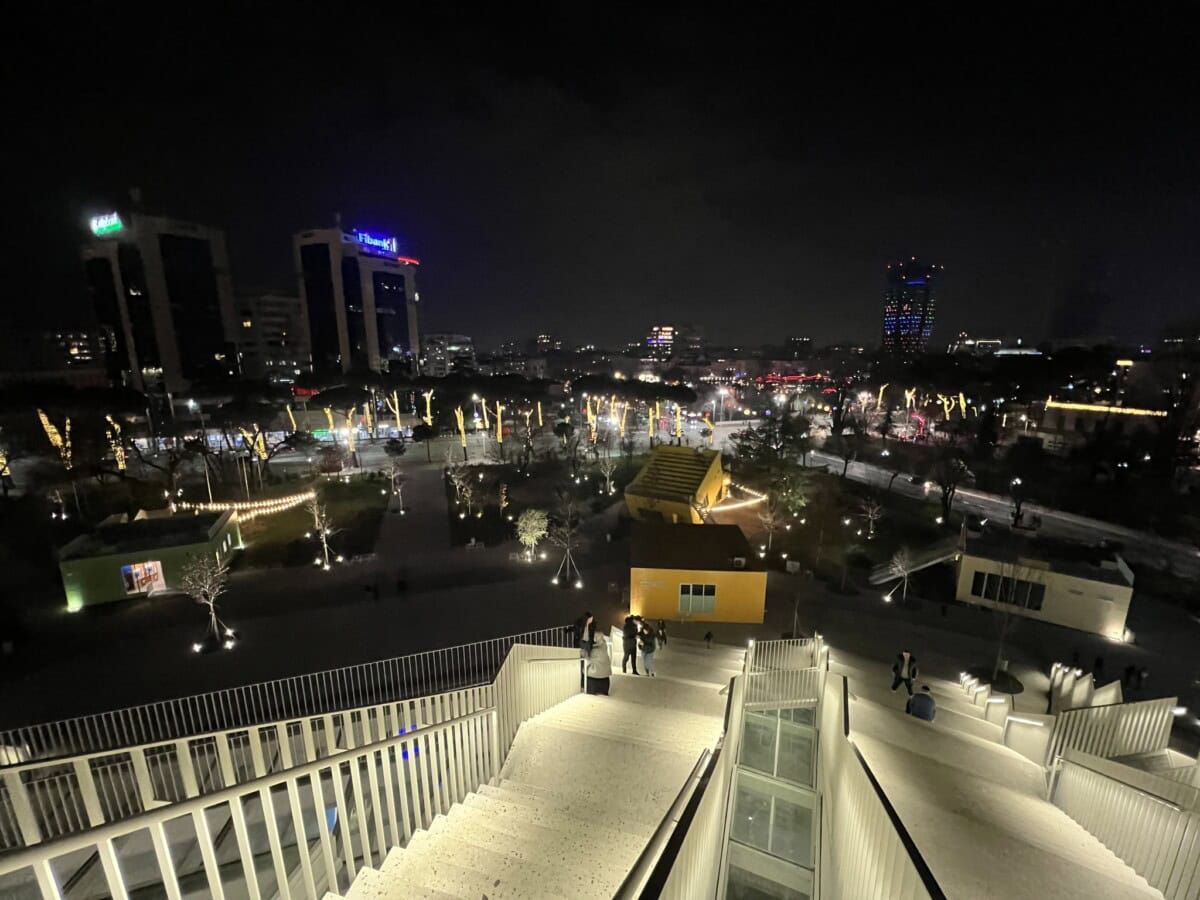
We definitely recommend hiking up the stairs to the top of the pyramid. In the hot summer, you might sweat through your shirt, but the view of Tirana is worth it. If you drive to the center by car, we recommend the underground parking under the shopping center Toptani. Another option is the underground parking HERE in the immediate vicinity of the main square and all important tourist spots or at the Turkish mosque HERE. Right behind the pyramid you will find a typical Albanian pub Komiteti Bar. We warmly recommend visiting it.
Mapa
Cathedral sv. Pavla
Více o katedrále
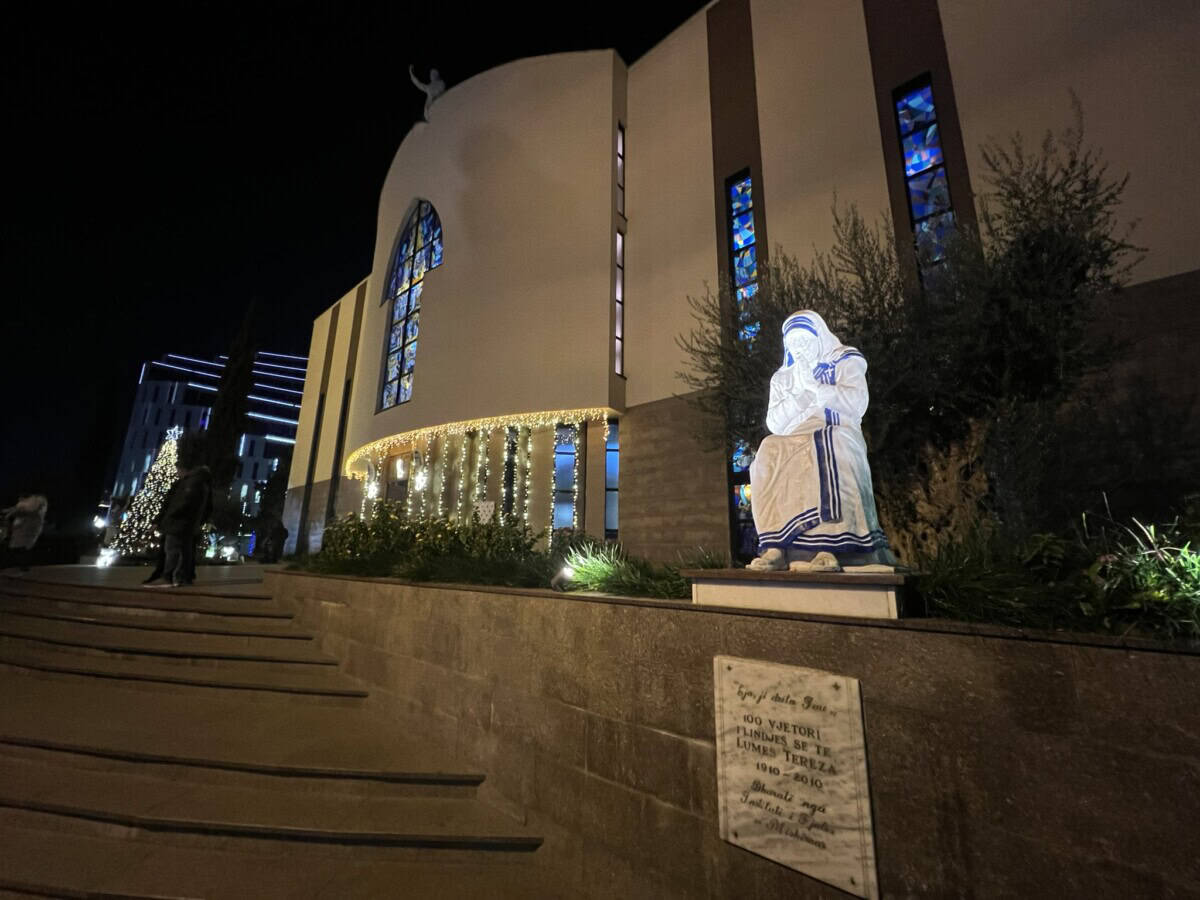
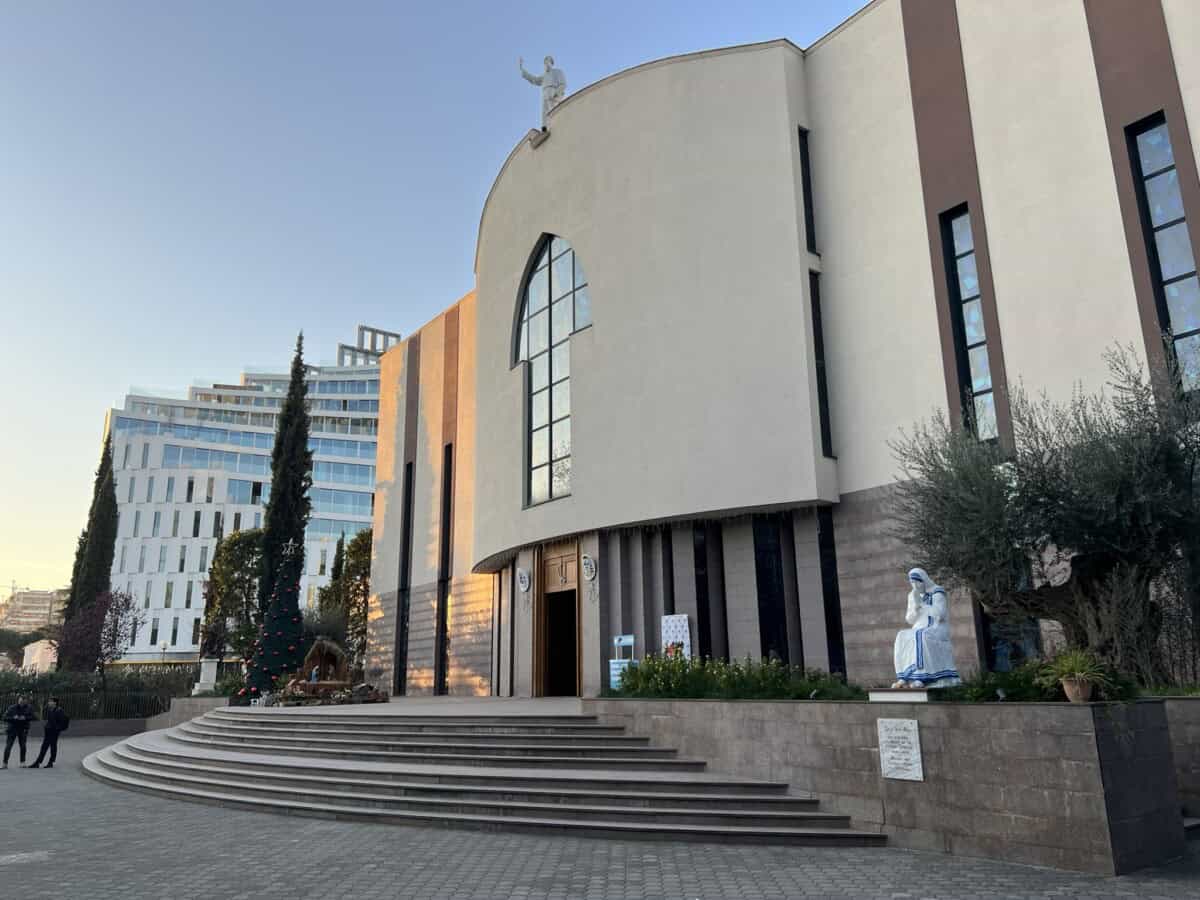
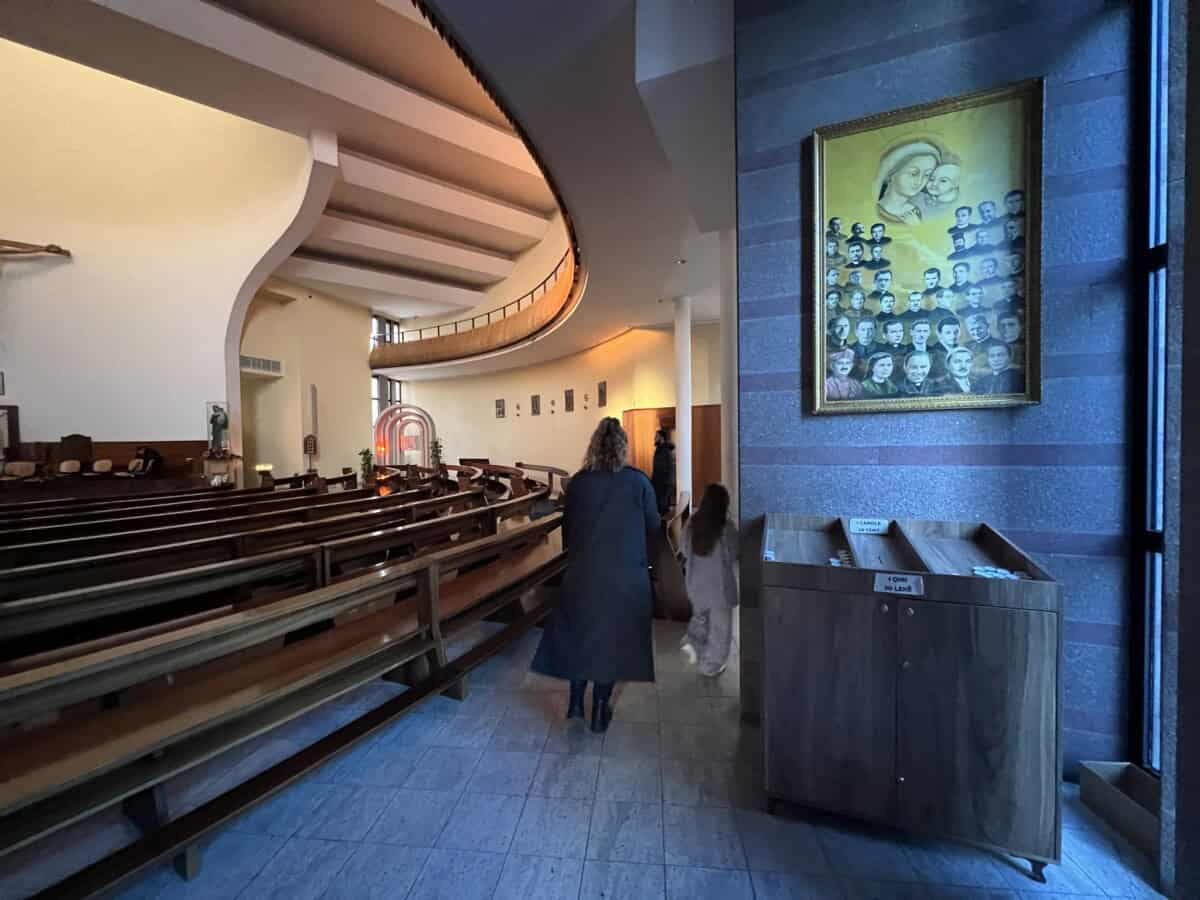
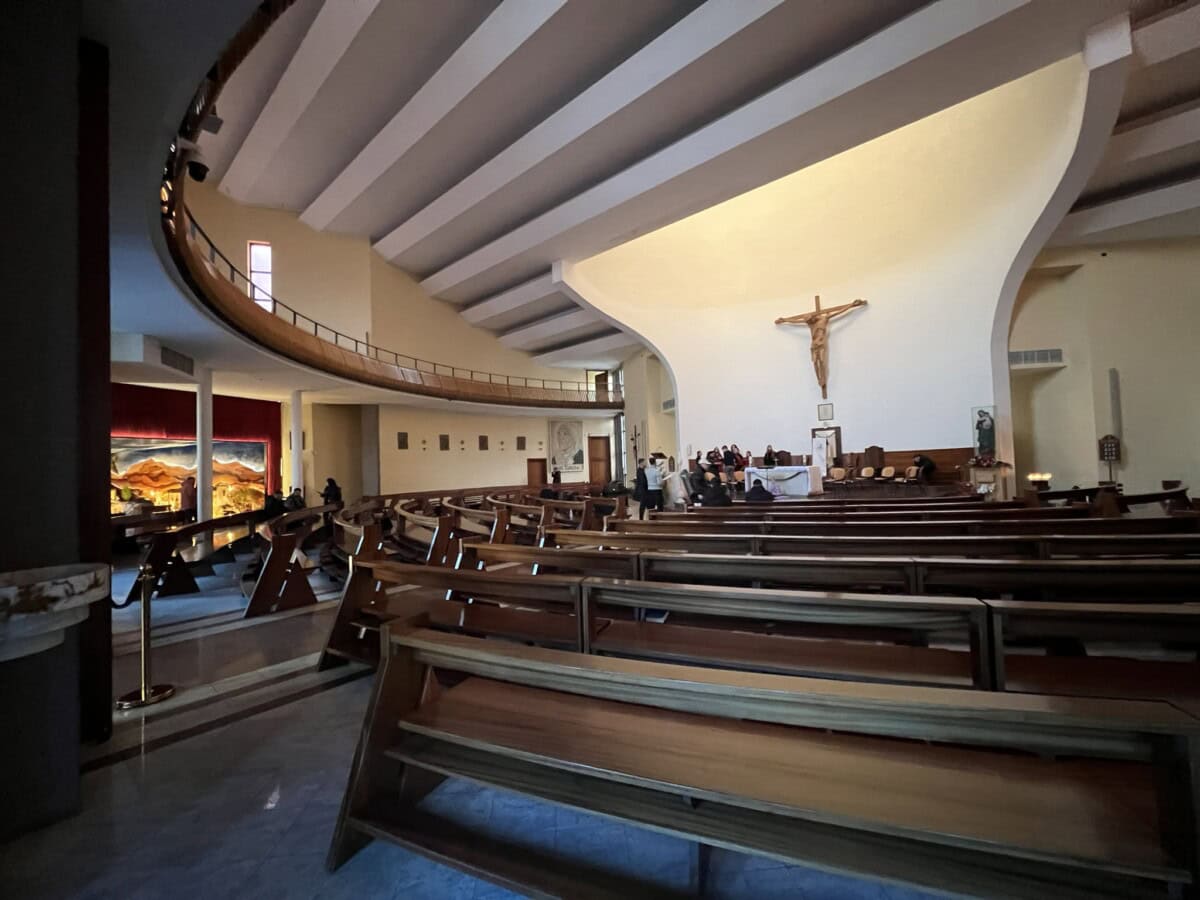
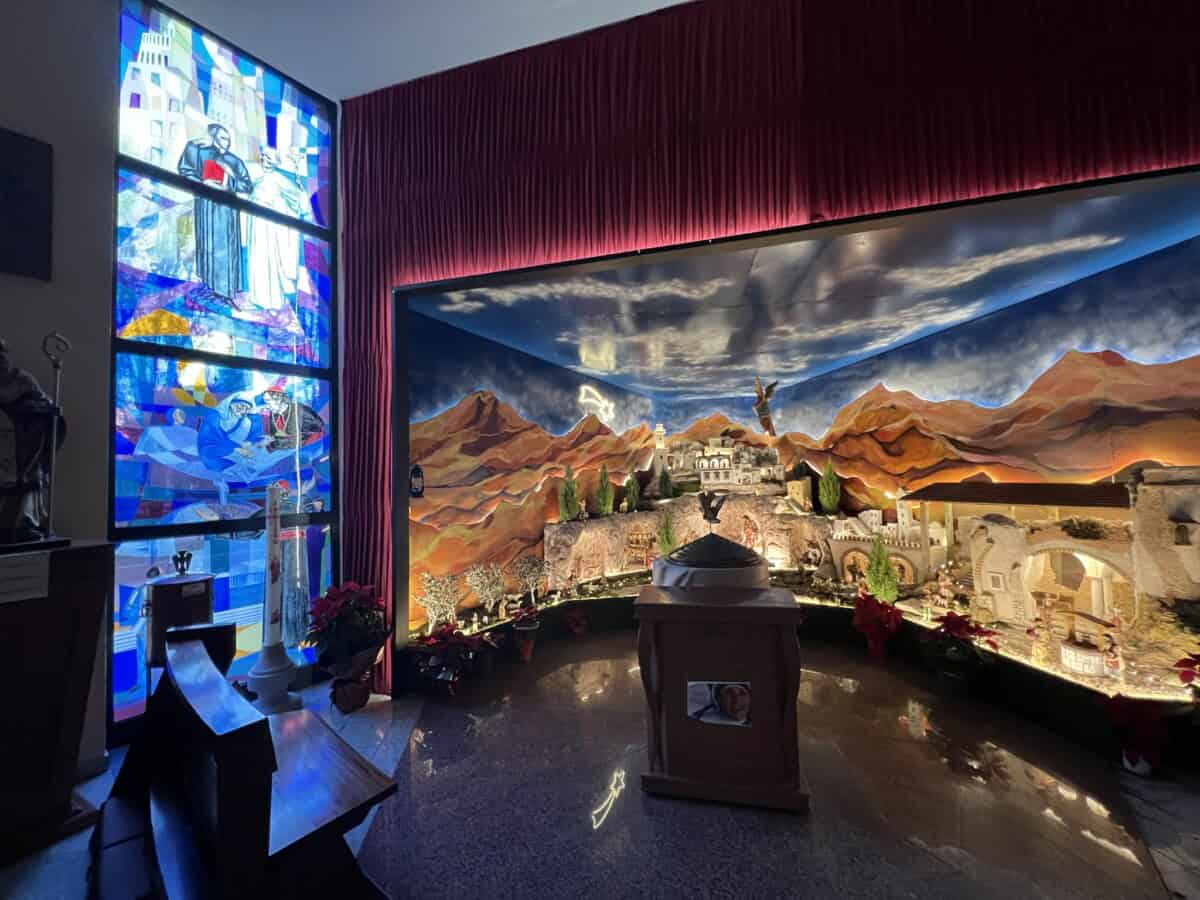
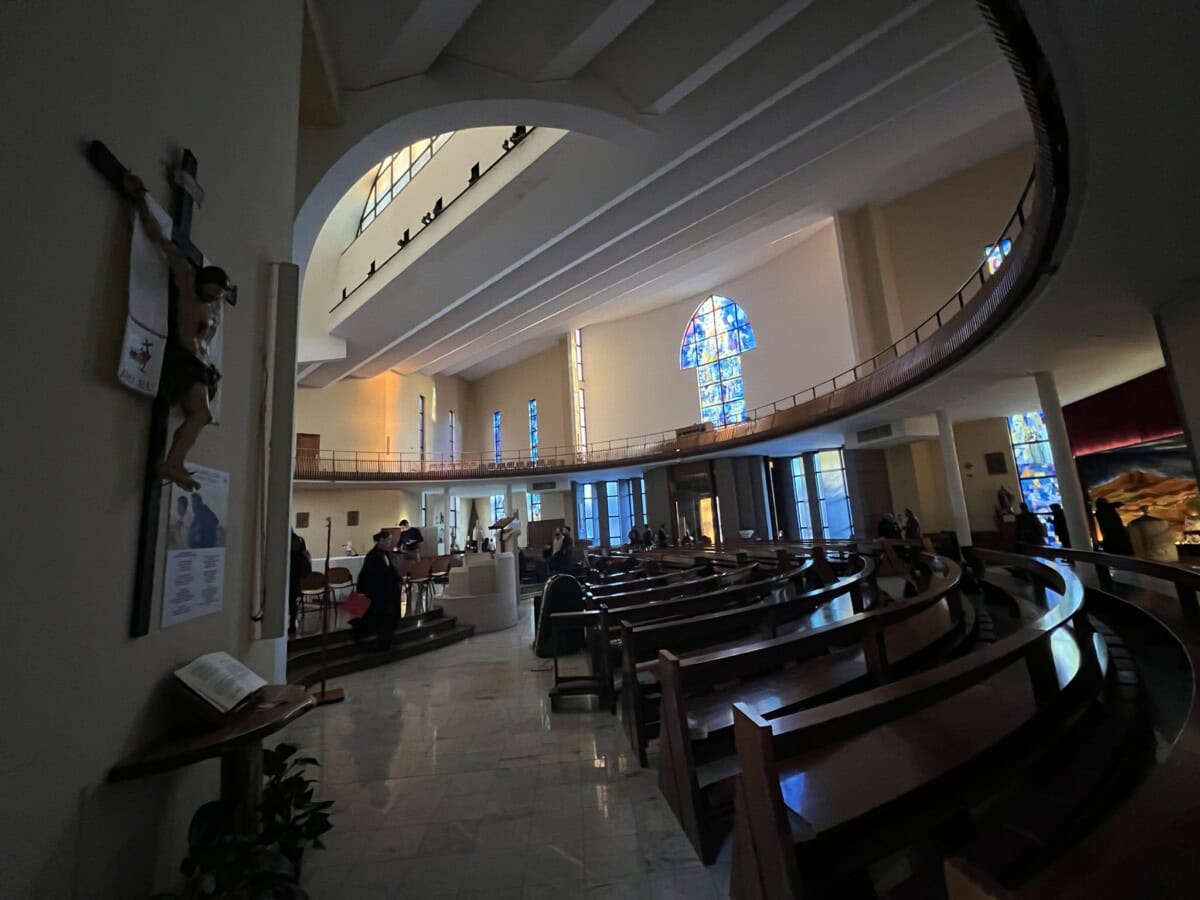
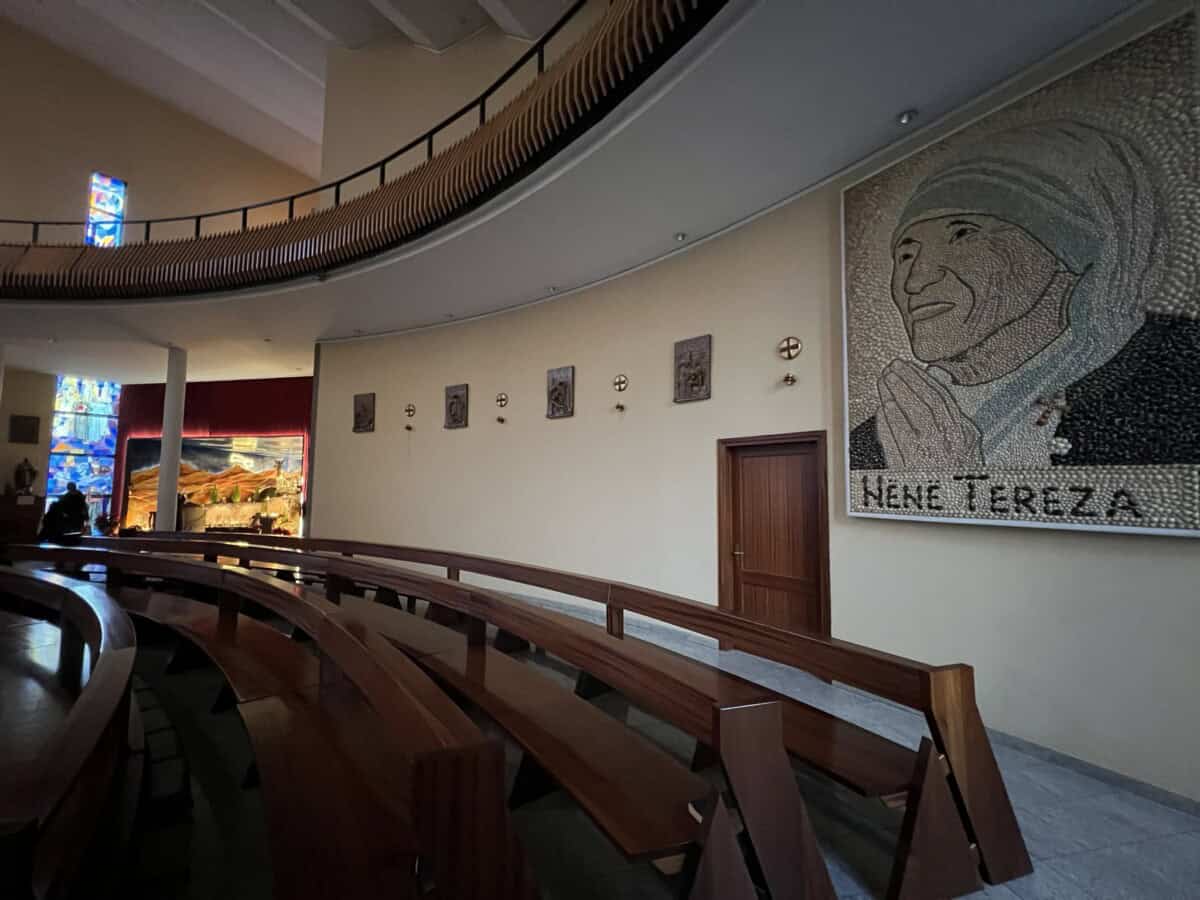
If you stand in front of the cathedral, don’t miss the remarkable stained glass windows above the entrance. Inside the church you can see another mosaic depiction of Mother Teresa and also a painting that contains portraits of Albanian Catholic priests martyred during communist rule.
Praktické
Mapa





Market Pazari i Ri
Více o bazaru
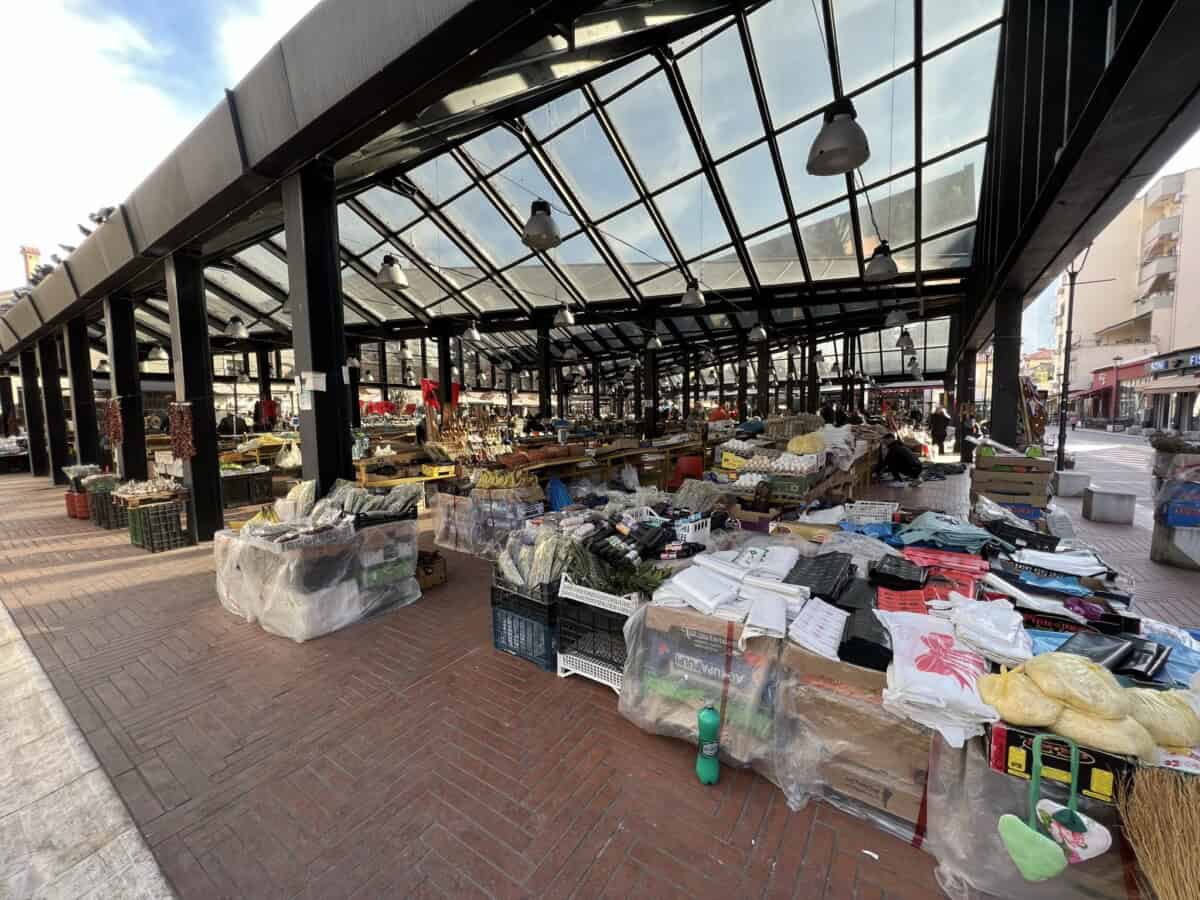
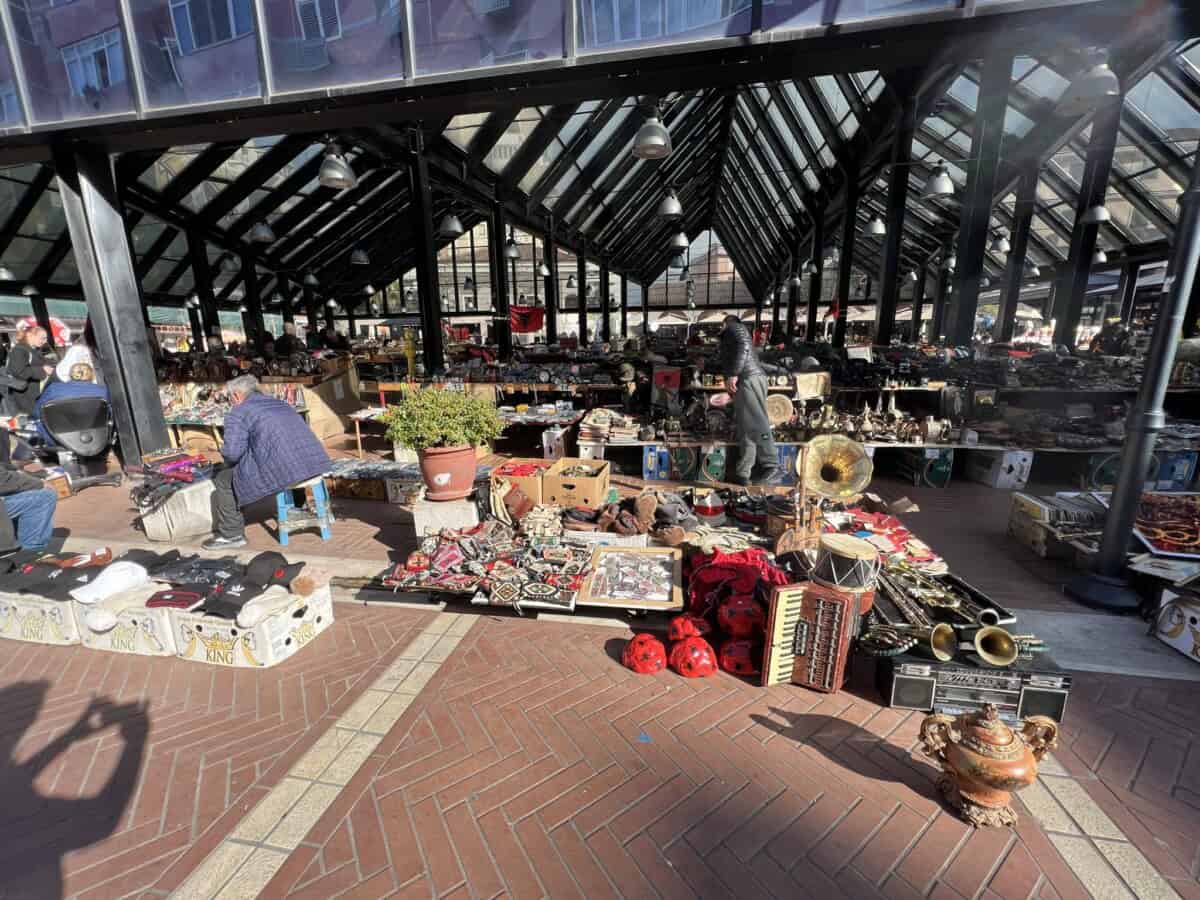
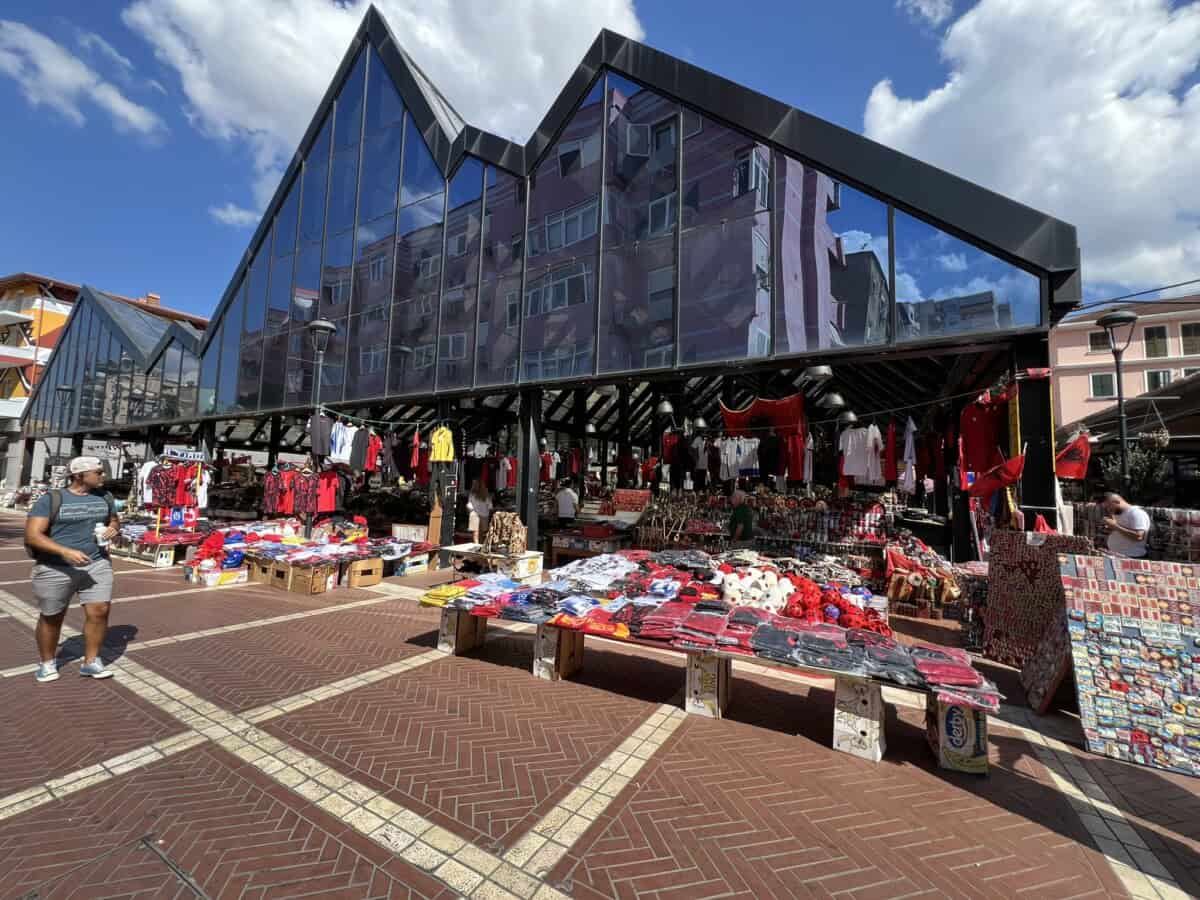
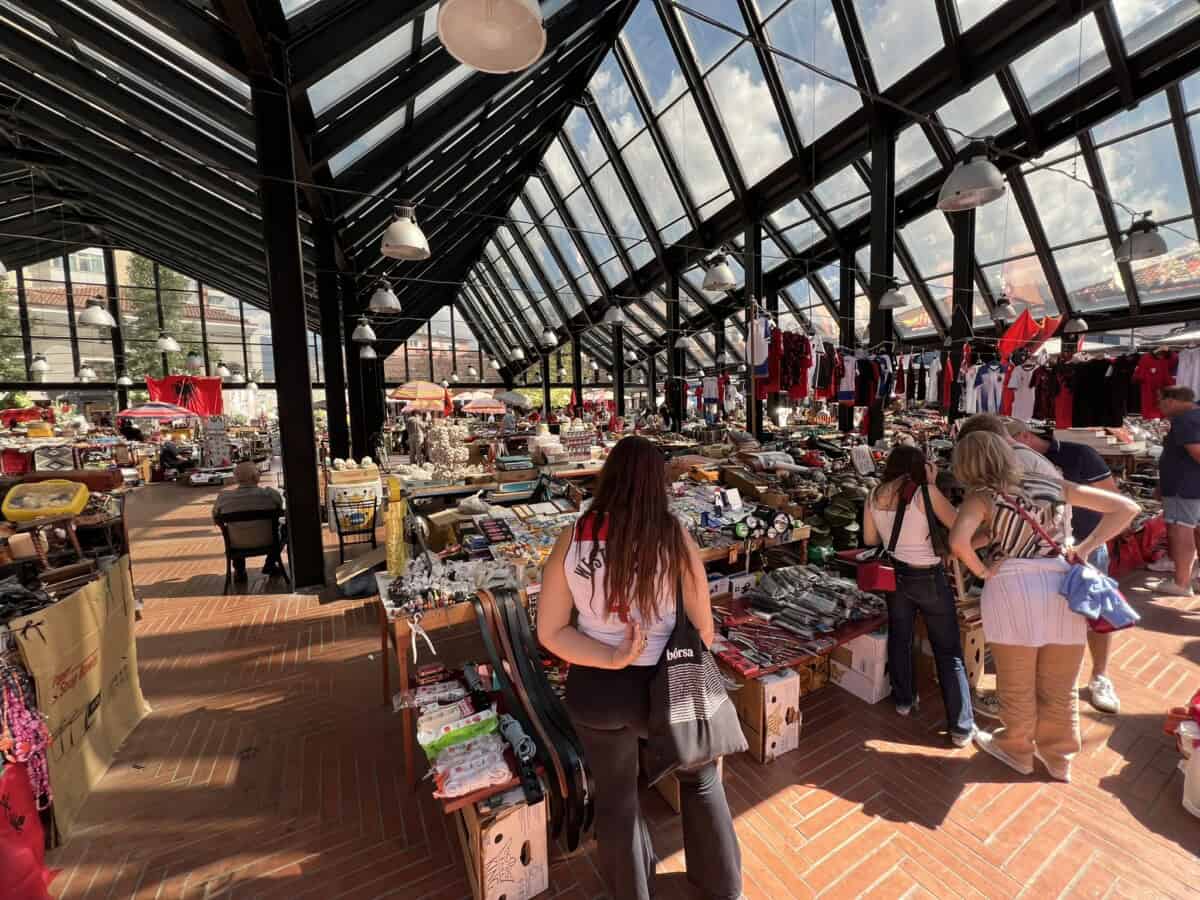
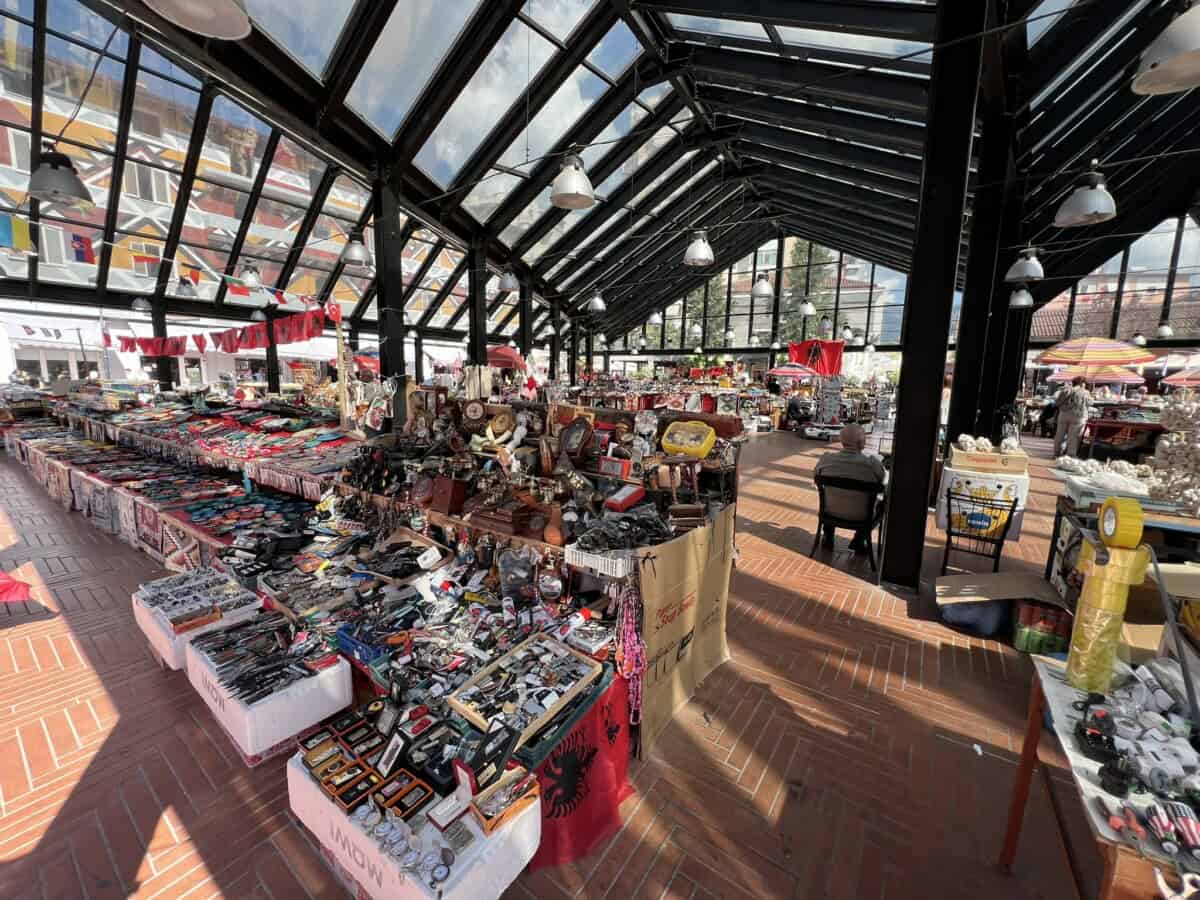
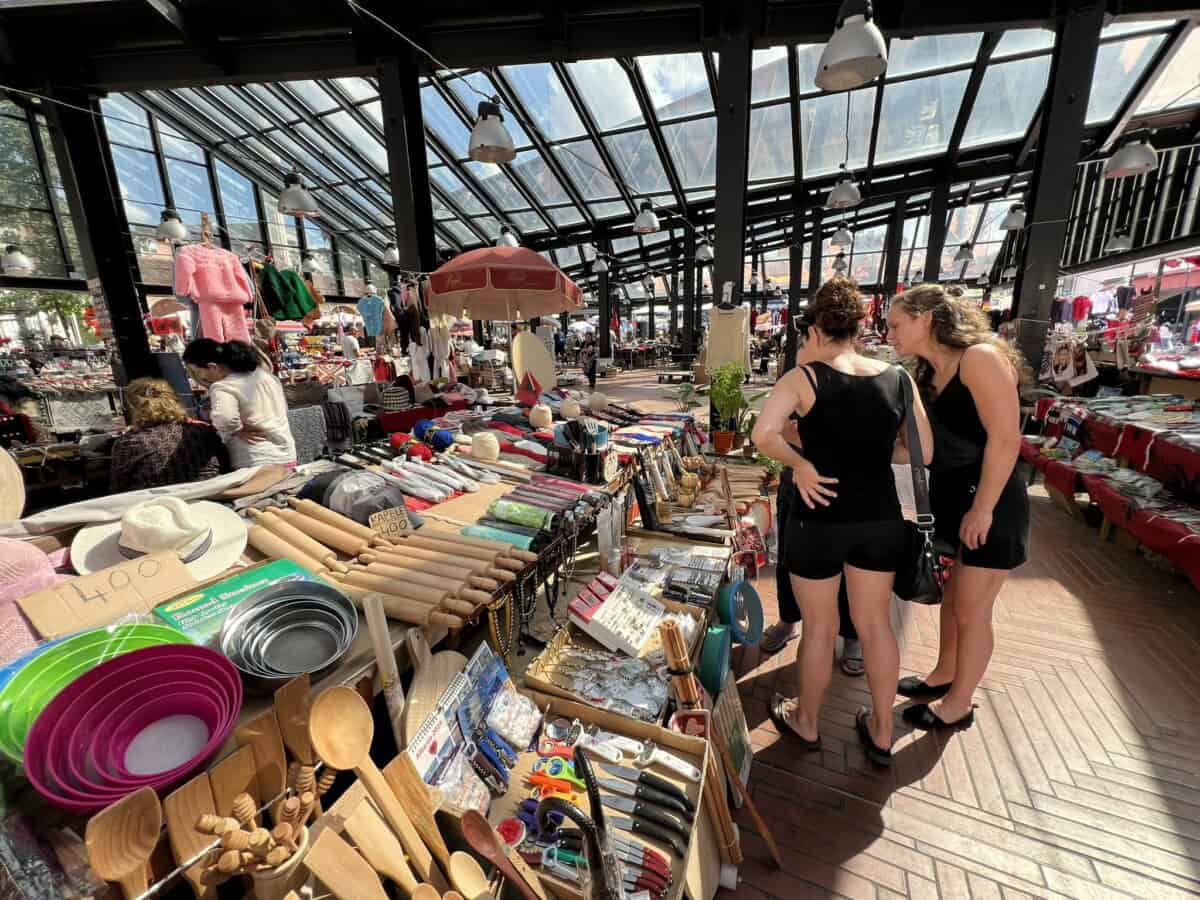
On weekends, various activities are organized here, such as craft fairs, concerts and theater for children. The first covered market was built on this site in 1931. Its predecessor was the uncovered Old Market. In 2017, the market from 1931 was reconstructed and renovated.
Praktické
If you drive to the center by car, we recommend the underground parking lot under the shopping center Toptani. Another option is underground parking HERE in the immediate vicinity of the main square and all important tourist spots or HERE at the Turkish mosque. Around the market you will find plenty of restaurants offering regional cuisine.
Mapa
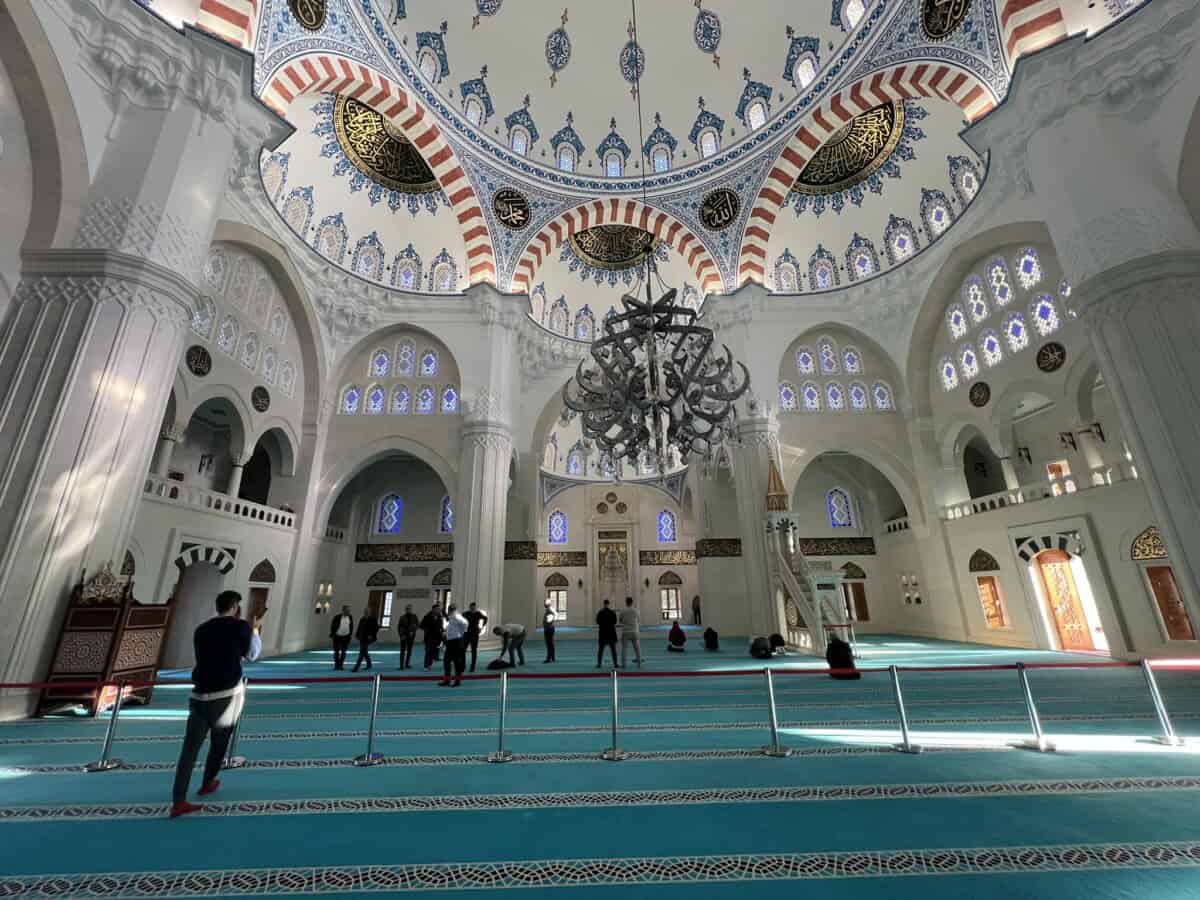
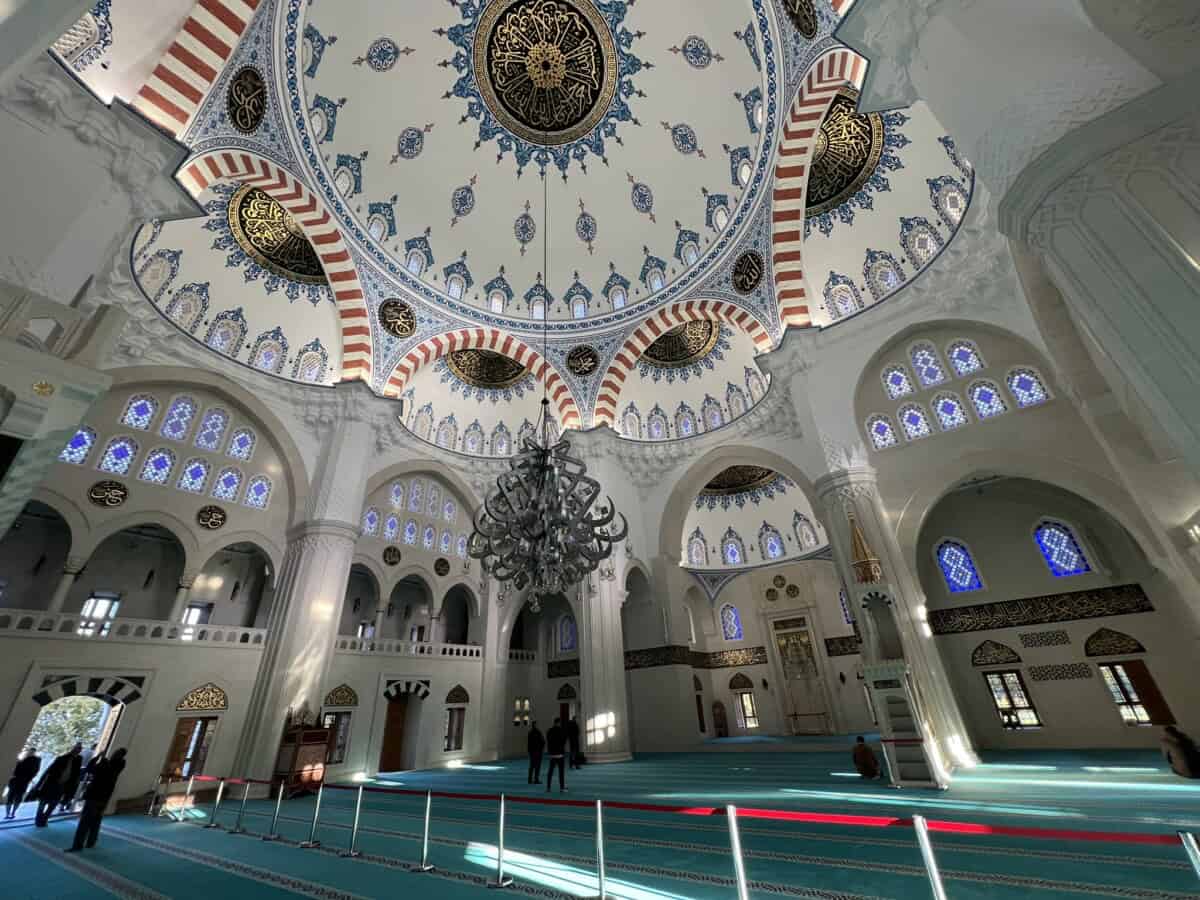
Mosque Namazgah
Více o mešitě
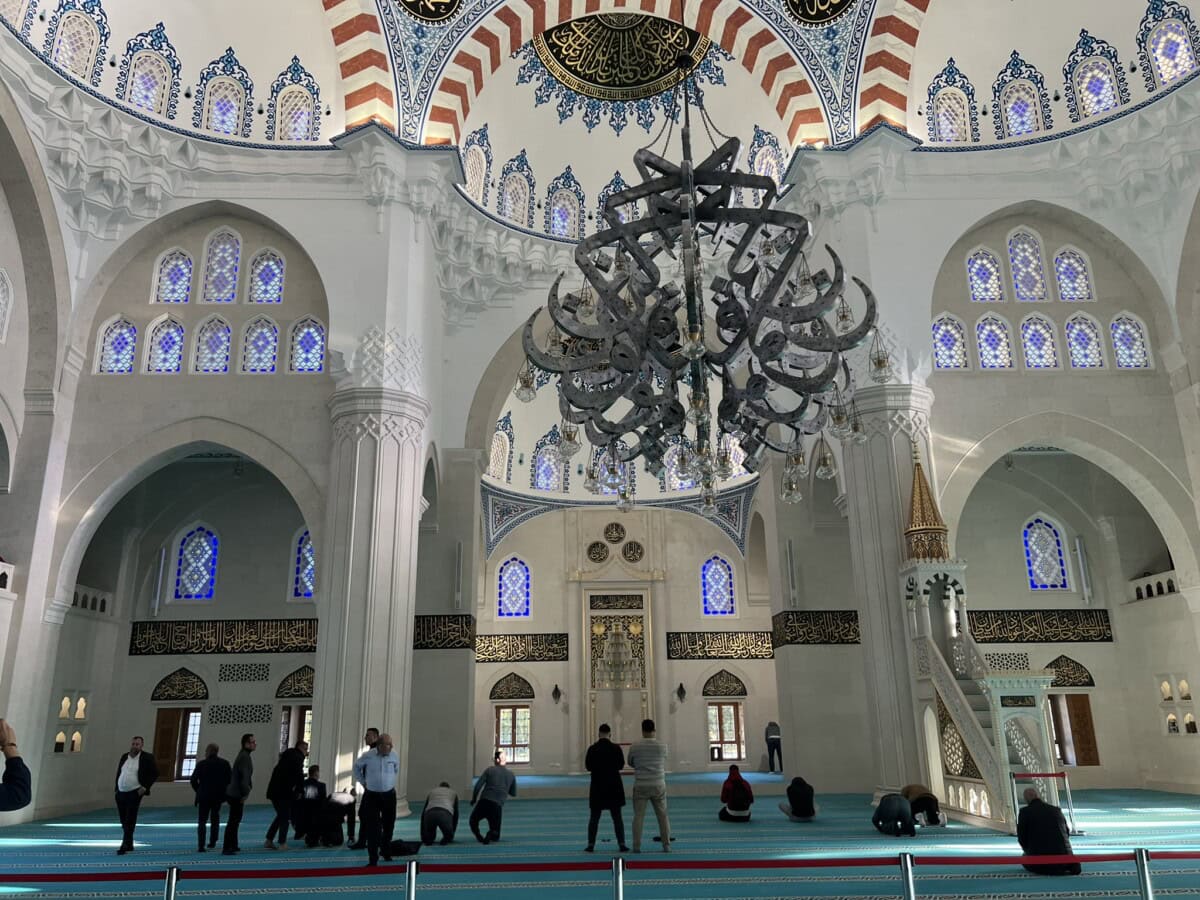
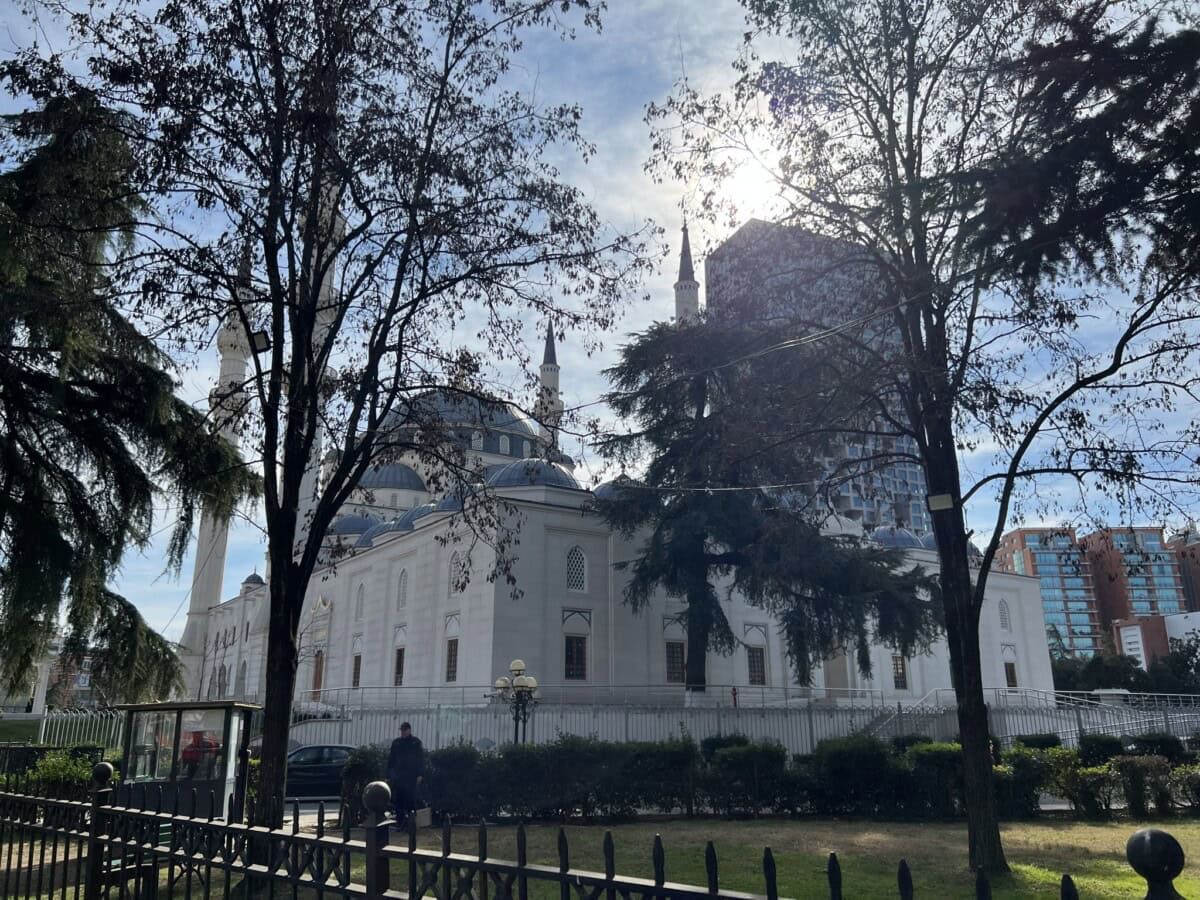
Since 1920, when Tirana became the capital of Albania, there have been plans to build a central mosque for the Muslim majority of Tirana and all of Albania. After gaining independence from the Ottoman Empire in 1912, the majority of the population living in the country was, logically, Muslim. However, no construction took place before the advent of communism. During communism, Albania was declared the “first atheist state in the world” and thoughts of building any shrine were out of the question; on the contrary, most of them were destroyed. Therefore, the realization of the great mosque had to wait another few decades.
The cornerstone with inscriptions in Albanian and Arabic was only laid in 1992. However, construction was then prevented by one of the Catholic deputies. The construction of the Orthodox cathedral was preferred, even though the citizens of Tirana still predominantly professed Islam. The decision to build the mosque was made in 2010 and the foundations of the new mosque were finally, with Turkish support, laid on the site of the cornerstone in 2015.
The mosque was officially opened on October 10, 2024 at a solemn ceremony, at which Turkish President Recep Tayyip Erdoğan and current Albanian Prime Minister Edi Rama delivered speeches.
Praktické
Although the mosque is located directly in the busy city center, it offers a calm meditative atmosphere. You must not miss its visit. You do not need to be a Muslim to visit the mosque. Tourists are welcome and entry is free. Dress decently and keep your shoulders and knees covered. Scarves are available for loan at the entrance if needed. Remove your shoes before entering the prayer hall.
If you want to take photographs, avoid visiting during prayers. During rituals and otherwise, be respectful to believers and religious customs, but enjoy the sense of freedom and unrestrainedness that mosques generally offer.
If you drive to the center by car, we recommend underground parking right next to the mosque HERE or under the shopping center Toptani. Another option is underground parking HERE in the immediate vicinity of the main square and all important tourist points.
Mapa









Lake Park in Tirana
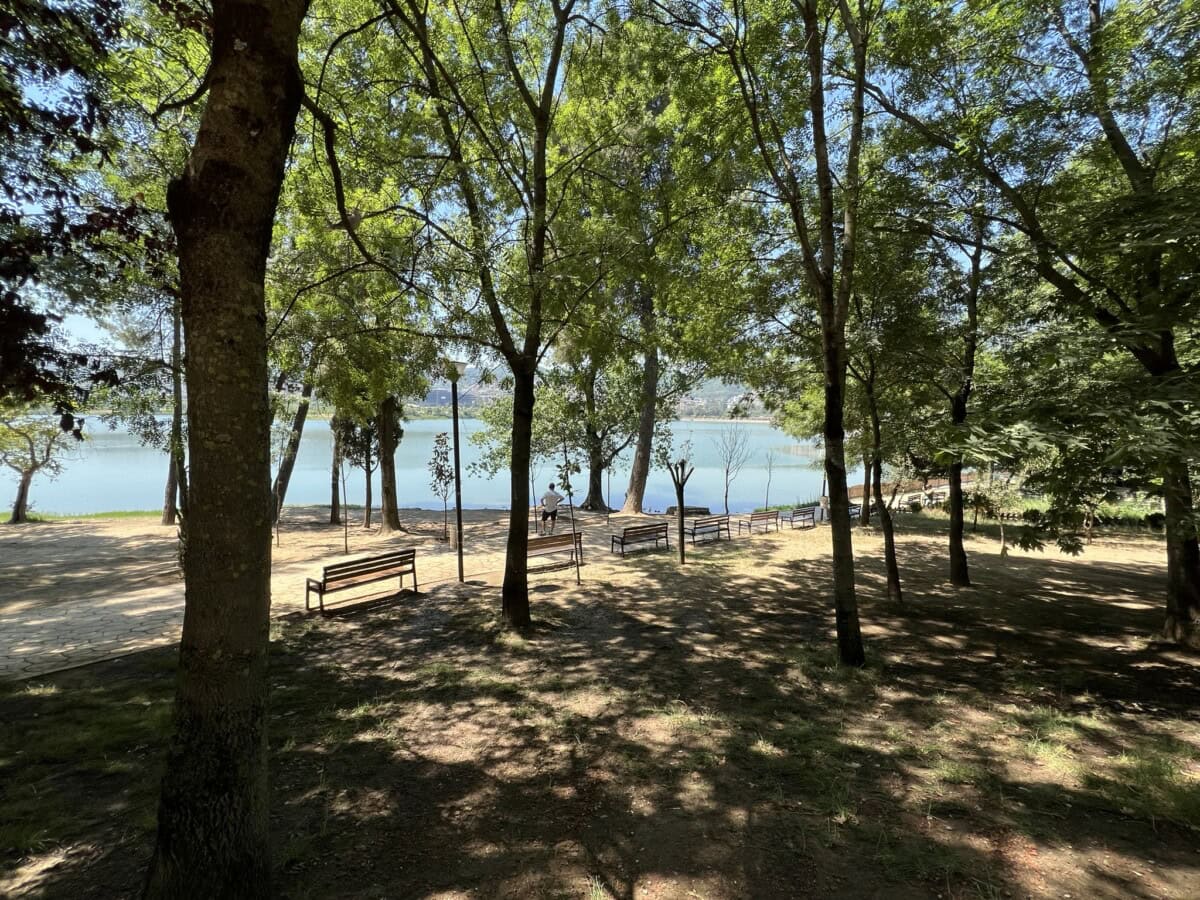
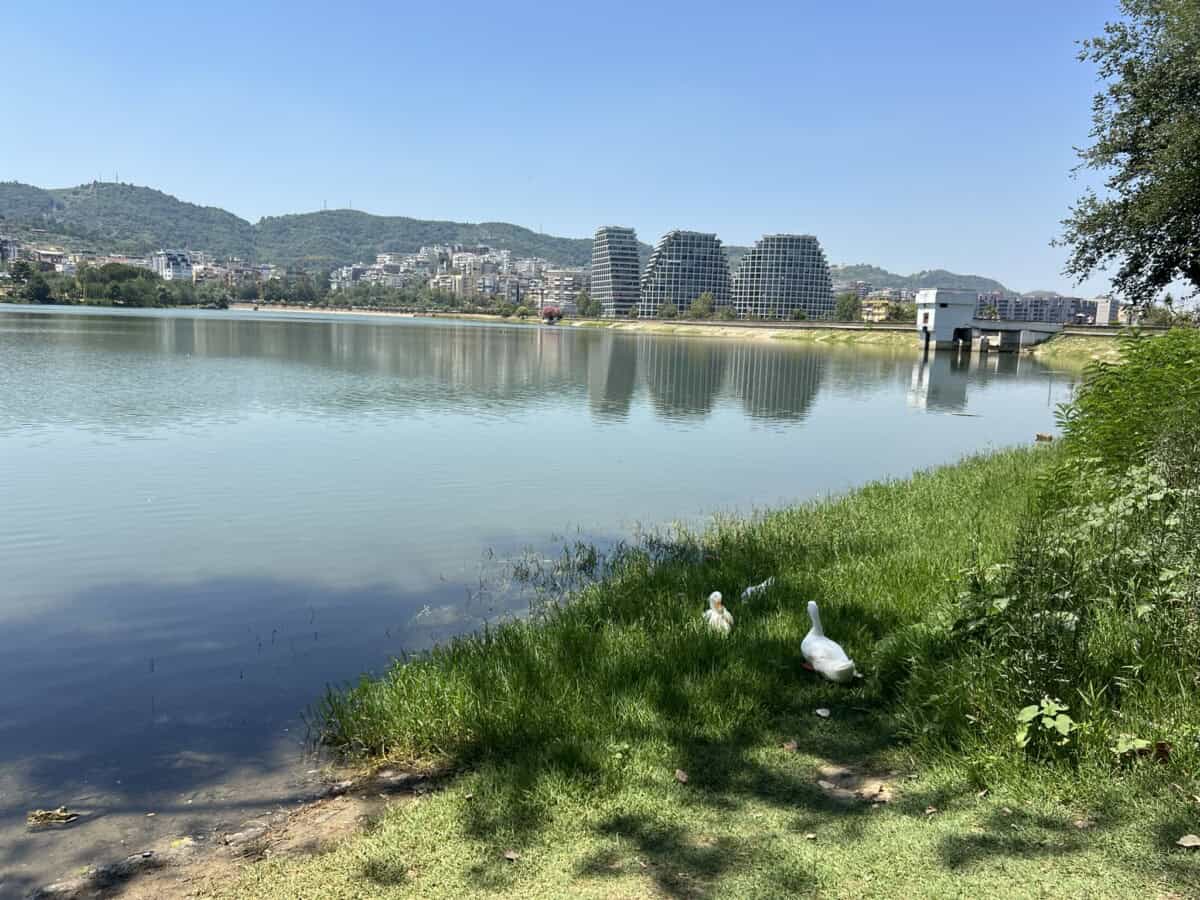
Park i Liqenit të Tiranës (Lake Park in Tirana) is one of the largest and most popular green islands of peace in the capital city of Albania. The extensive park in the south of Tirana was created in the 1950s on a site where, just a short time before, sheep and goats belonging to Vlach families from the surrounding area grazed. The key element of the entire complex is an artificial lake, whose dam approximately 400 meters long was completed in 1955.
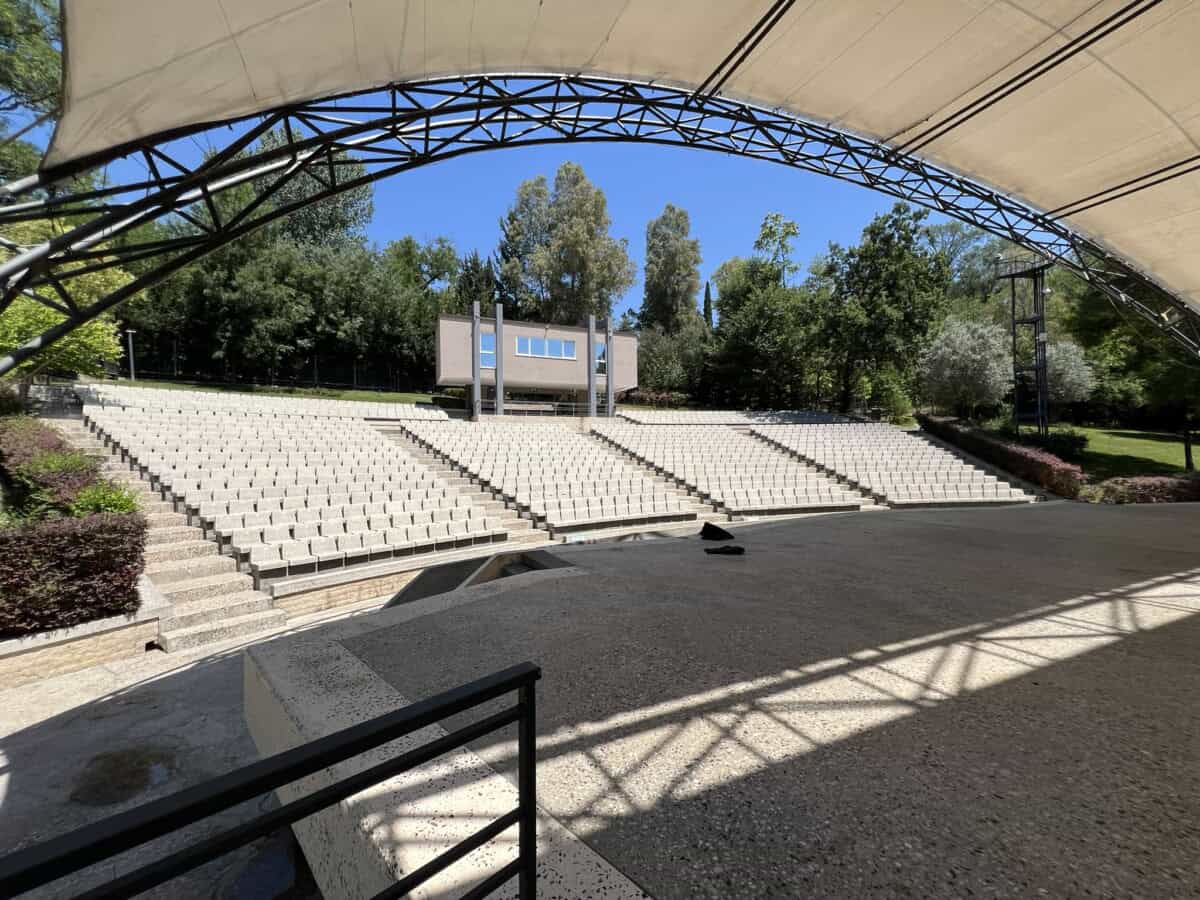
Two years later, in 1957, architect Valentina Pistoli came up with a comprehensive vision for the entire lake park including artistic elements and sculptural decoration. The project was then taken over in 1961 and further developed by a group of Bulgarian engineers who contributed to its final form. In 1974, a large swimming pool was built, supplemented by an amphitheater, which still serves today for hosting concerts, theatrical performances and other public events. On the western side of the dam is the only, not very extensive, Albanian zoo and also a swimming area.
Více o parku
Inside the park we find several significant monuments. The most remarkable is a monument dedicated to 45 British soldiers who fell on Albanian soil during World War II. Further, we can find symbolic graves of three Frashëri brothers – key figures of the Albanian national renaissance of the 19th century, originating from one of the most important patriotic families of that time, as well as the grave of Faik Konitza, a prominent Albanian intellectual, writer and diplomat at the turn of the 19th and 20th centuries.
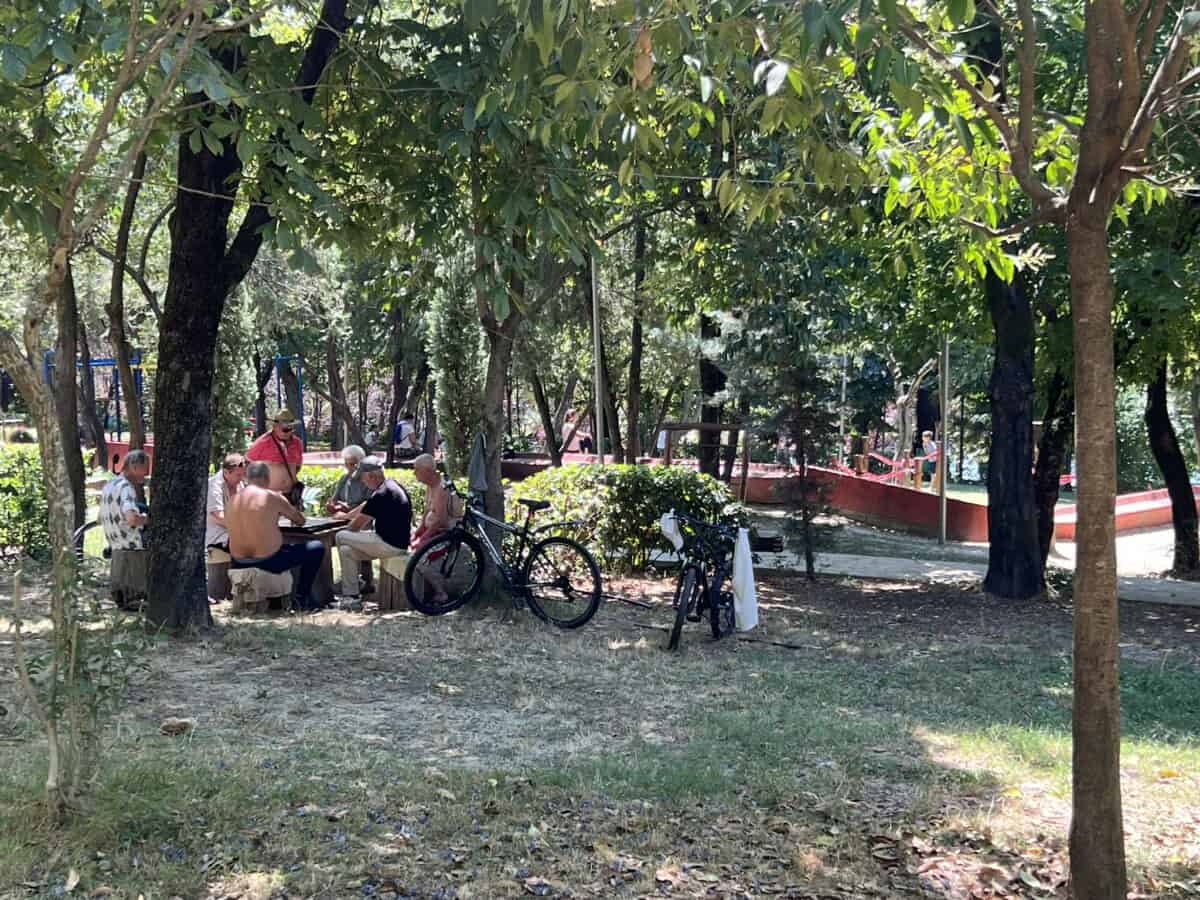
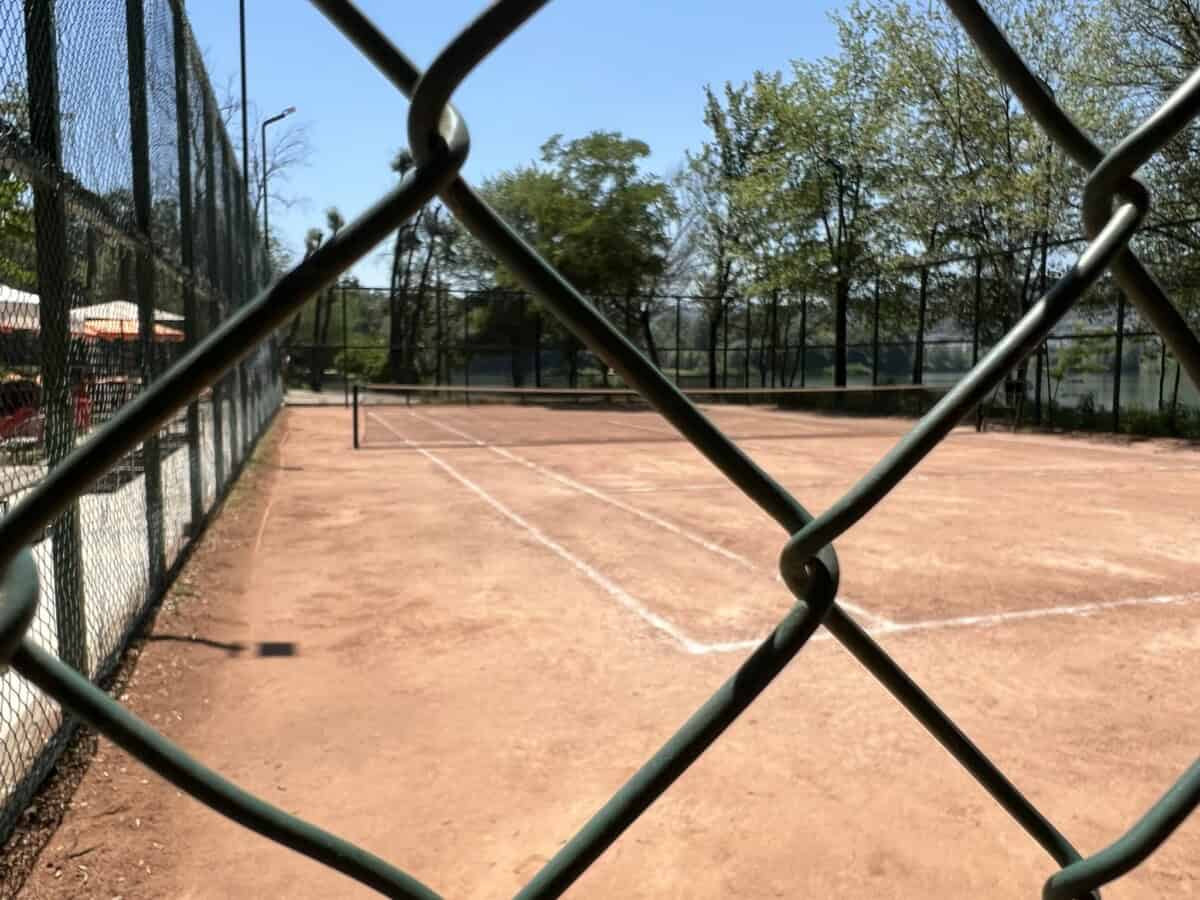
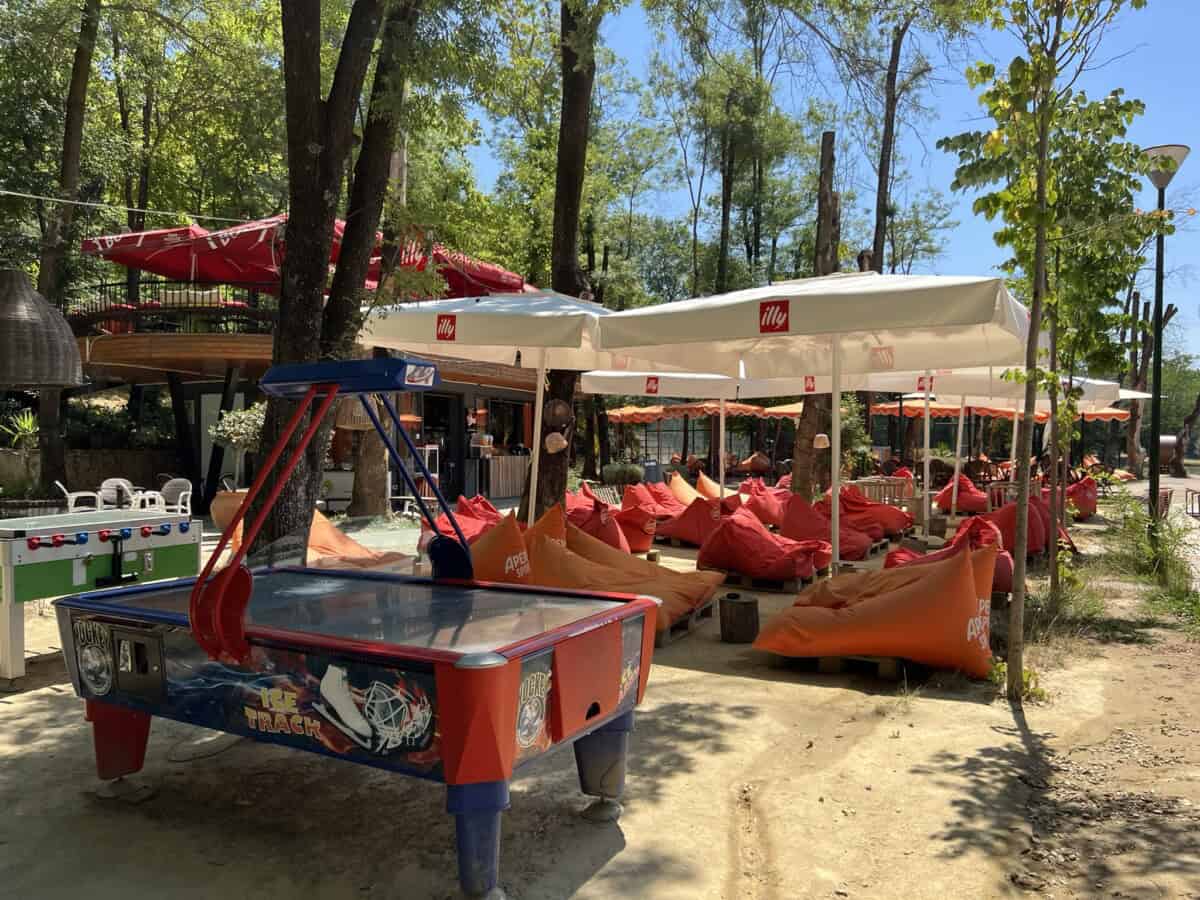
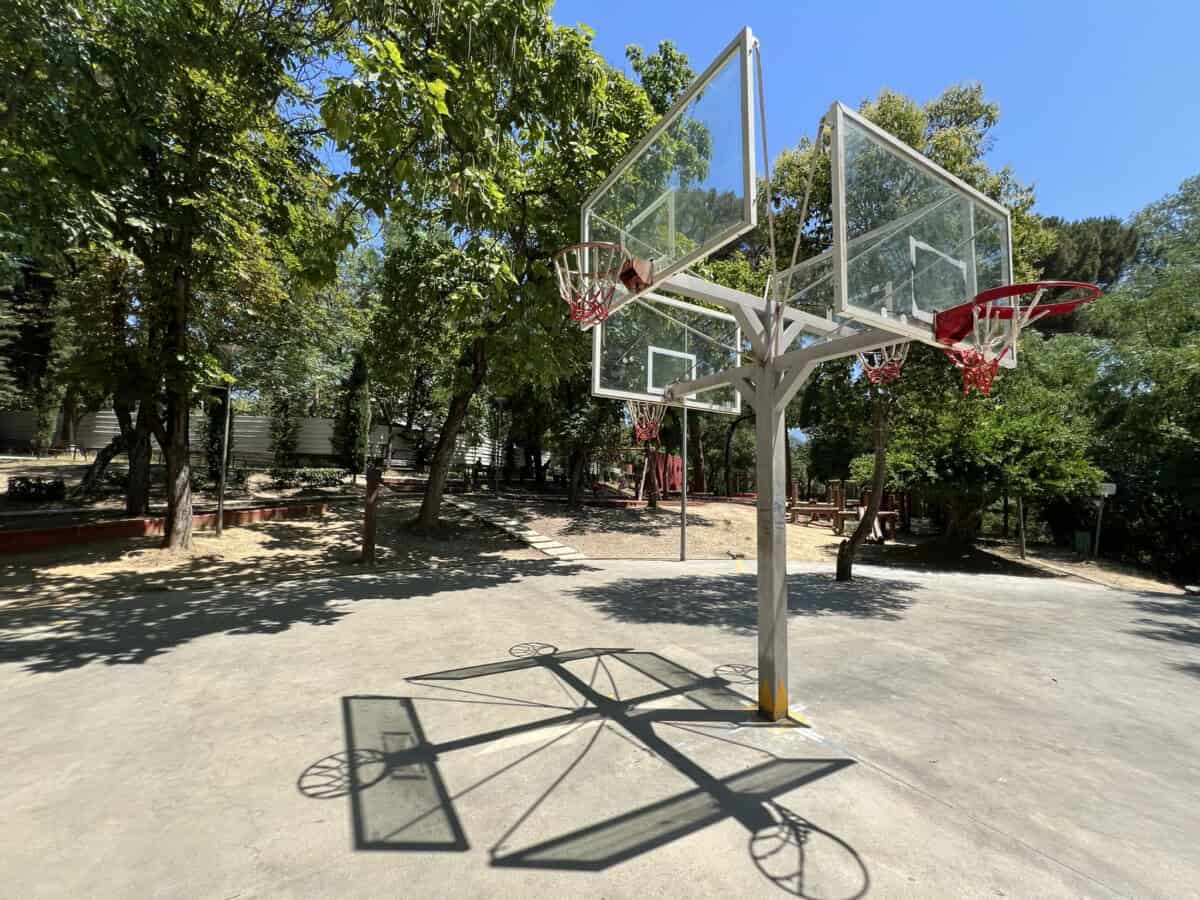
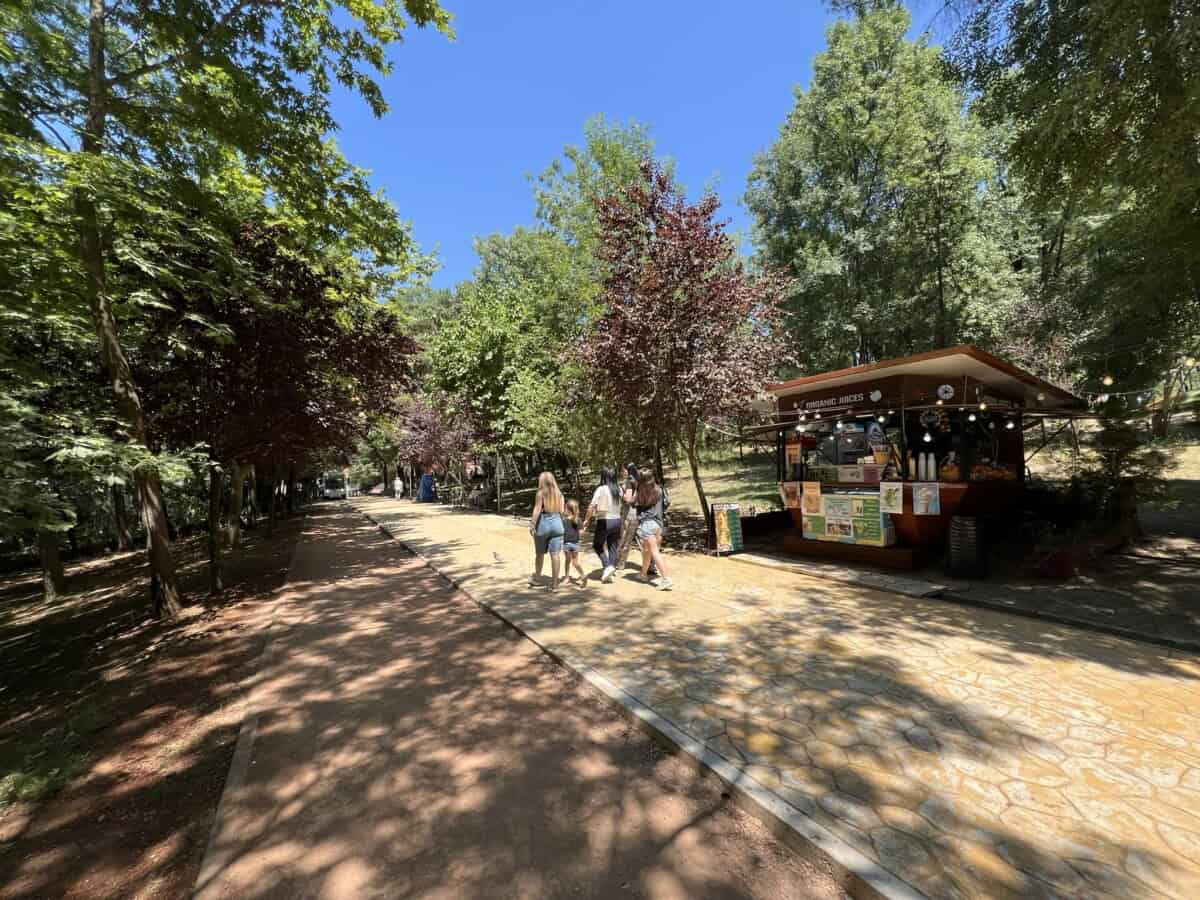
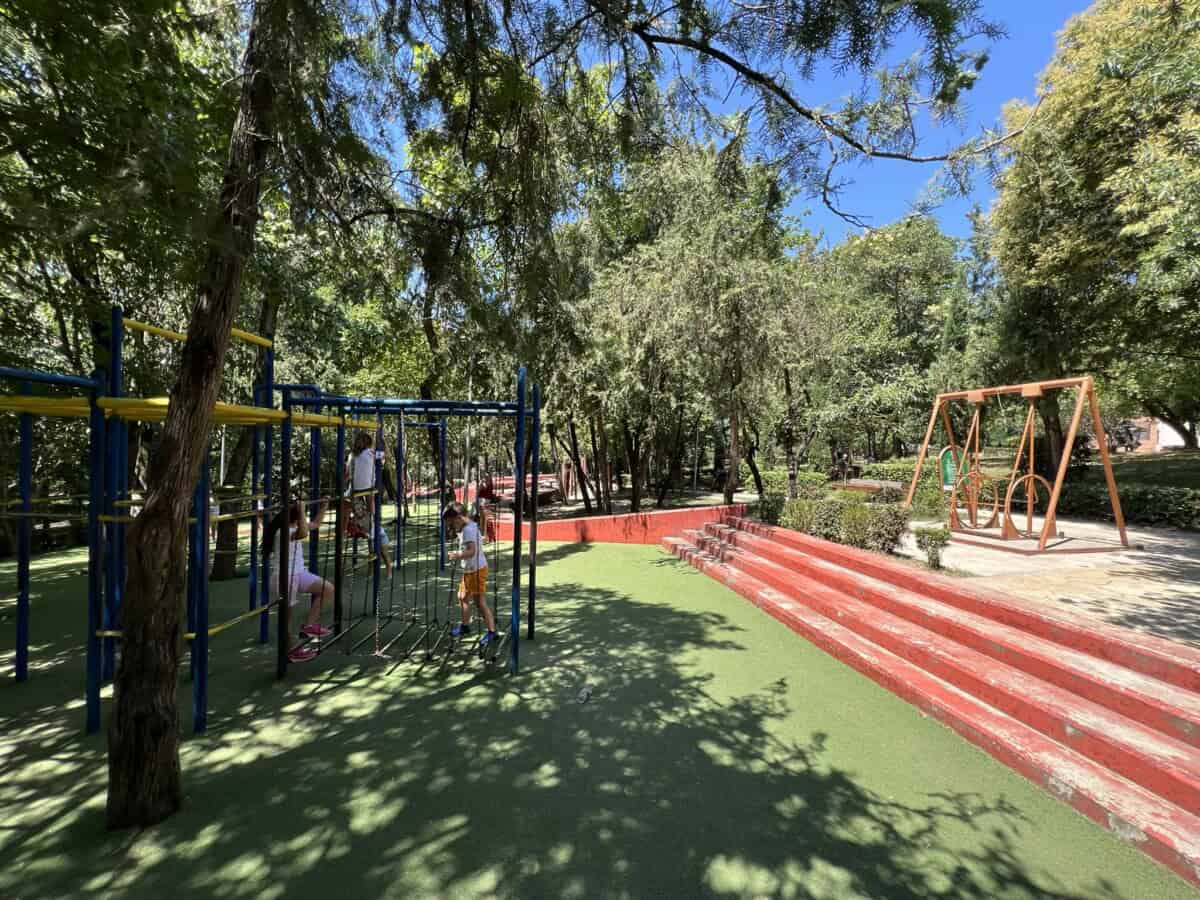
A visit to the park is worthwhile if you spend more time in Tirana and want to, for example in summer, hide in the shade of trees. The atmosphere in the park is very pleasant and if you have children, they will also find free entertainment at children’s attractions. A nearby interesting building is the national football arena. On the edge of the park you can have lunch in a restaurant with a view of the lake. Likewise, you cannot miss ice cream and sweets stands. A coffee in a cool bar is a must. Inside the park, renovation of the Orthodox Church of St. Prokop is underway, which was first opened in 1945.
Today the park is one of the most popular places for rest, walks, sports and family picnics – a place where the socialist past of Tirana intertwines with the everyday life of a modern city.
Praktické
The parking lot is located just below the lake dam HERE. However, if you want to take a walk and spend the whole day in Tirana, we recommend the underground parking under the shopping center Toptani. Another option is underground parking HERE in the immediate vicinity of the main square and all important tourist attractions.
Mapa
Hora Dajti
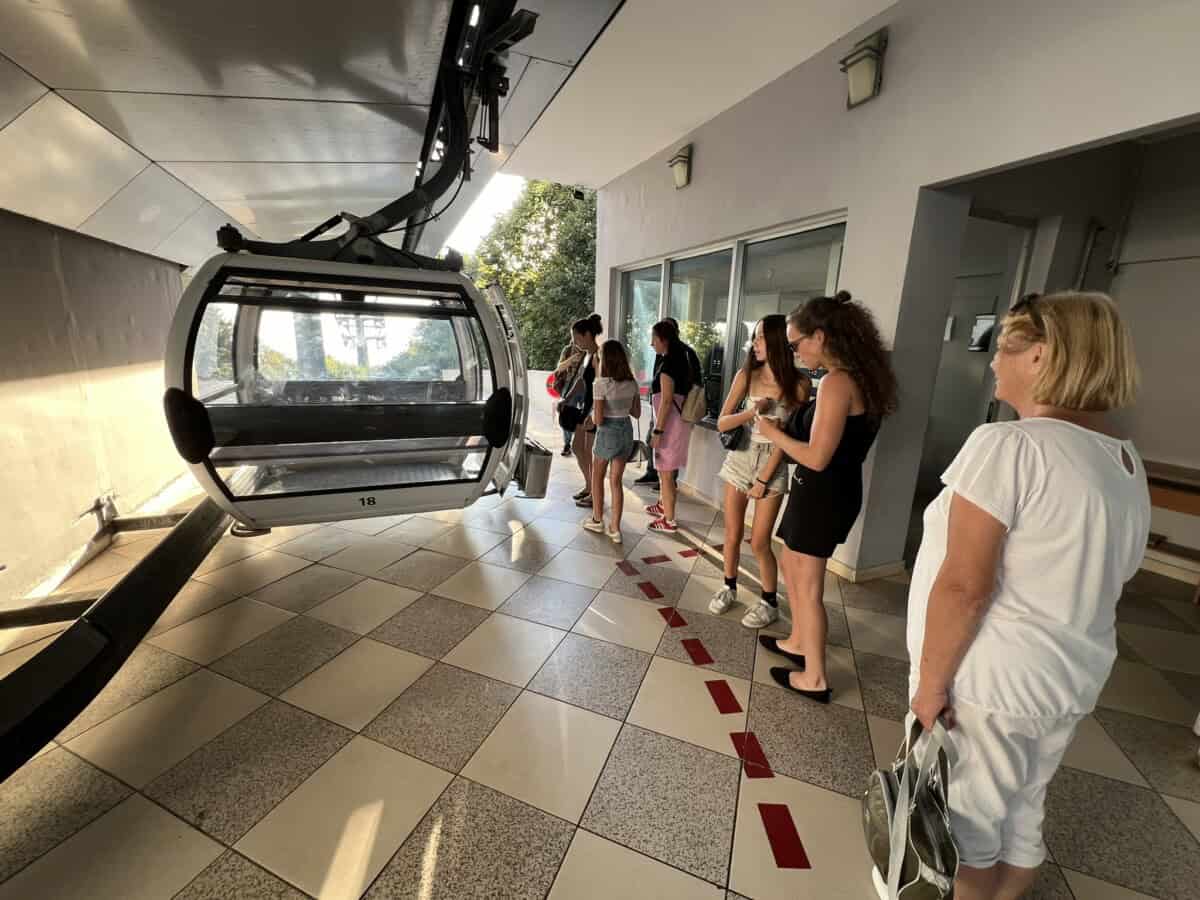
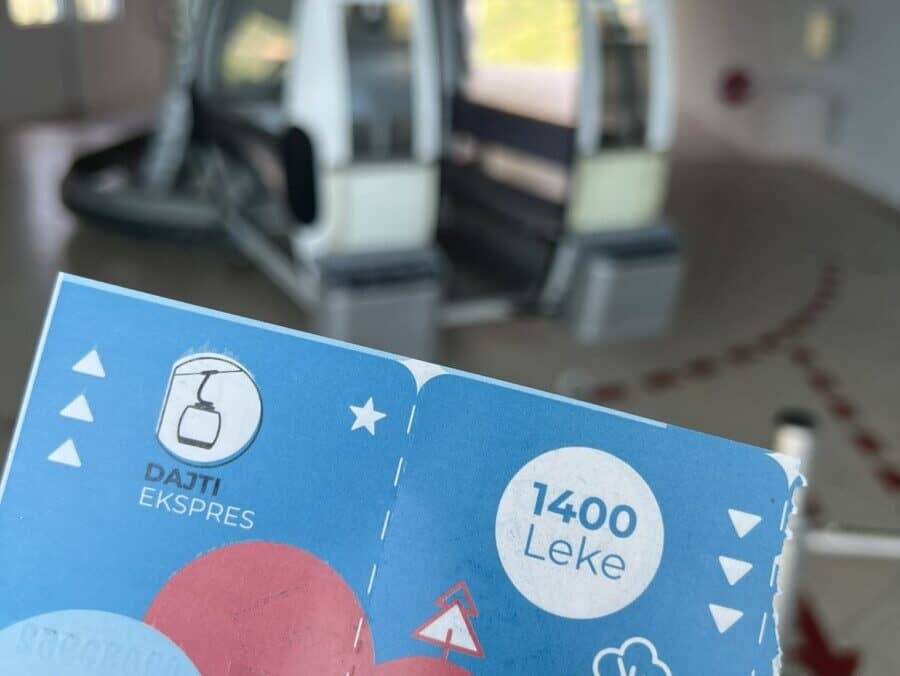
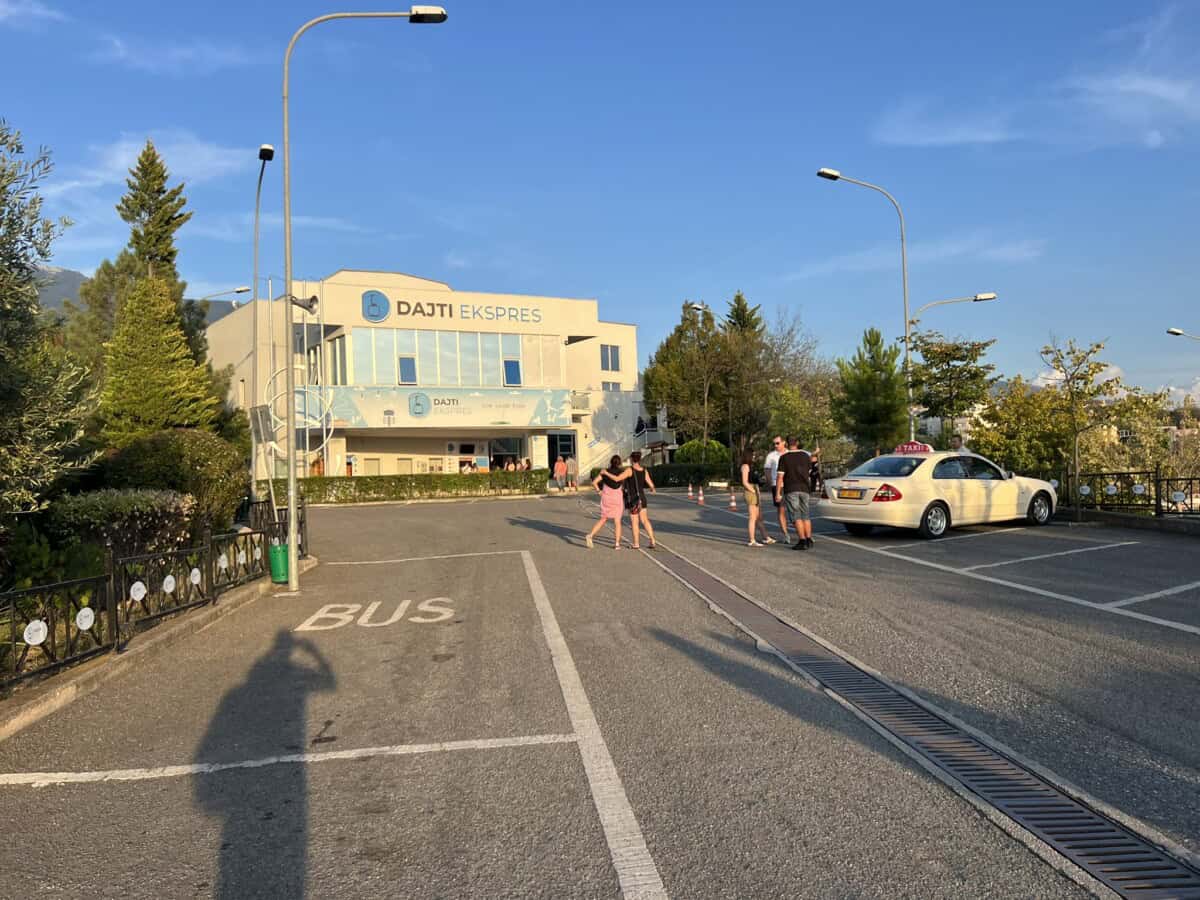
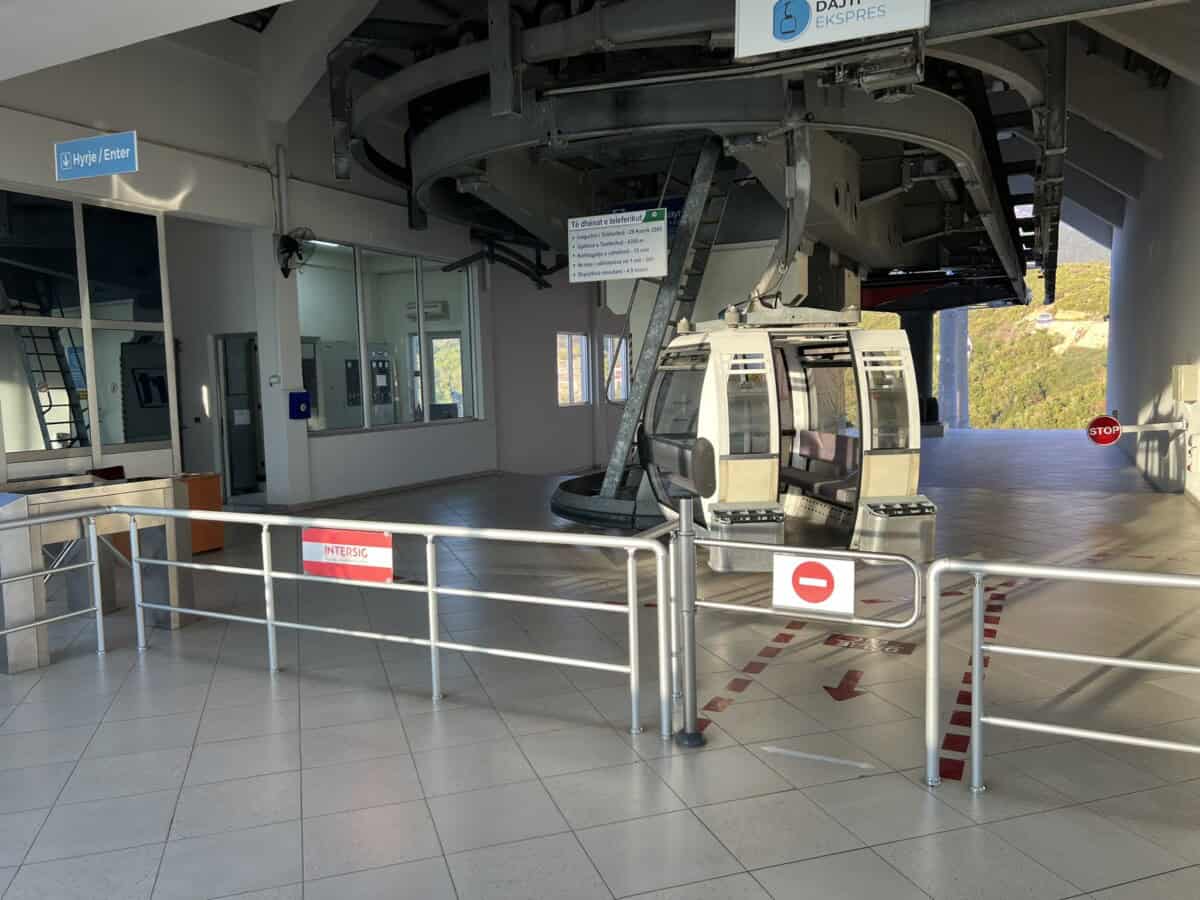
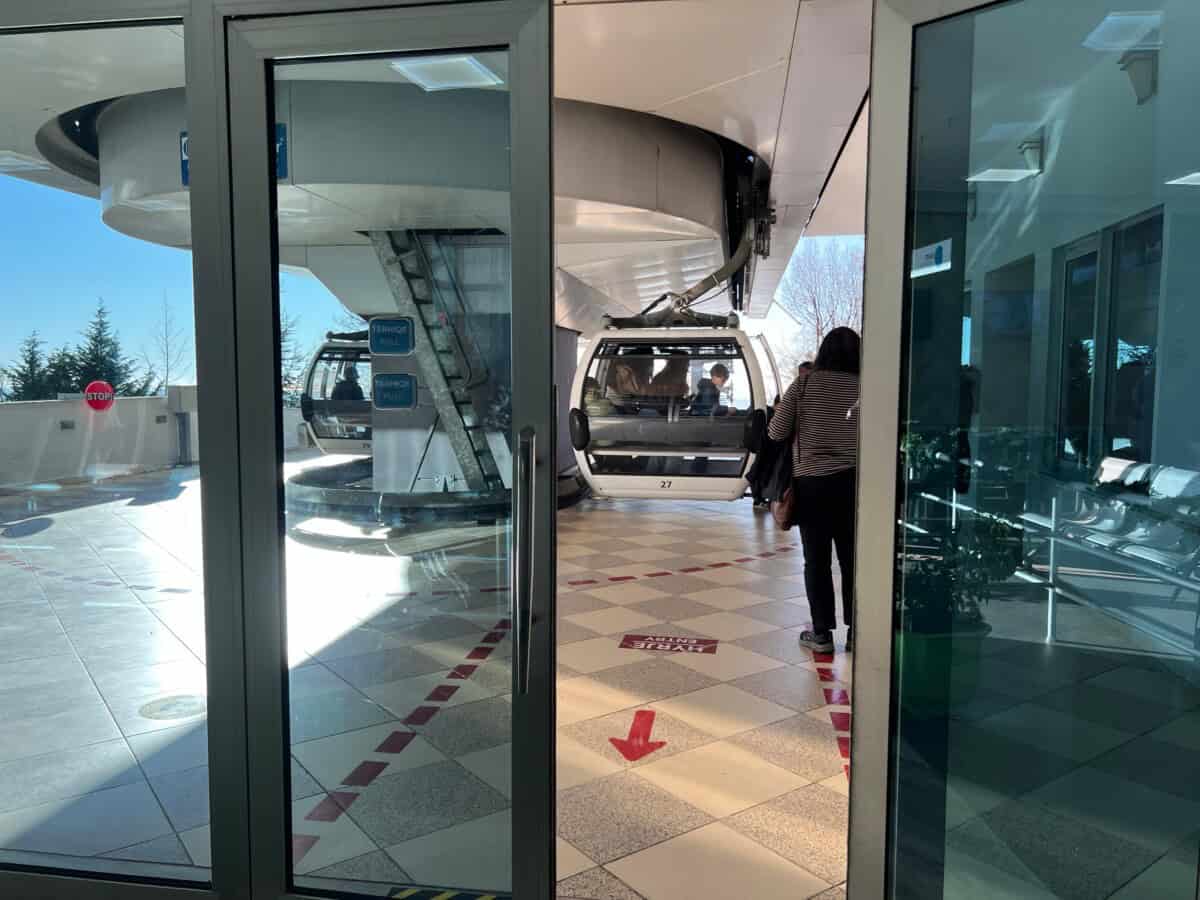
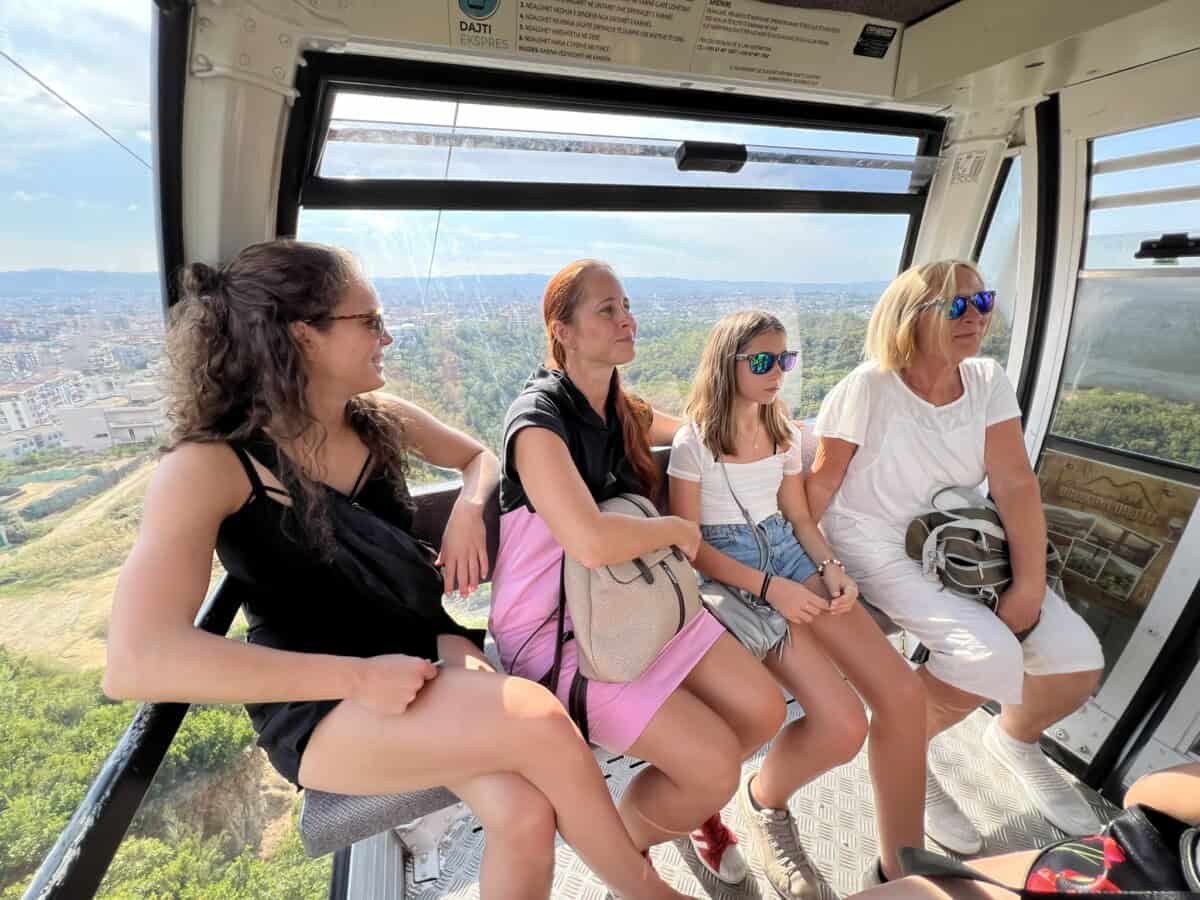
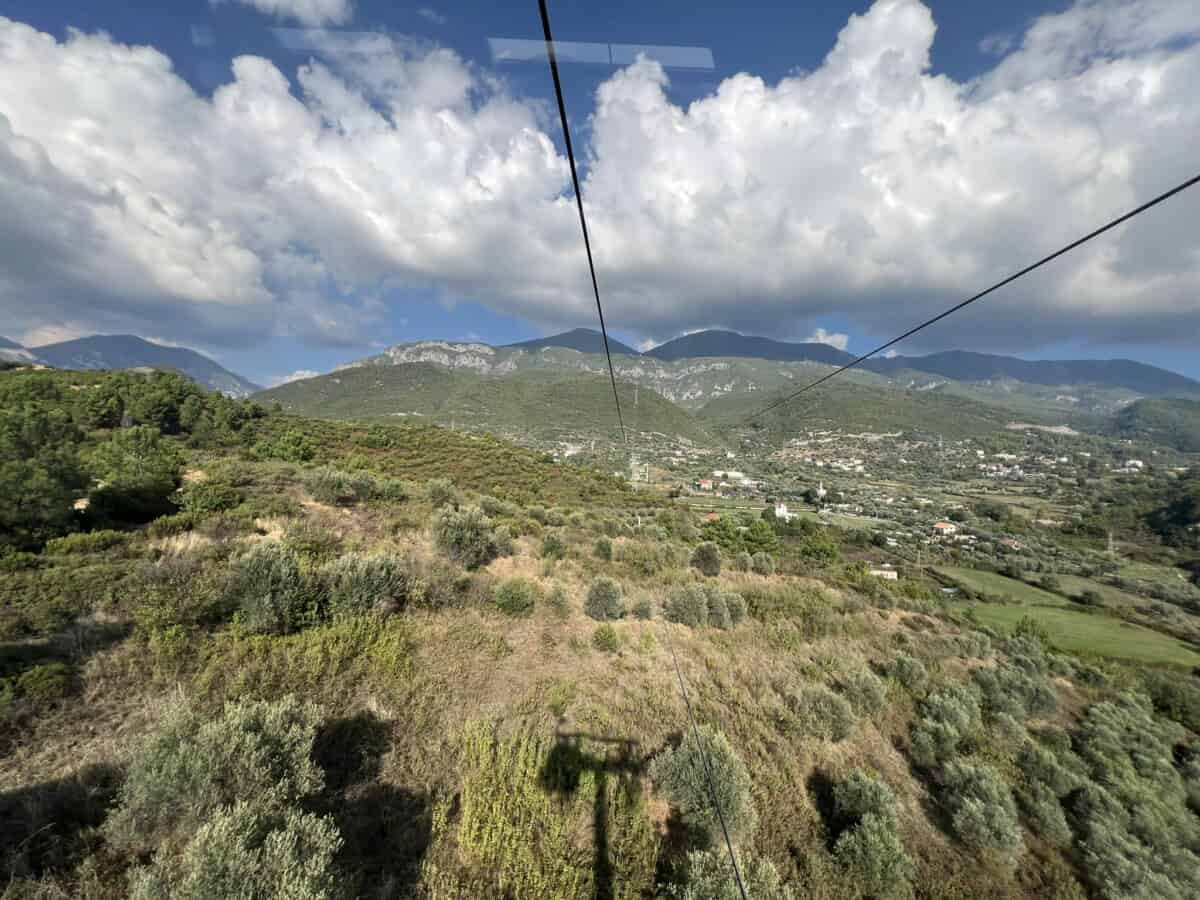
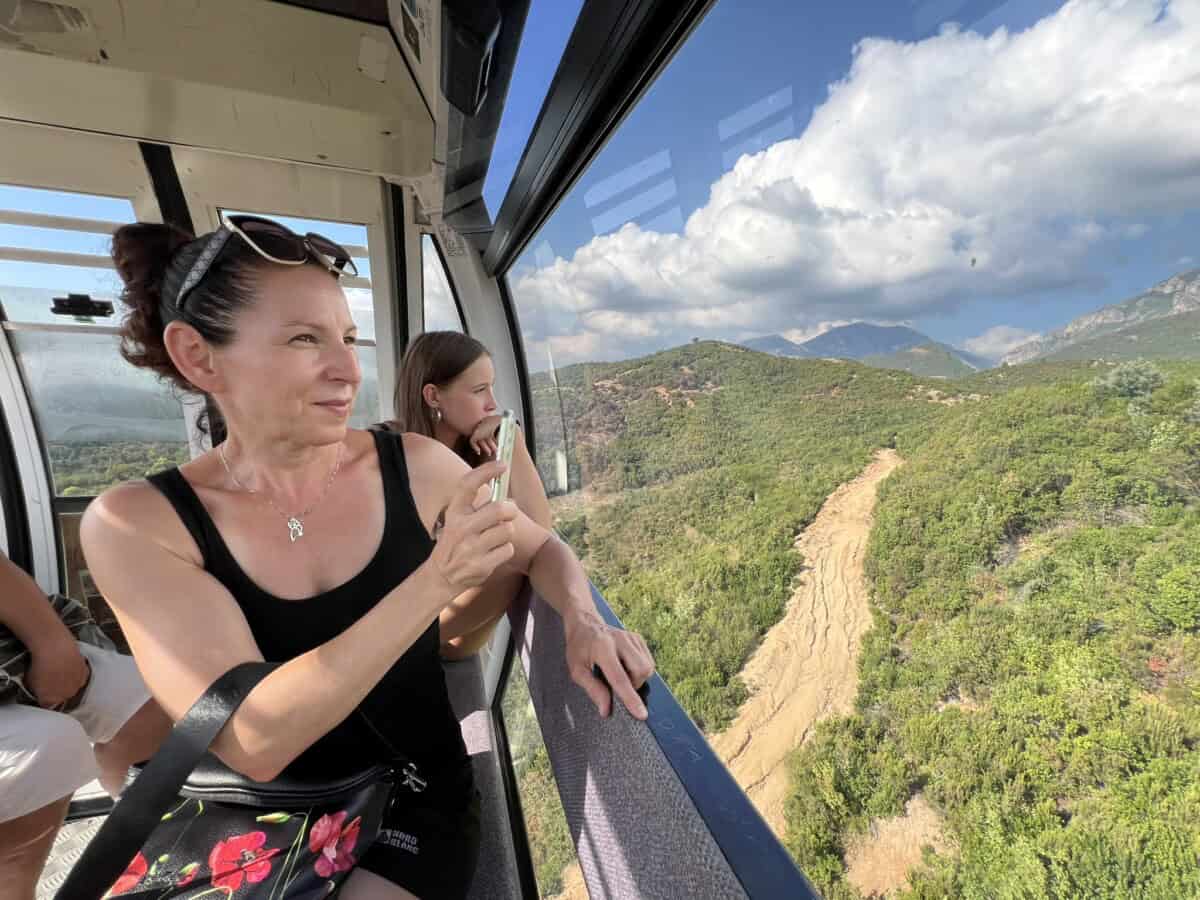
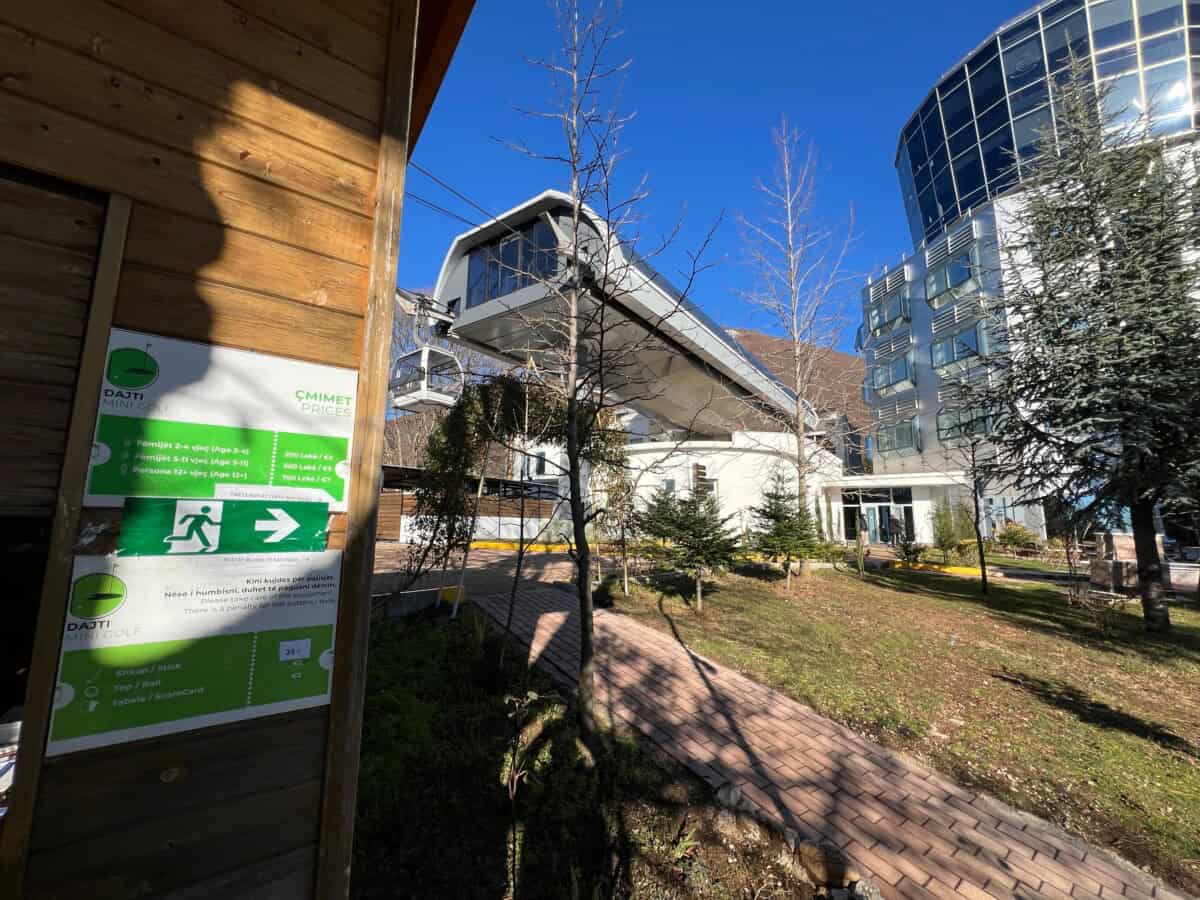
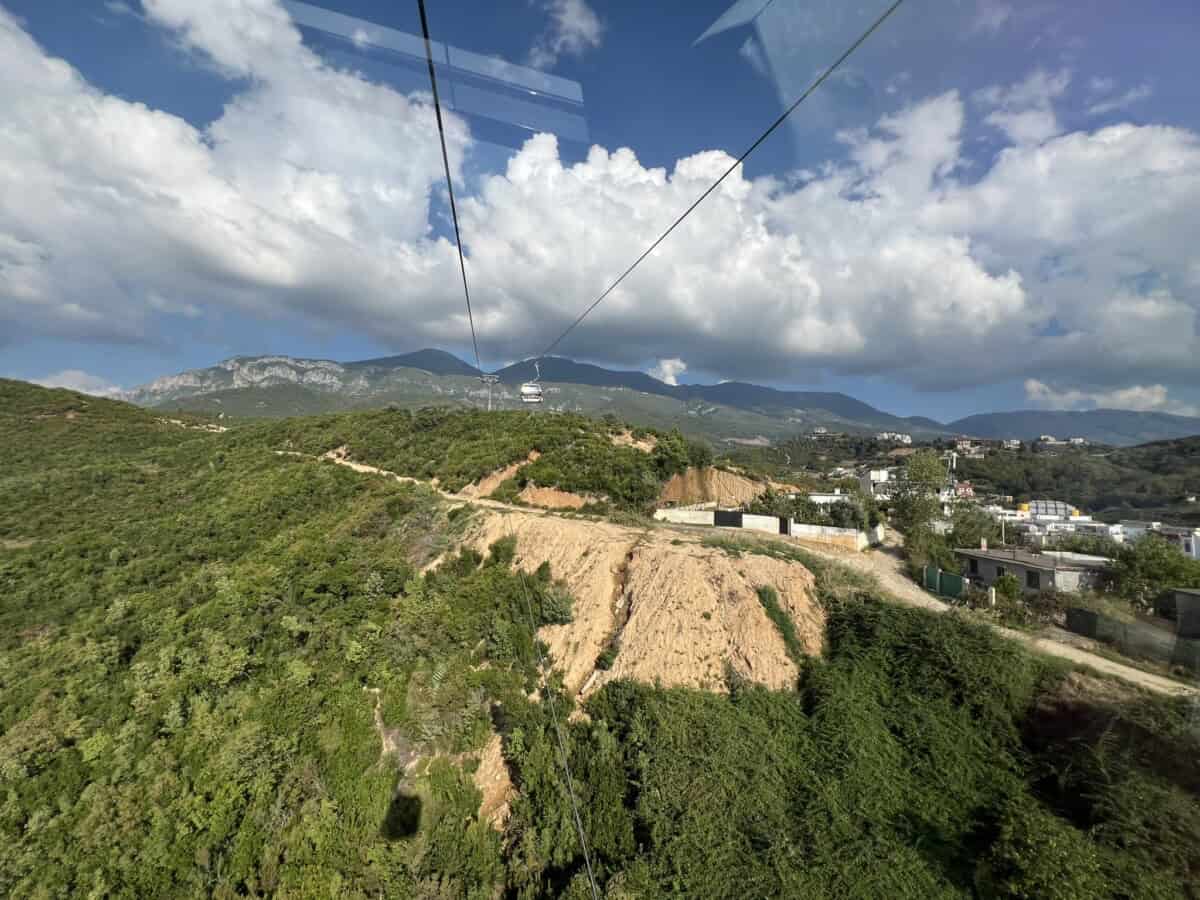
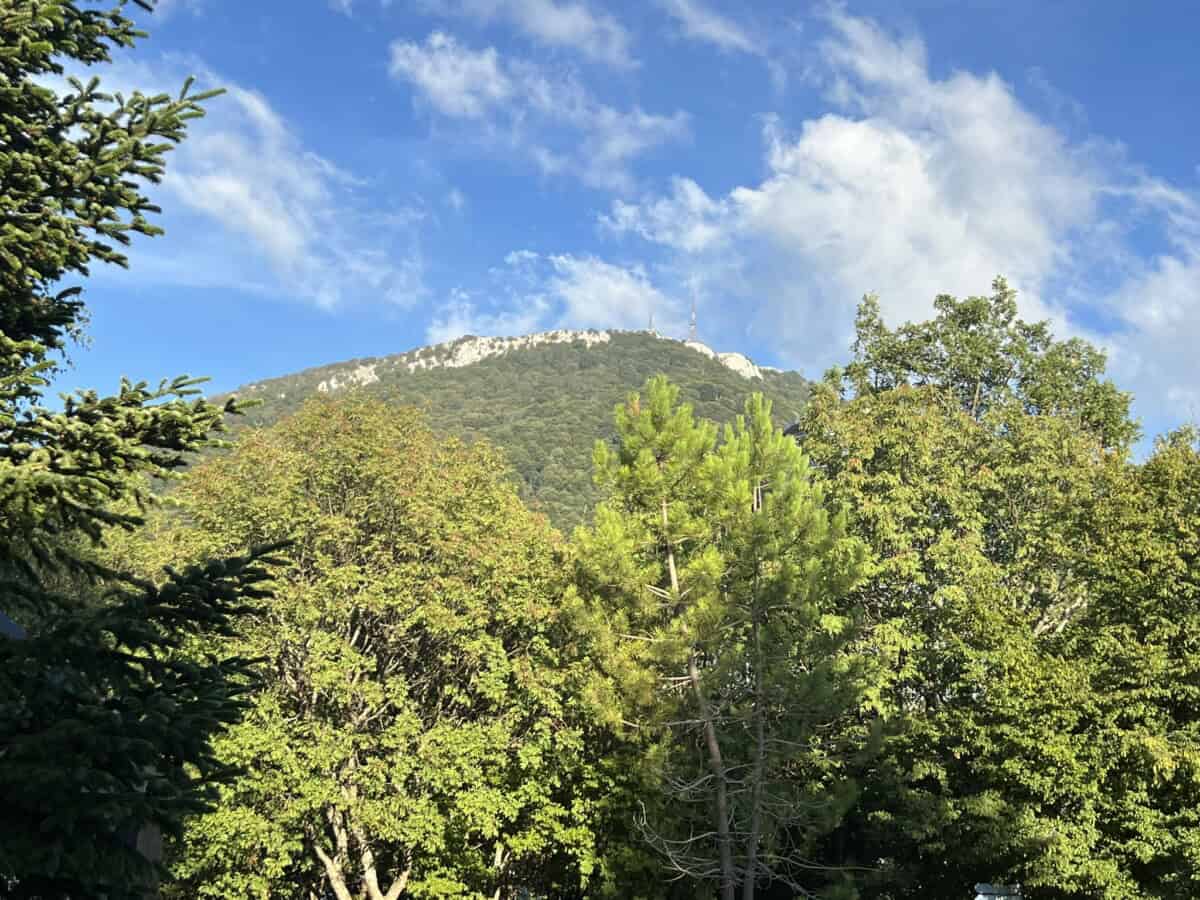
Mount Dajti is part of the National Park of the same name, which was declared here in 1966. The National Park, Alb. Parku Kombëtar Dajt, is a green oasis just a few minutes from the hustle and bustle of Tirana. It was declared in 1966 and today is among Albania’s most valuable natural areas – thanks to its diverse nature, dramatic landscape and easy accessibility. It is no wonder that it is called the “natural balcony of Tirana”. From the summit, which it has been possible to reach since 2005 by cable car DajtiExpres, there is a beautiful view of the city panorama and on clear days you can also see the coastline around Durrës.
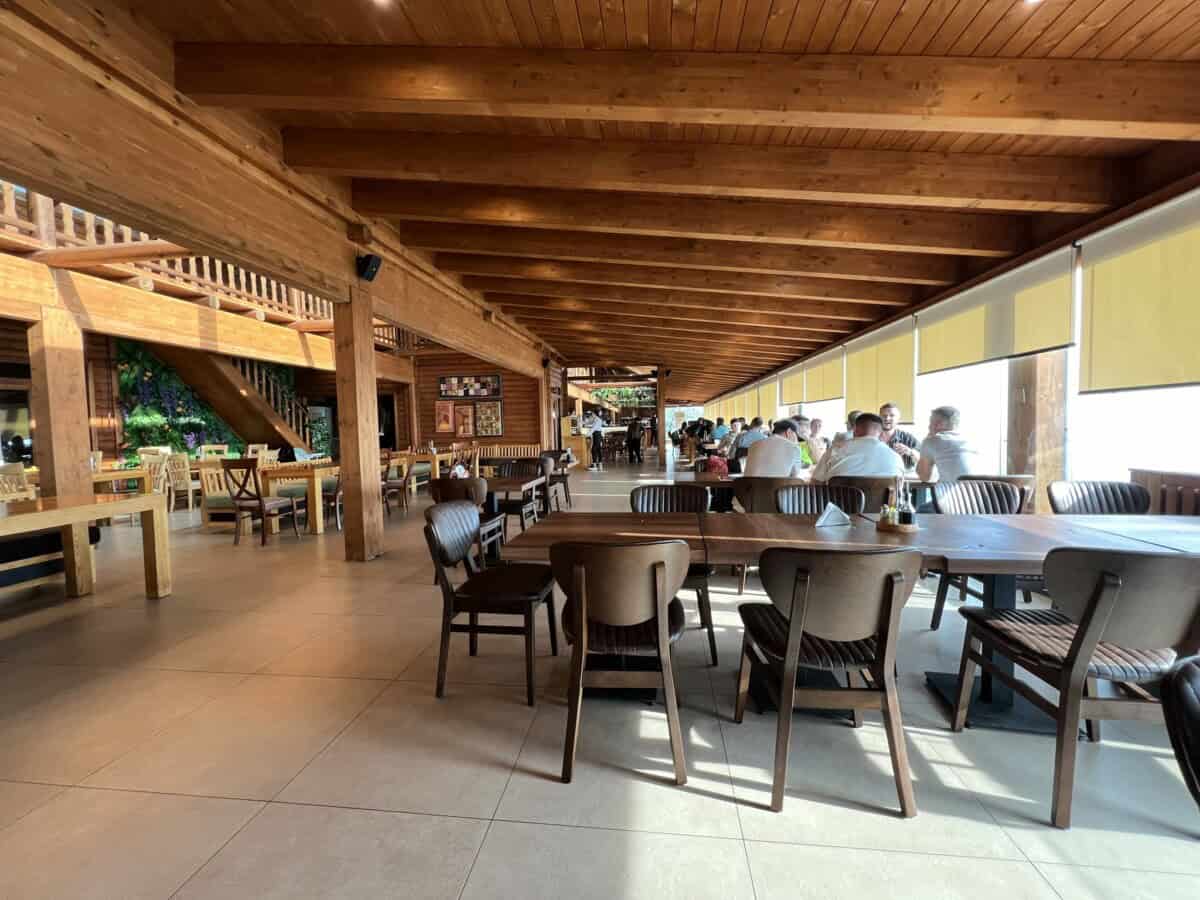
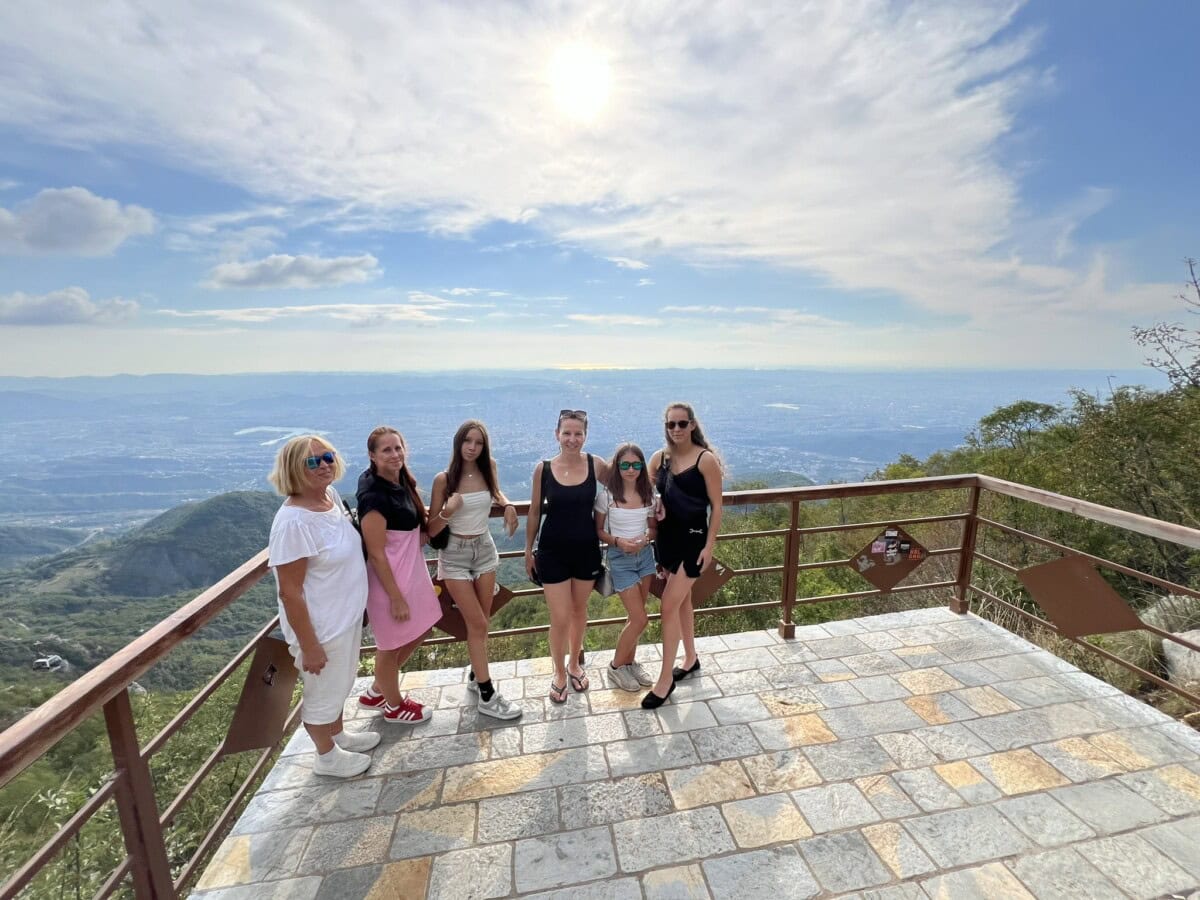
The ride on the cable car to the upper station, which is located at approximately 1000 m altitude, takes about 15 minutes. Near the upper station is an amazing viewpoint where you can’t help but take a group photo. The terrace is part of a restaurant that offers regional and standard dishes with a view of Tirana. The upper cable car station is an excellent starting point for further tourist activities. The goal could be, for example, Mount Dajti itself at a height of 1600 meters above sea level.
Více o Dajti
Dajti National Park is among Albania’s most impressive and greenest natural treasures. Due to its dramatically varied mountain terrain, an amazing mosaic of ecosystems intertwines here – from typical Mediterranean shrubland in lower elevations, through extensive oak and beech forests, to virtually untouched mountain vegetation at higher altitudes. This diversity gives the park exceptional ecological value, which was internationally recognized by the organization Plantlife and placed Dajti among the botanically most significant areas in the world.
Local soil, climate and altitude create ideal conditions for rich and harmonious life cycles. Fungi, bacteria and insects work tirelessly here on the decomposition of dead trees and the renewal of forest soil. Fallen trunks become refuges for birds, mammals and reptiles, while diverse flora maintains rare and ancient habitats that have long since disappeared in many other parts of Europe.
The park’s territory borders on other protected areas, which together create a very extensive continuous strip of wilderness. You can visit Dajti essentially at any time. The best period, however, is April-June and September. During this time the weather is ideal for hiking.
Dajti National Park is thus an ideal destination for anyone who wishes to experience Albania in its most authentic and most beautiful form – in wild mountains and ancient forests that have managed to preserve their original appearance virtually unchanged for many centuries.
Praktické
Mapa




Tvrz Prezë
Více o tvrzi
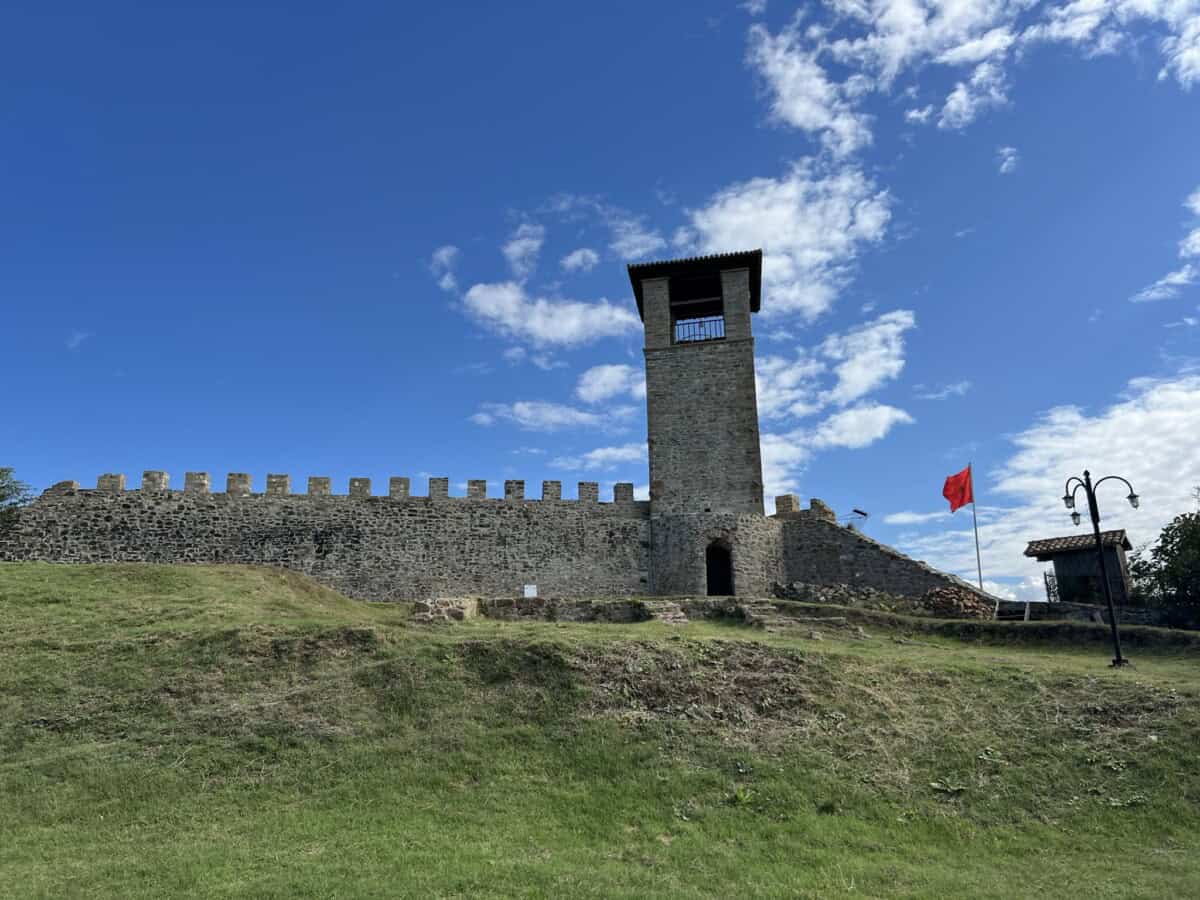
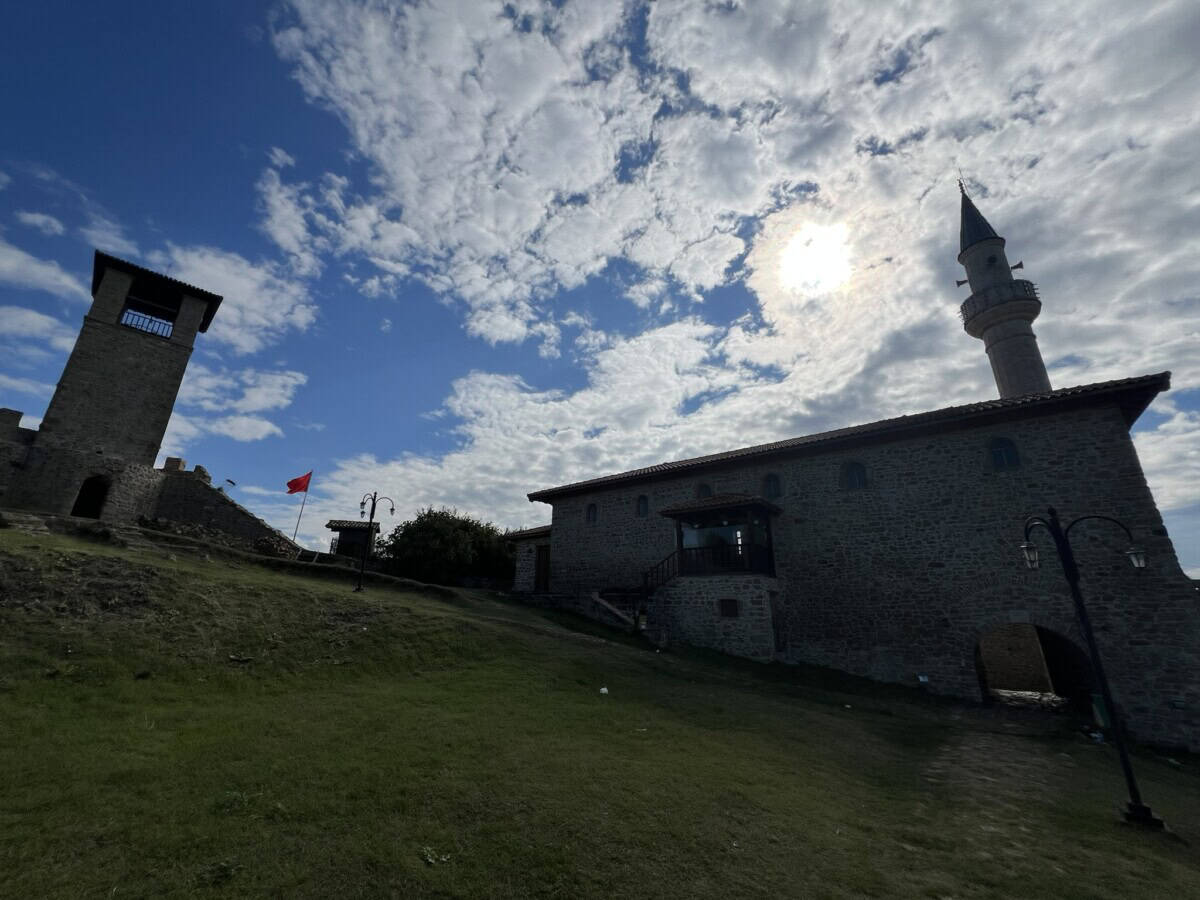
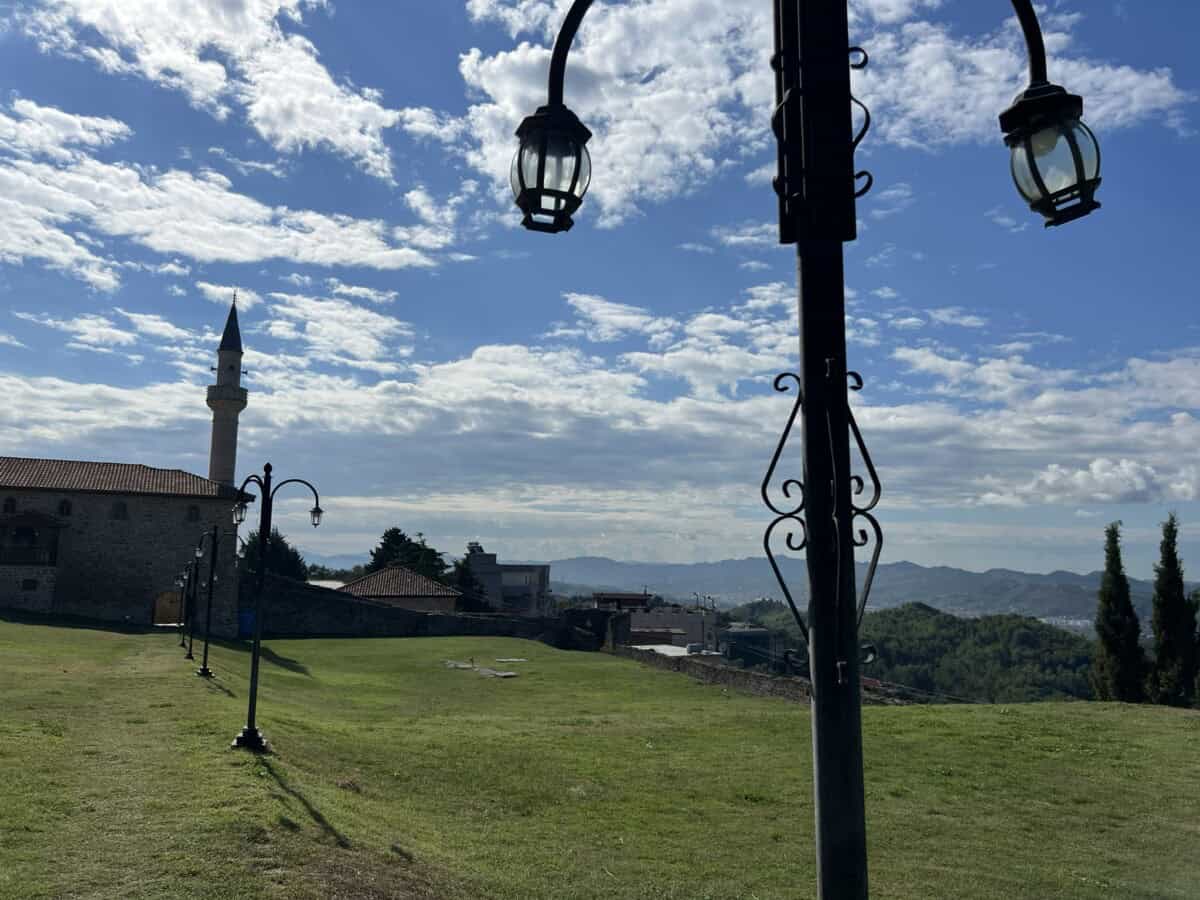
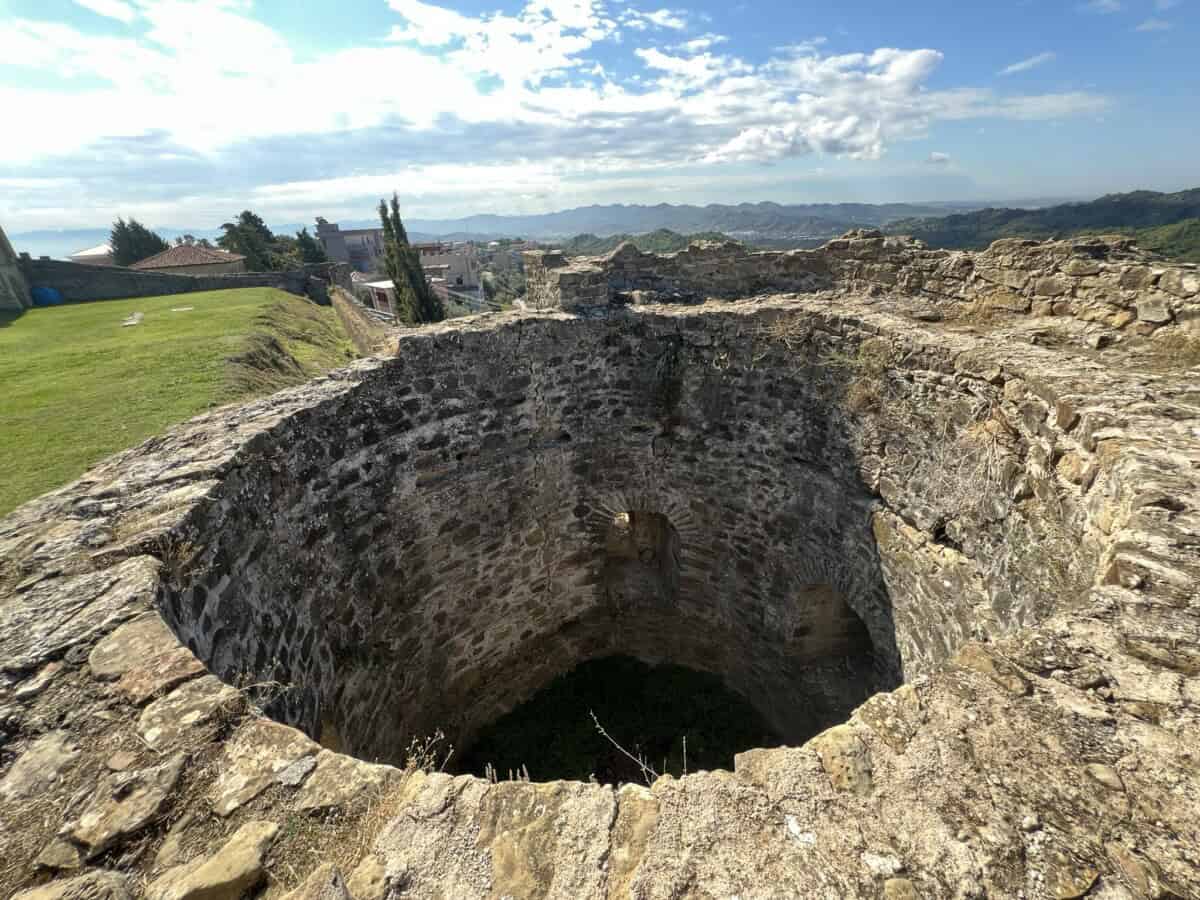
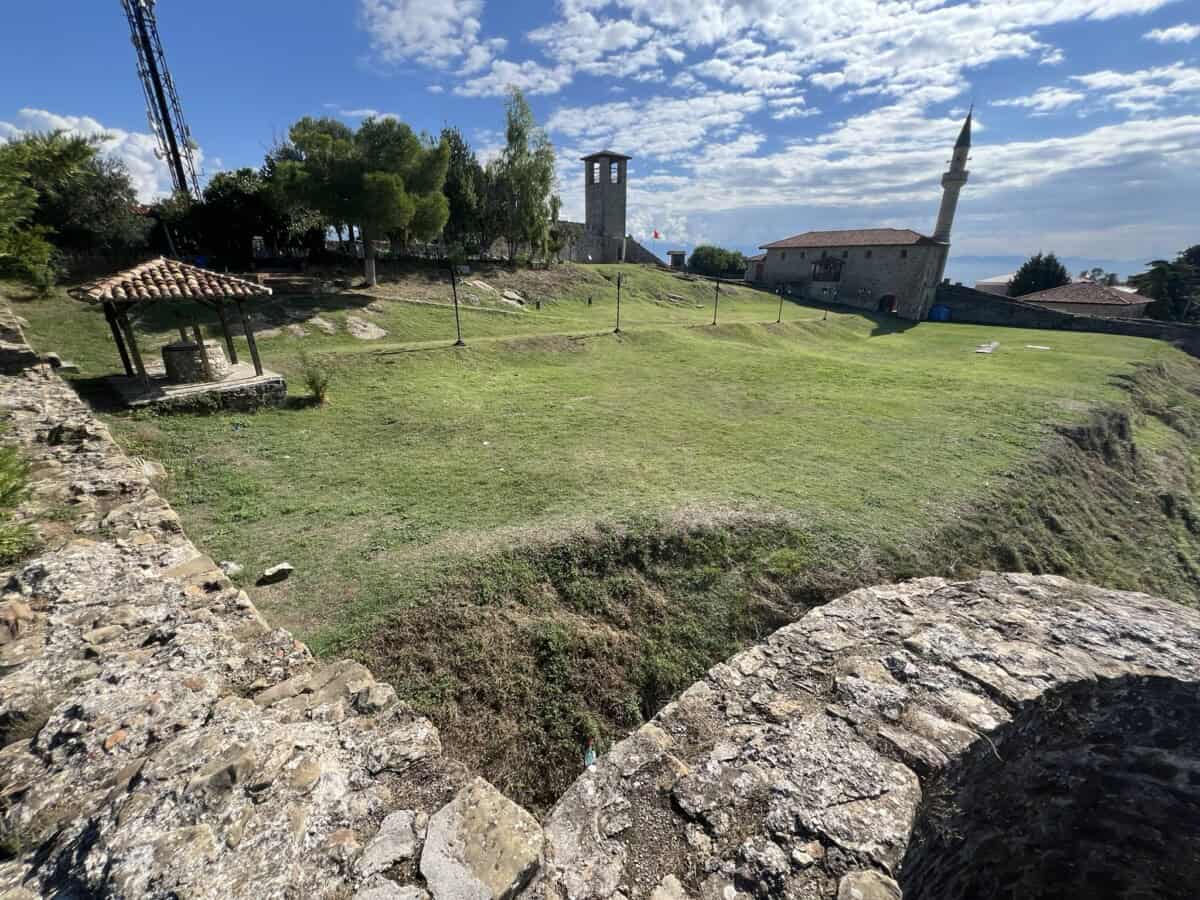
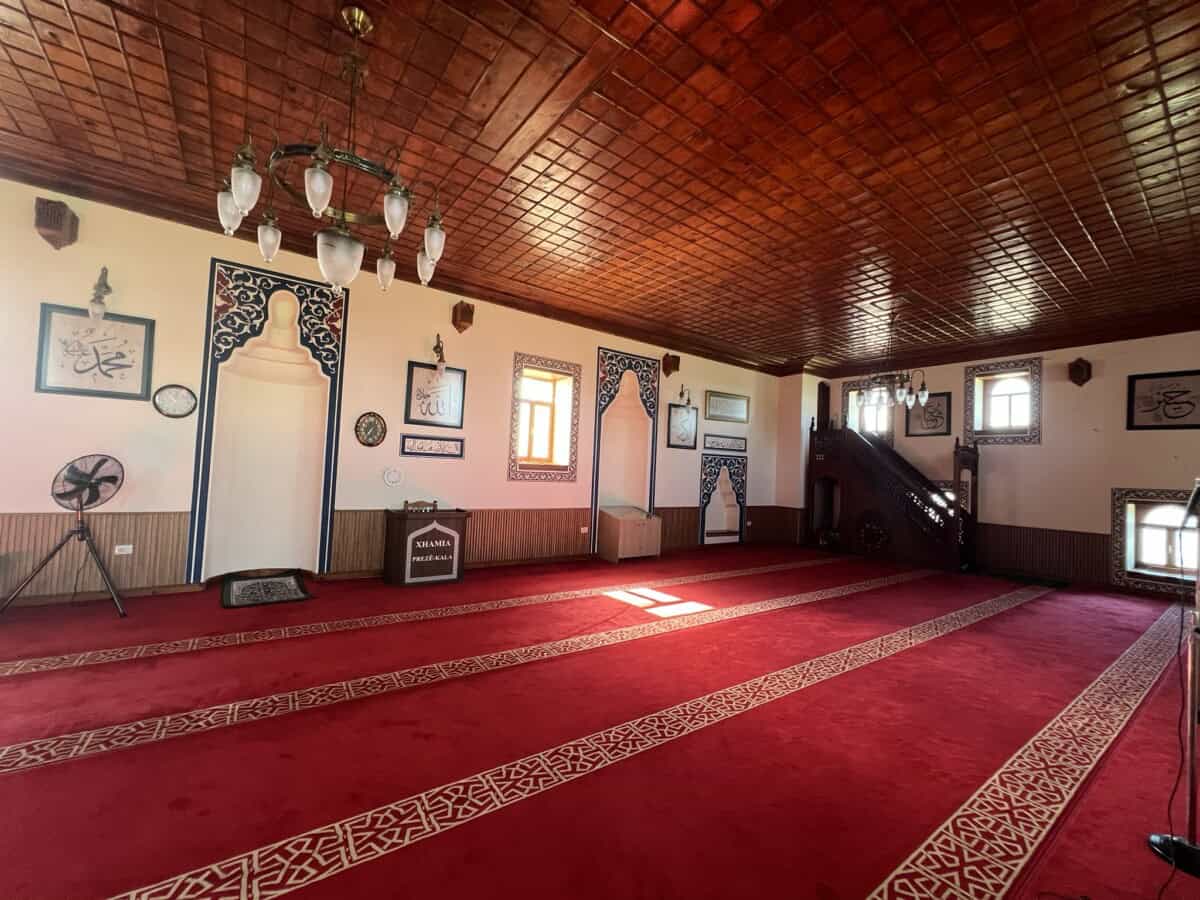
The fortress has an irregular pentagonal floor plan with four round towers at its corners, supplemented by a rectangular tower in the middle of one of the walls. The entire complex measures approximately 80 × 50 meters. In the first construction phase, the fortifications were built and in the second phase a mosque above the main gate. Due to its small area, the fortress probably did not serve as a royal residence, but had primarily military purposes.
Its modest dimensions and less robust fortifications place it rather among fortresses designed to supervise commercial and military routes that passed through the Tirana plain. The fortress also formed an important node of visual communication – it enabled the transmission of light or smoke signals between the castles of Petrelë, Kruja, Durrës and Ishmi, especially during the uprising against the Ottomans in the 15th century.
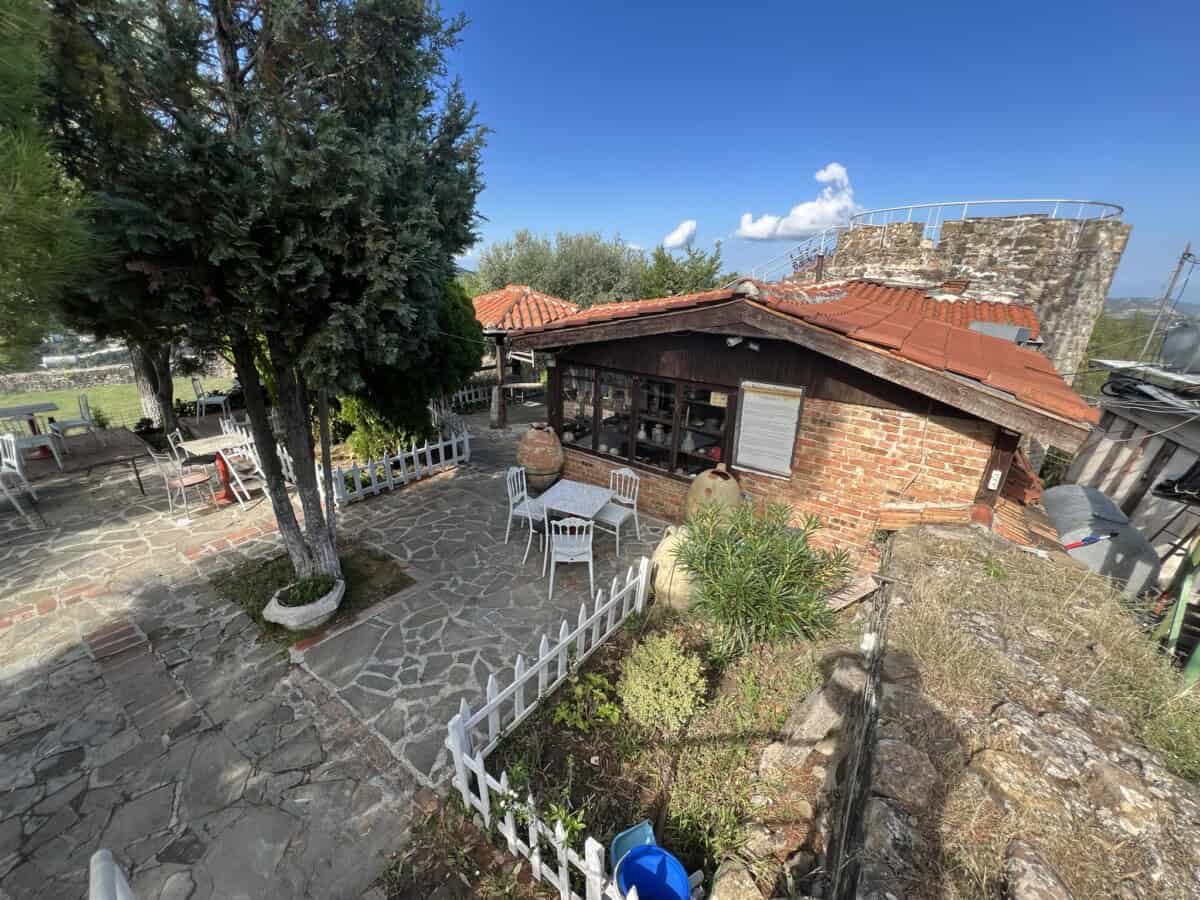
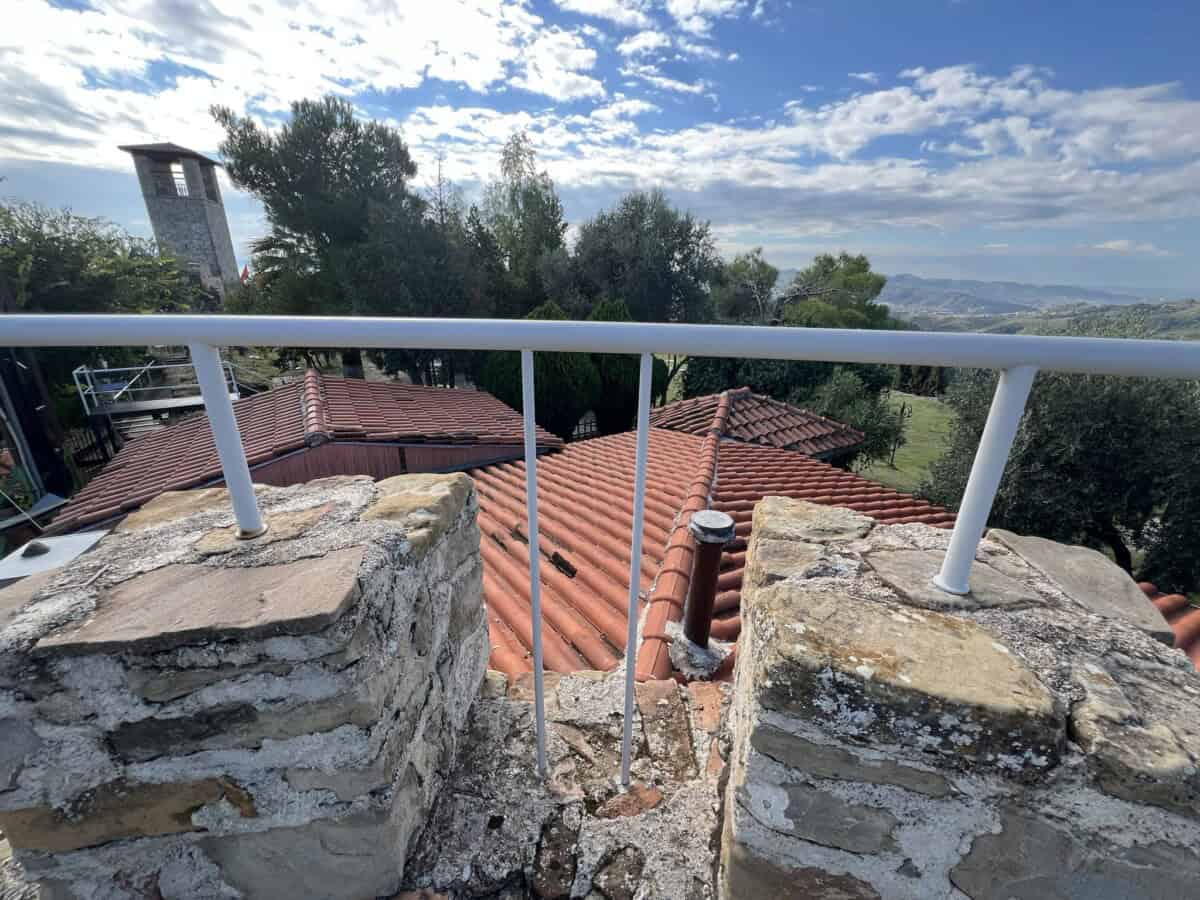
If you visit the fortress, you will find a stylish restaurant here, where you will be served lamb or other Albanian specialties according to grandmother’s recipe. As a bonus, you can enjoy the view of the surrounding landscape.
Praktické
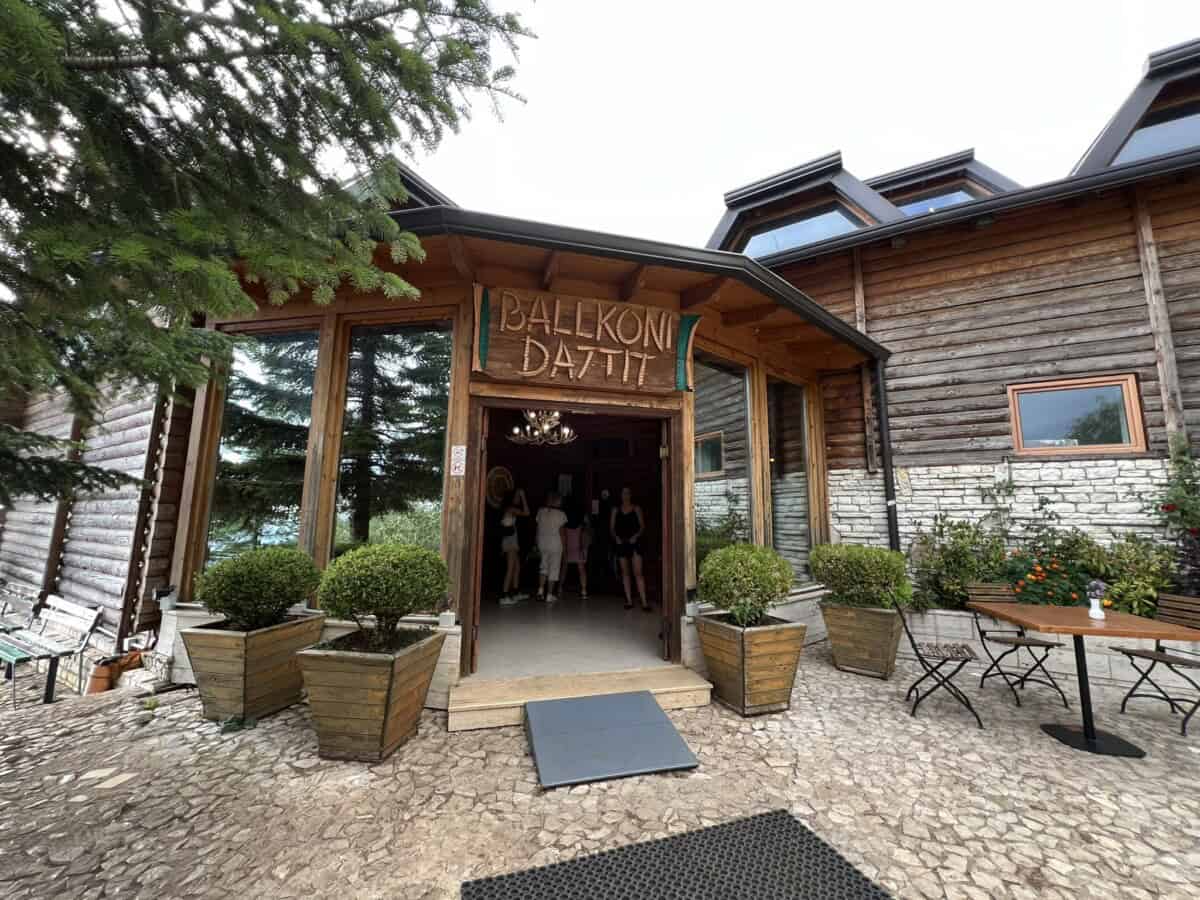
If you ever fly to the airport in Rinas near Tirana and see a small castle with a distinctive tower on a hill near the runway, be sure it is Prezë Castle. You can park not far from the fortifications on a small square near the restaurant Ballkoni i Prezës, where you can year-round, with a view of the landscape, taste regional Albanian cuisine.
You also have the option to have something to eat between the fortifications in a stylish small restaurant Bar restorant Kalaja e Prezës. However, it operates mainly during the tourist season.
Mapa
Hrad Bashtovë
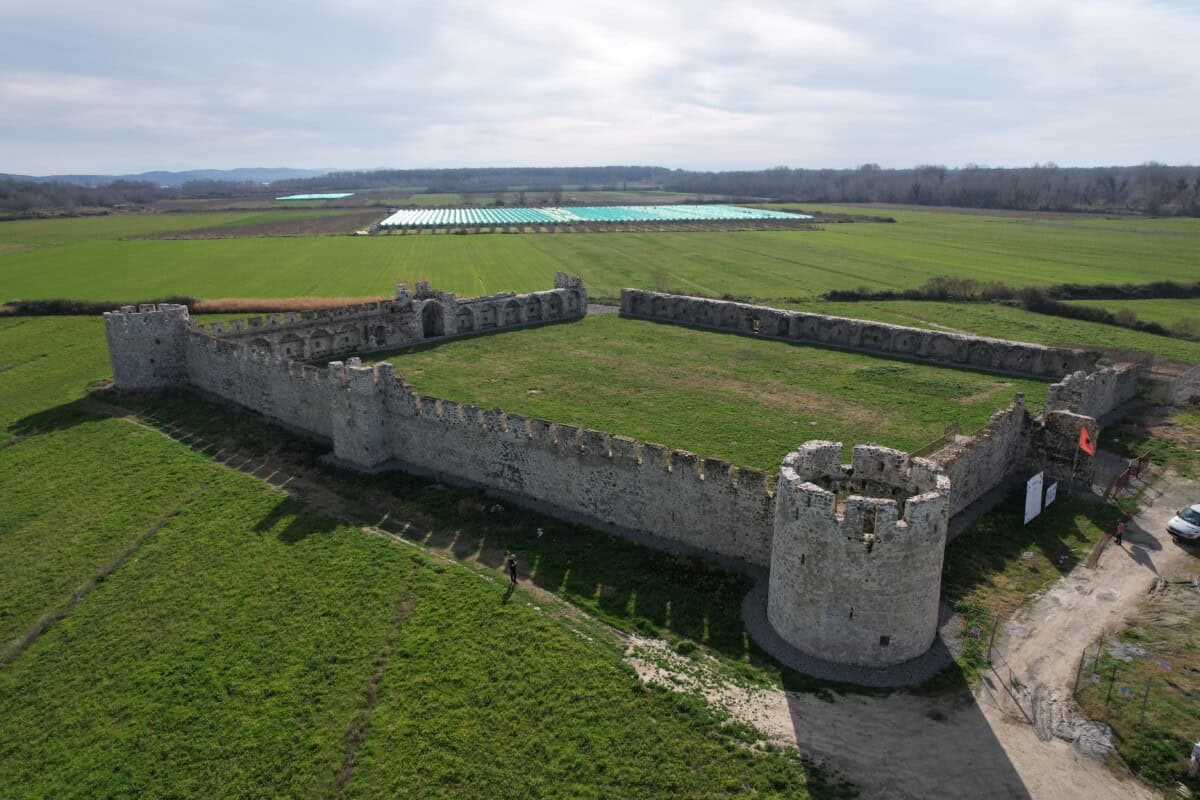
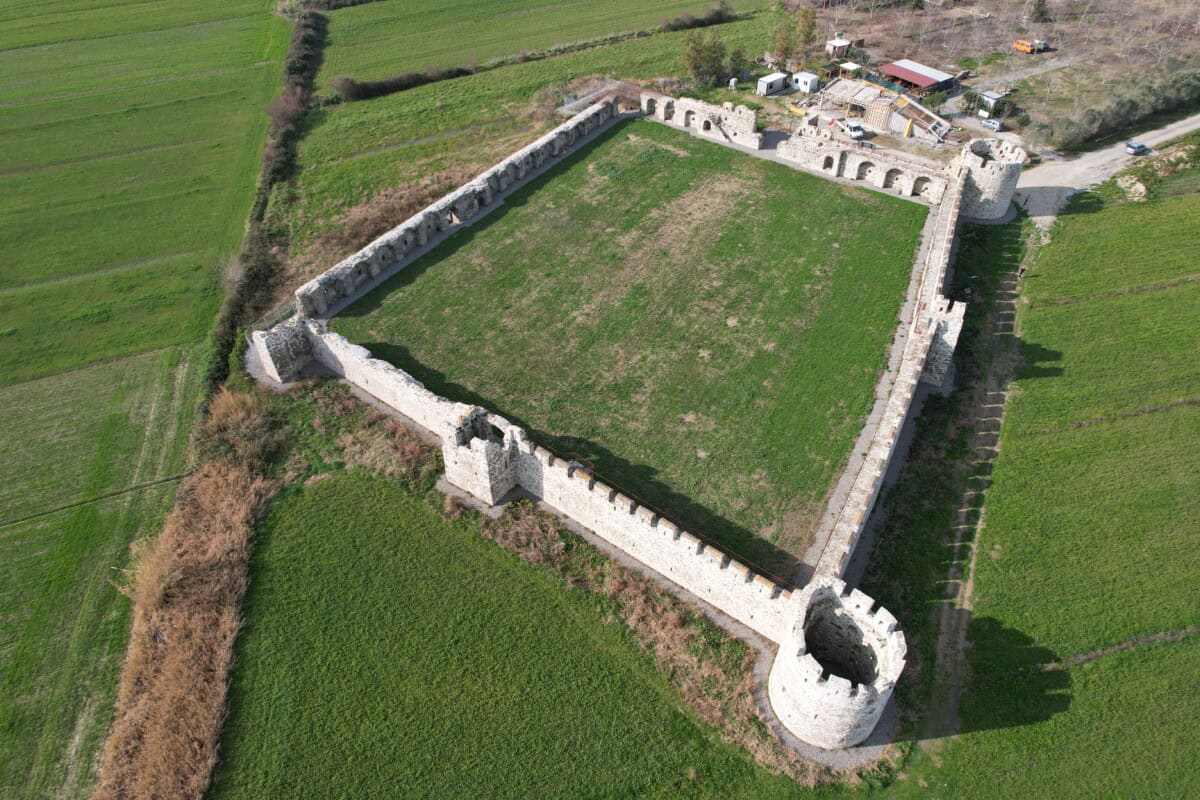
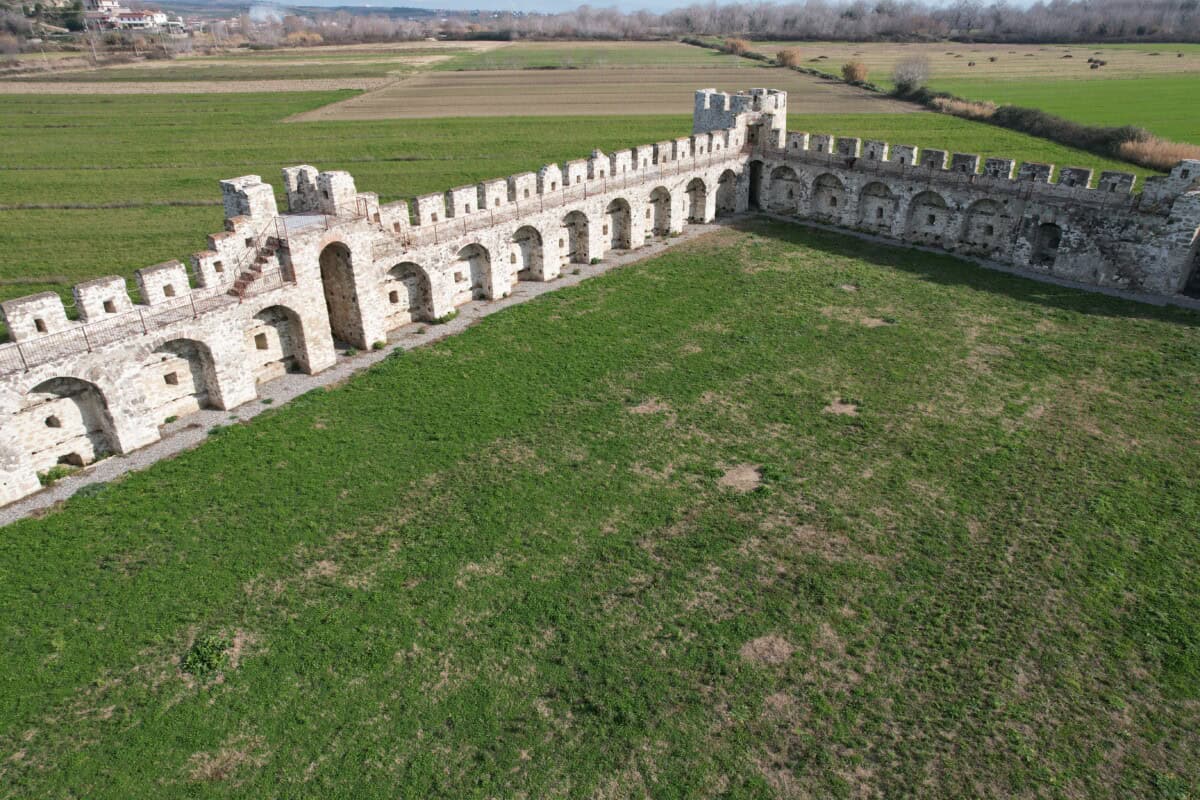
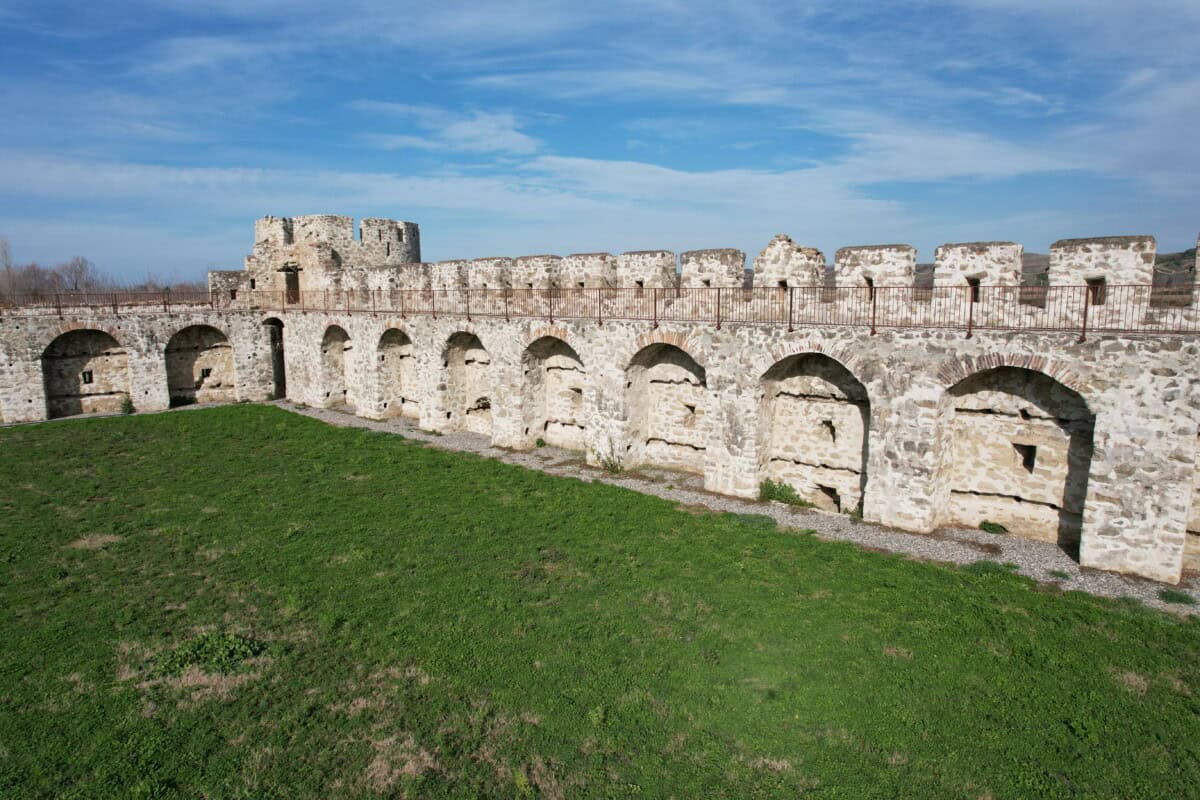
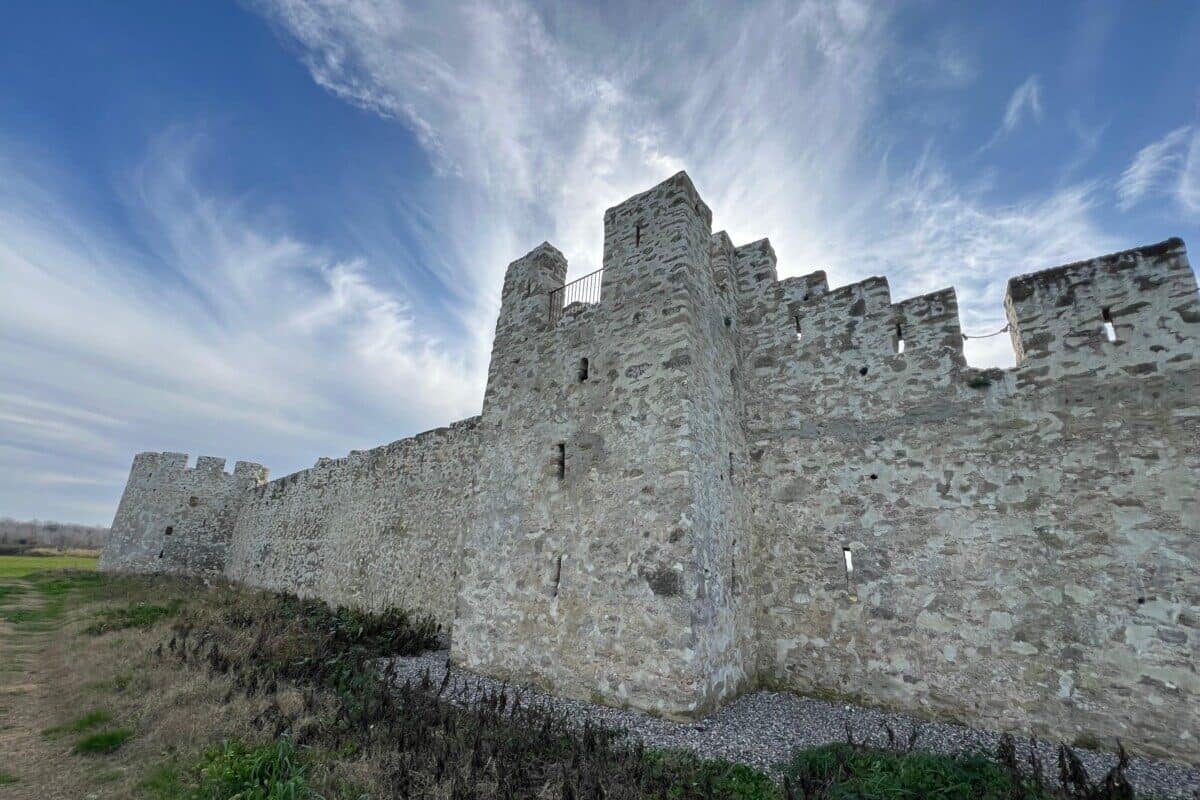
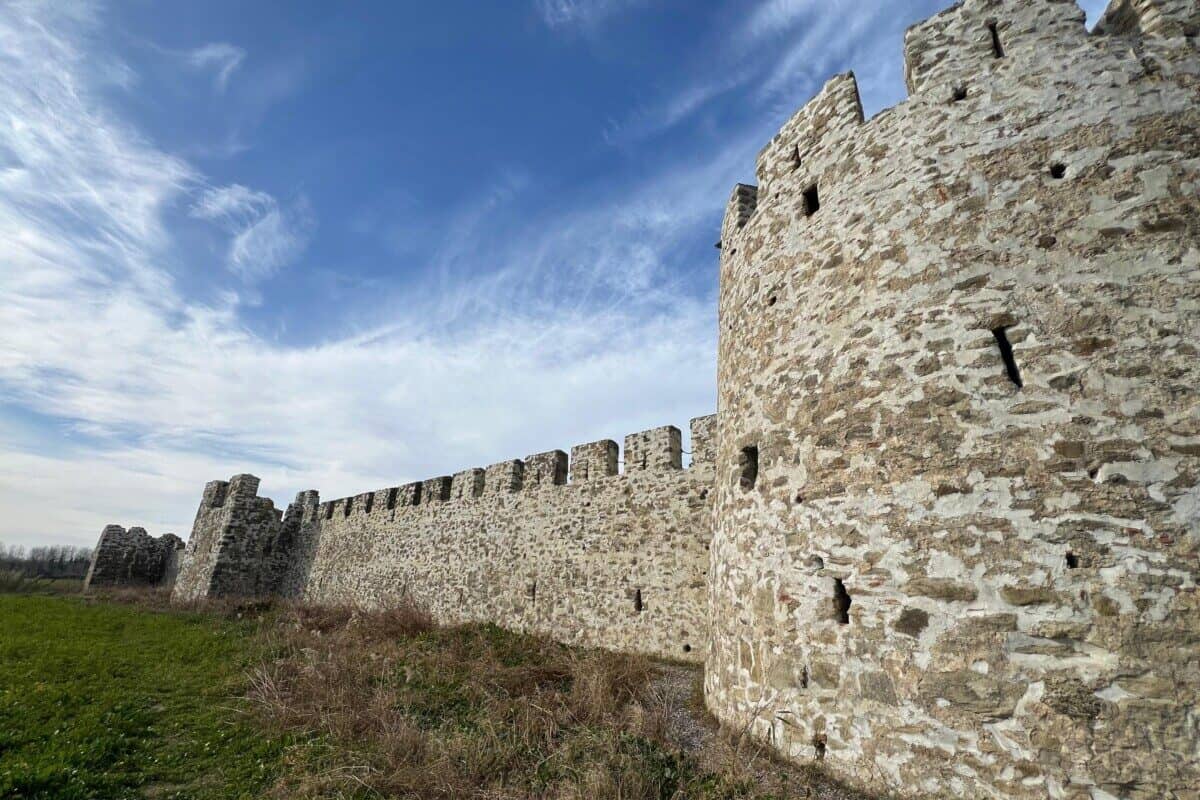
Bashtova Castle (Kalaja e Bashtovës), also known in the Middle Ages as Breg, Briego or Vrego, is a medieval quadrangular fortress located near the mouth of the Shkumbin River into the Adriatic Sea in central Albania. Once it served as a gateway for merchants, connecting people, civilizations and cultures, with grain and textiles being traded here and generating considerable income.
During excavations, archaeologists discovered that the original floor of the fortress lies 1.7 meters below the current level, which suggests that the entire area was almost two meters lower at the time of construction. The bed of the Shkumbin River was therefore, in all likelihood, closer to the fortress. Archaeologists also discovered part of a road outside one of the towers during one of their investigations, which could have connected the castle to the famous trade route Via Egnatia, leading from Rome to Istanbul. The fortress also functioned for defensive and control purposes. The walls are now 9 meters high and surround an area of approximately 60 x 90 meters. On the north and east sides stand round towers, each 12 meters high.
Více o hradu
The building is protected by the Albanian state as a cultural monument and is part of Albania’s preliminary list of monuments to be inscribed on the UNESCO World Heritage List.
The origin of the fortress is a matter of dispute among historians. According to one version, this historically first building on this site was built only when the region was part of the Venetian Empire in the 15th century. It was allegedly one of the last Venetian fortifications built in resistance to the Ottoman invasion. Another version claims that the Venetians built the fortress on the site of an existing former structure dating from the 6th century, thus from the period of Justinian’s rule.
Regardless, what is certain is that after the fortress was eventually occupied by the Ottomans in the 15th century, they built a mosque here and rebuilt part of the western side. Objects found in the fortress are stored in the National Museum in Tirana. Around the castle grows a laurel forest, which is designated as a natural monument. From the walls you can observe the seashore from the gulf in Durrës to Divjakë and Karavasta.
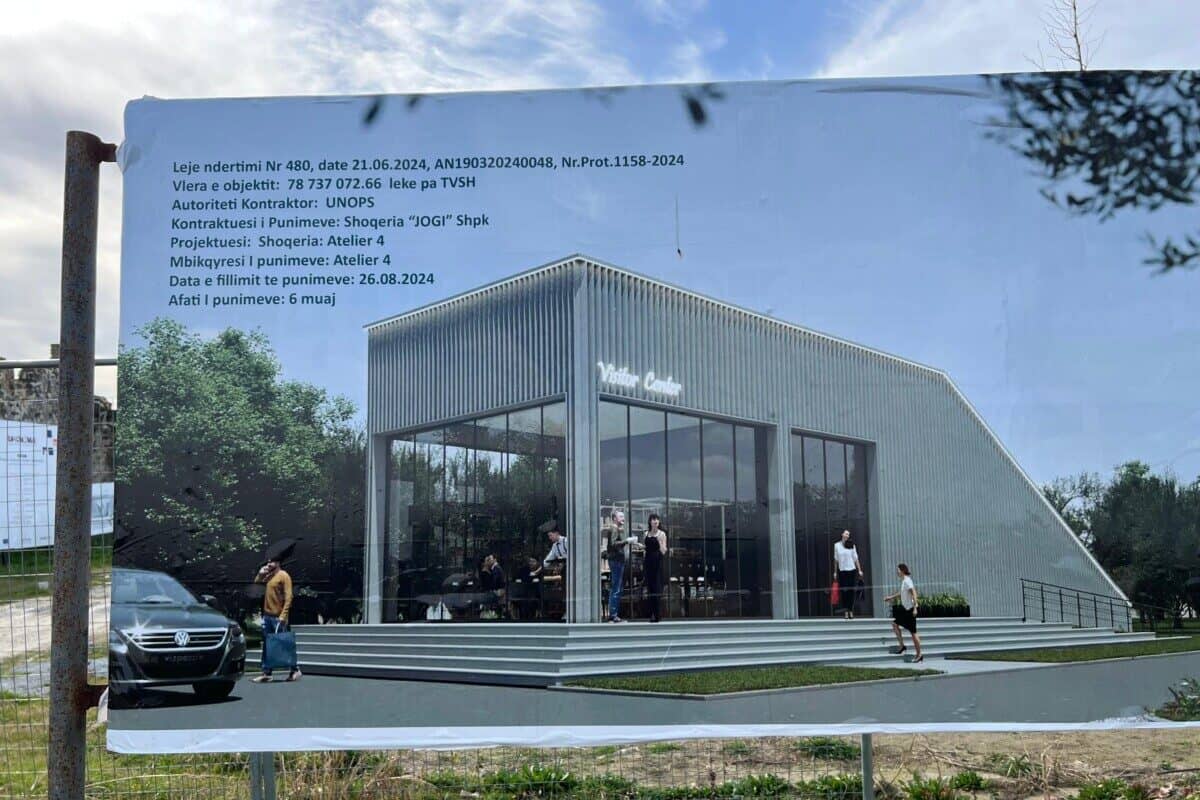
In 2025, a visitor center was opened. The opening of the center was the culmination of a larger project that included the restoration of the castle walls and tower and detailed archaeological research.
Praktické
Arriving at the fortress is without any difficulties in the direction of Durrës-Fier on SH4 and the subsequent turn towards the village of Vilë-Ballaj. After passing through the village, you will have the fortress on your left and you cannot miss it. Besides the info center, you will find a family restaurant with a campsite right next to the fortress Kalaja Camper Albania.
Mapa




Jezero Bovilla
Více o Bovilla lake
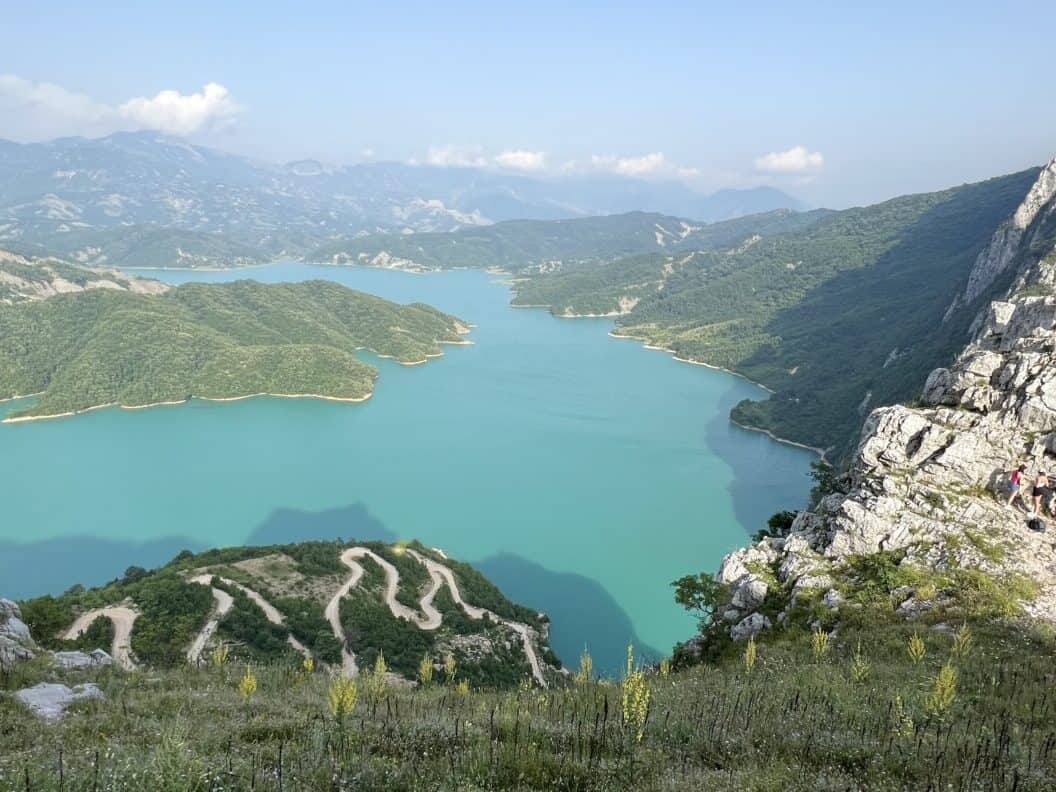
The area around Bovilly is truly magnificent and Bovilla Lake absolutely deservedly experiences its great boom in recent years. Many agencies and tourist guides use this terrain for mountaineering or for example for rock climbing. Rock climbing routes are increasing. Also popular is a modern restaurant above the dam. A favorite local specialty is boiled sheep’s head, which will be served to you on a plate whole including the eyes. So if you like unusual specialties and a warm sheep’s gaze, do not hesitate.
Praktické
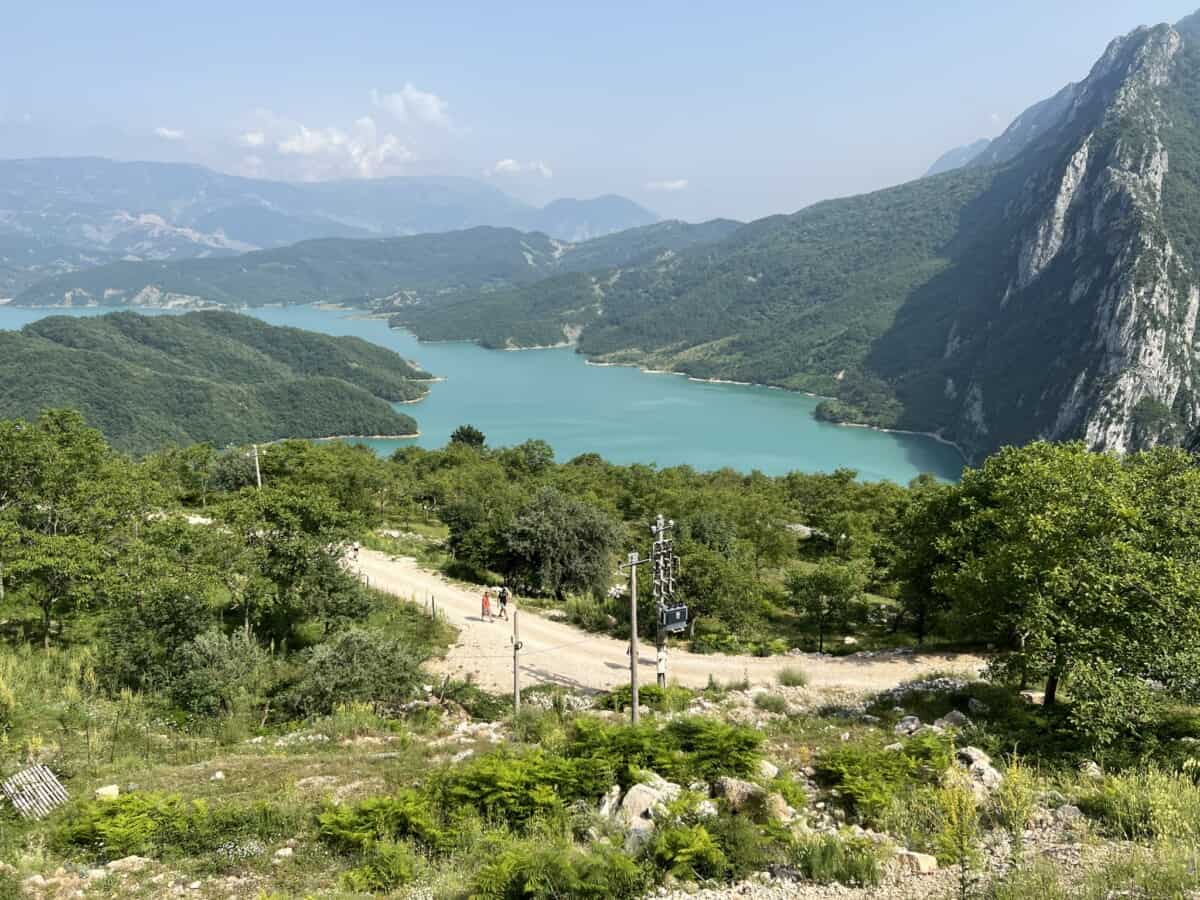
A quality asphalt road leading to the dam ends in the village Zall-Herr. From there it’s still about 7 kilometers to the dam on an alternately gravel and sometimes asphalt road full of potholes. This section of the road is severely damaged by stone quarrying. Nevertheless, it is possible to reach the dam by slow driving even with a regular car. The seven-kilometer poorly passable section is often in the sights of car rental companies and it often happens that when returning the car, the rental company demands a fine from you. This section is usually prohibited due to poor road conditions and the rental company monitors your route by satellite. Clients often don’t know about this and then unnecessarily lose money. We therefore recommend asking the rental company in advance whether it is possible to use the car for a trip to the Bovilla dam.
If that is the case and you eventually drive across the dam after seven kilometers of jolting, it is not advisable to scrape your car through serpentines up to the restaurant HERE. You can get up with almost any car, but it is debatable whether you want to unnecessarily damage your car. It is therefore not a bad idea to rather leave the car a little above the dam HERE and walk the few hundred meters to the restaurant. However, you can choose a compromise option – take the car into the serpentines and evaluate along the way whether it might be better to leave the car in one of the parking areas along the road.
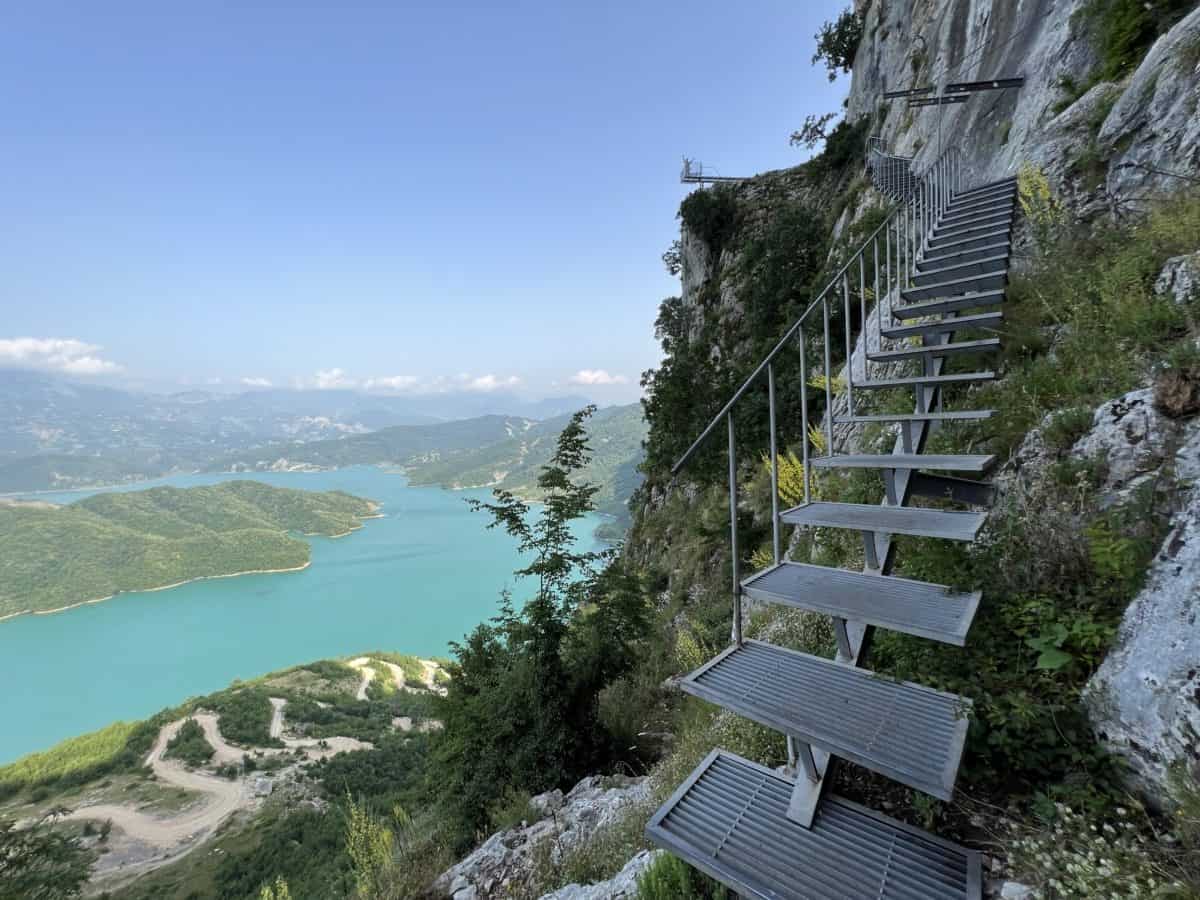
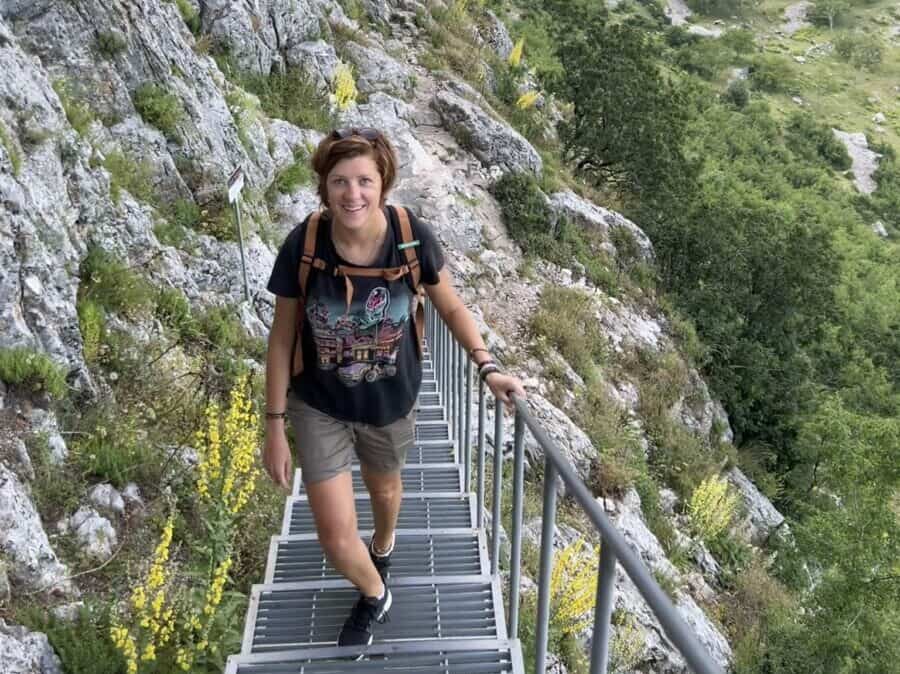
From the restaurant you can then easily reach the metal stairs and subsequently the viewpoint. It is possible that before boarding the stairs you will have to pay 1€ per person. However, there is not always a car with a collector there, so you might even save. And one more tip. A common mistake when entering a destination into navigation is a different point located on the opposite bank across from the dam. When searching in Google maps, enter specifically this point Bovilla Reservoir.
Mapa
Hrad Petrelë
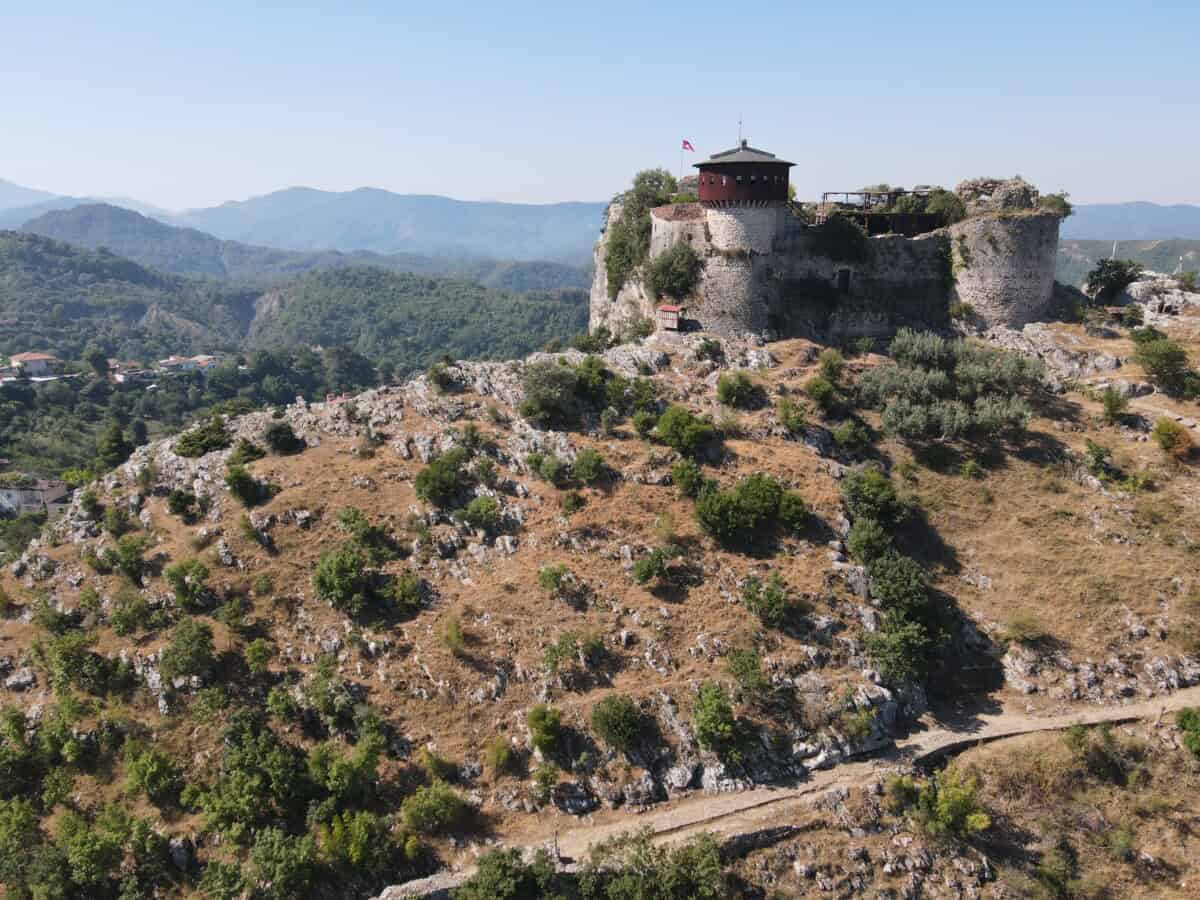
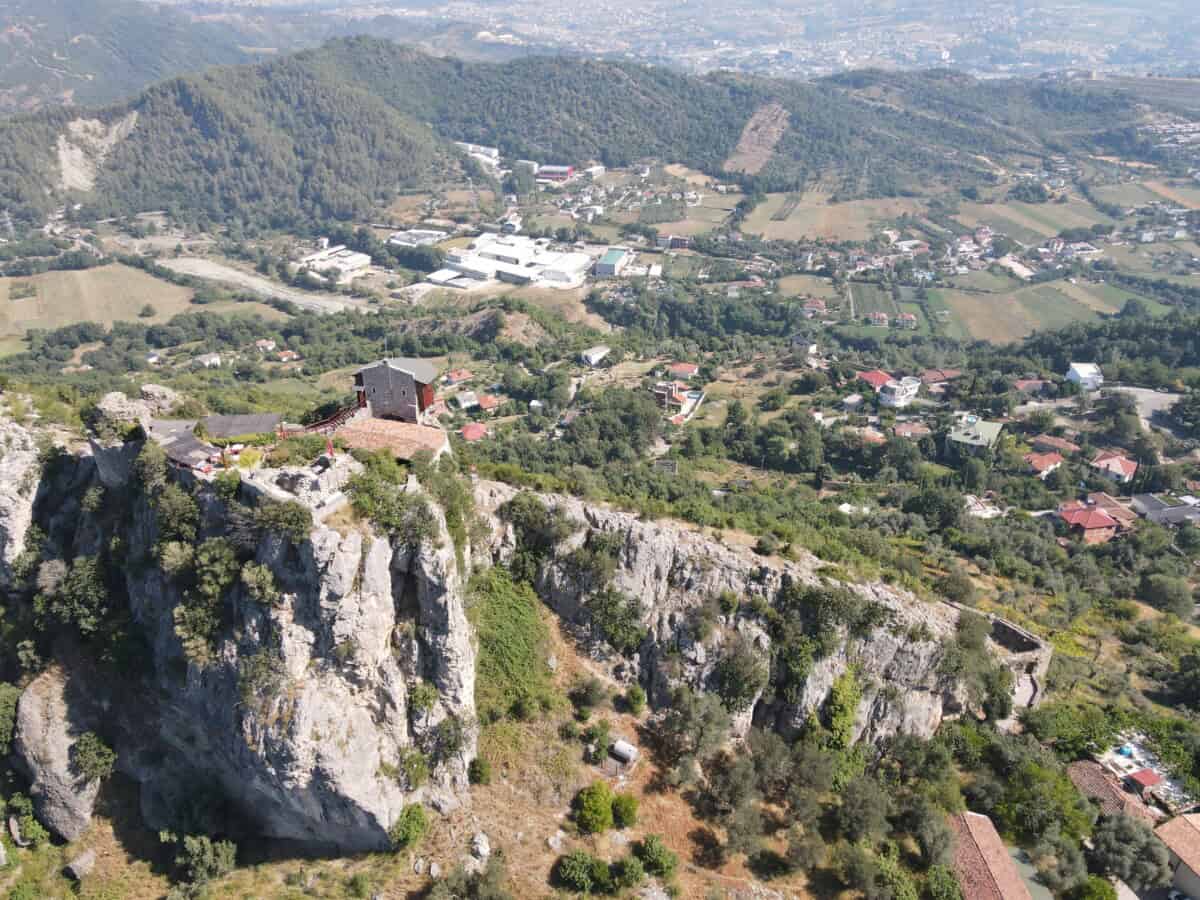
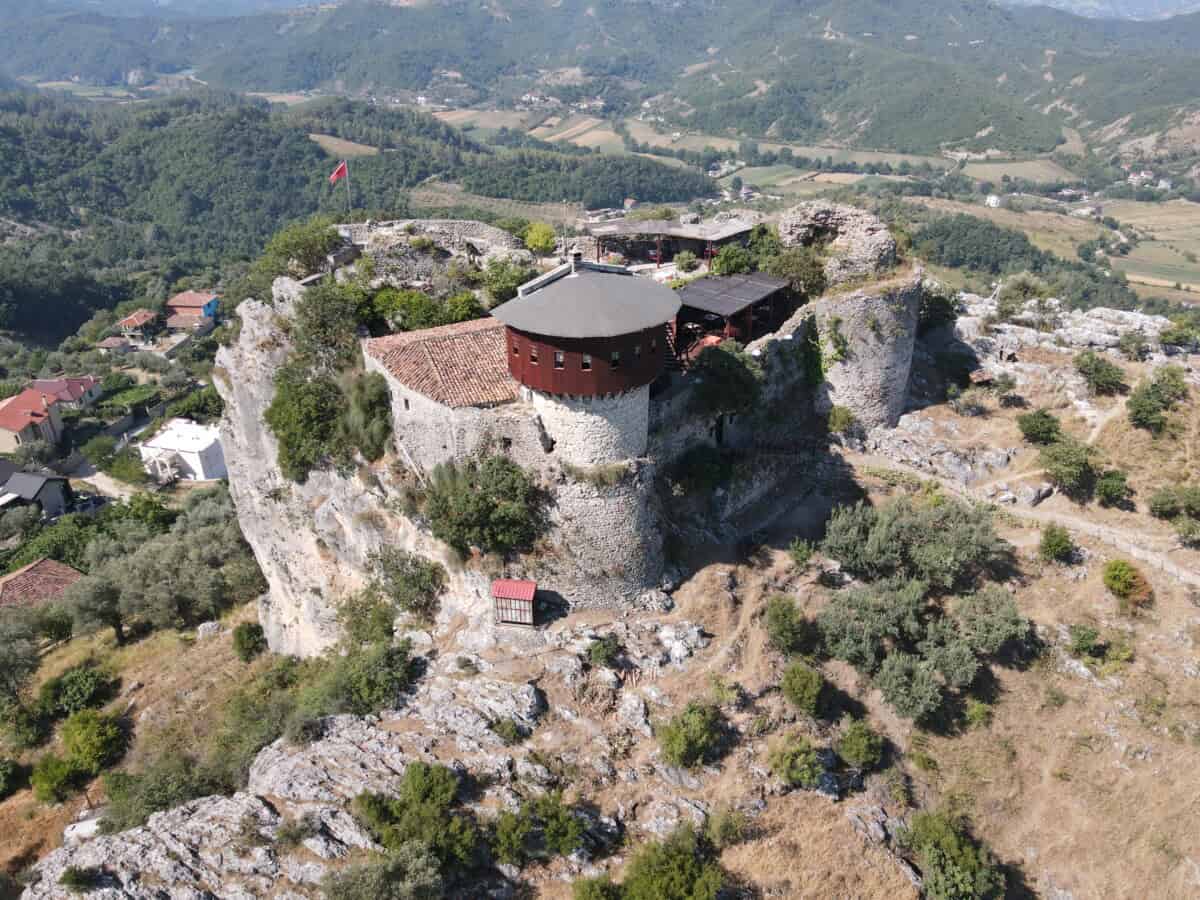
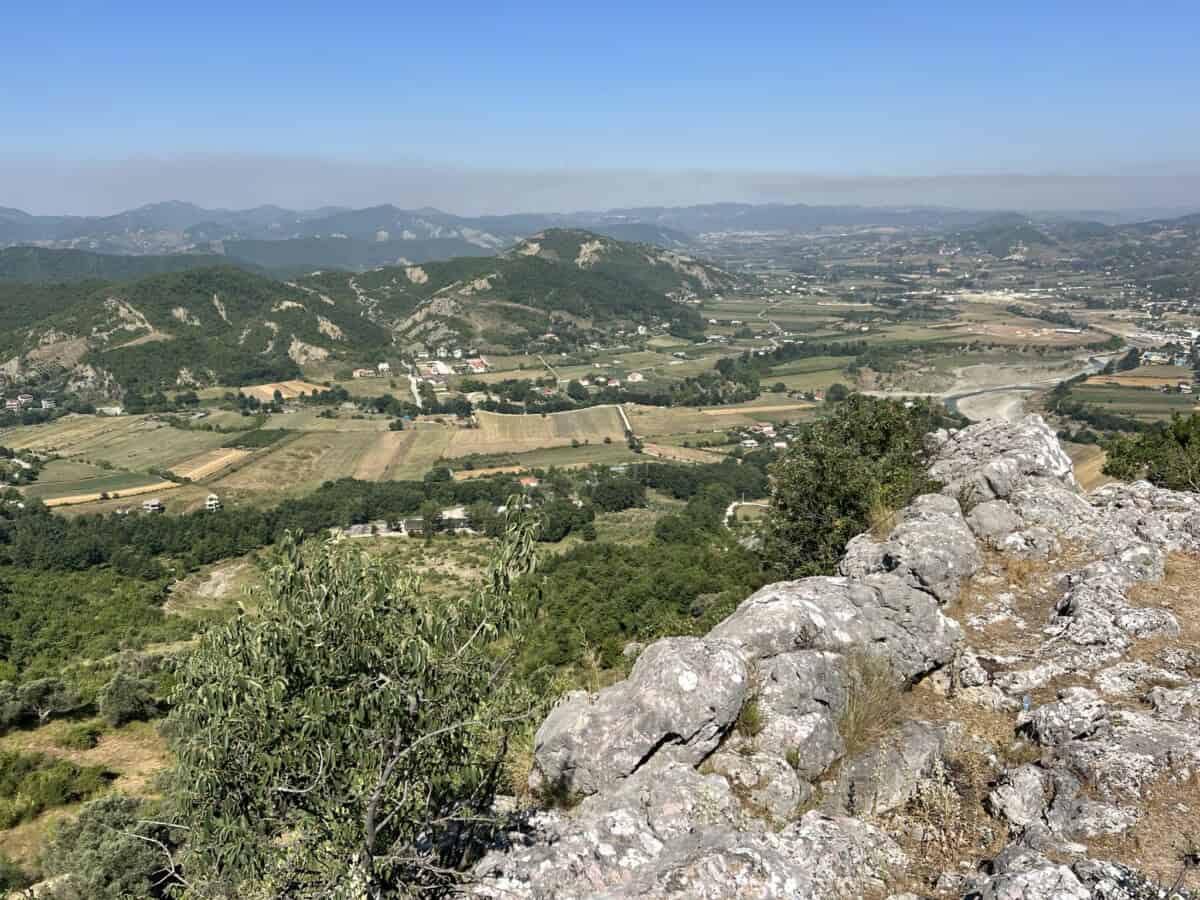
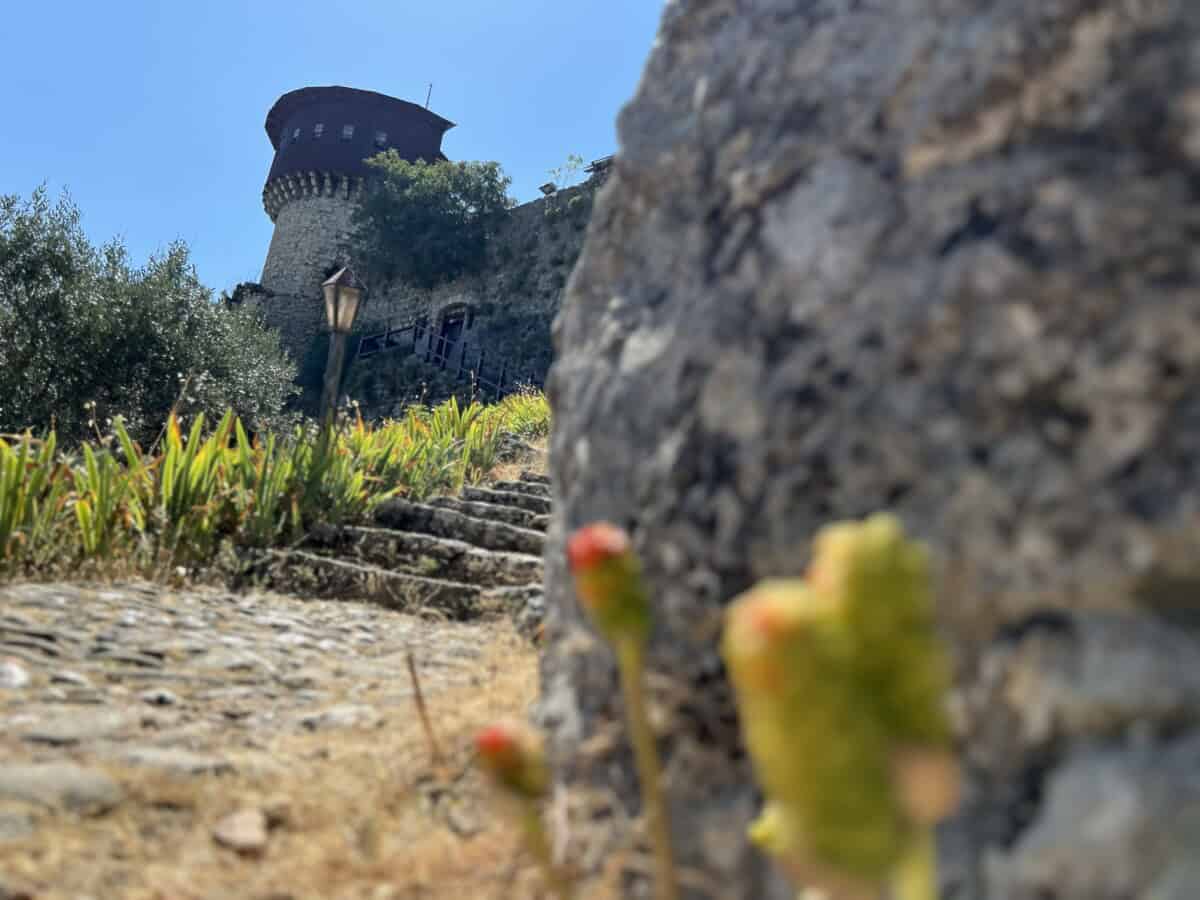
Petrelë Castle (Kalaja e Petrelës) hides just 15 km south of the pulsing center of Tirana. It represents a perfect combination of adventure, knowledge of history and unforgettable culinary experiences The origins of the fortress date back to the 6th century AD, when the Byzantine Emperor Justinian I had a small fortification built on this strategic location. The castle was part of an extensive defense network that protected the important trade artery Via Egnatia.
This triangular fortress with a dominant watchtower rises to a height of 329 meters above sea level. In the 15th century, Petrelë became a key observation point in the network of Albanian fortresses – together with nearby castles in Kruja and Prezë. From these elevated positions, guards sent fire and smoke signals at every Ottoman threat, thus warning the entire surrounding area. During the famous battles against Ottoman forces, the sister of Gjergje Kastrioti Skanderbeg – Mamica Kastrioti, who, thanks to her unbreakable courage, became one of the strongest symbols of Albanian heroism.
Více o tvrzi
Today, a traditional restaurant hidden within its ancient walls offers authentic Albanian cuisine in its finest form. On the terrace with a sunset view, you can enjoy grilled lamb meat, fresh herb salads, local cheeses and a glass of Albanian wine.
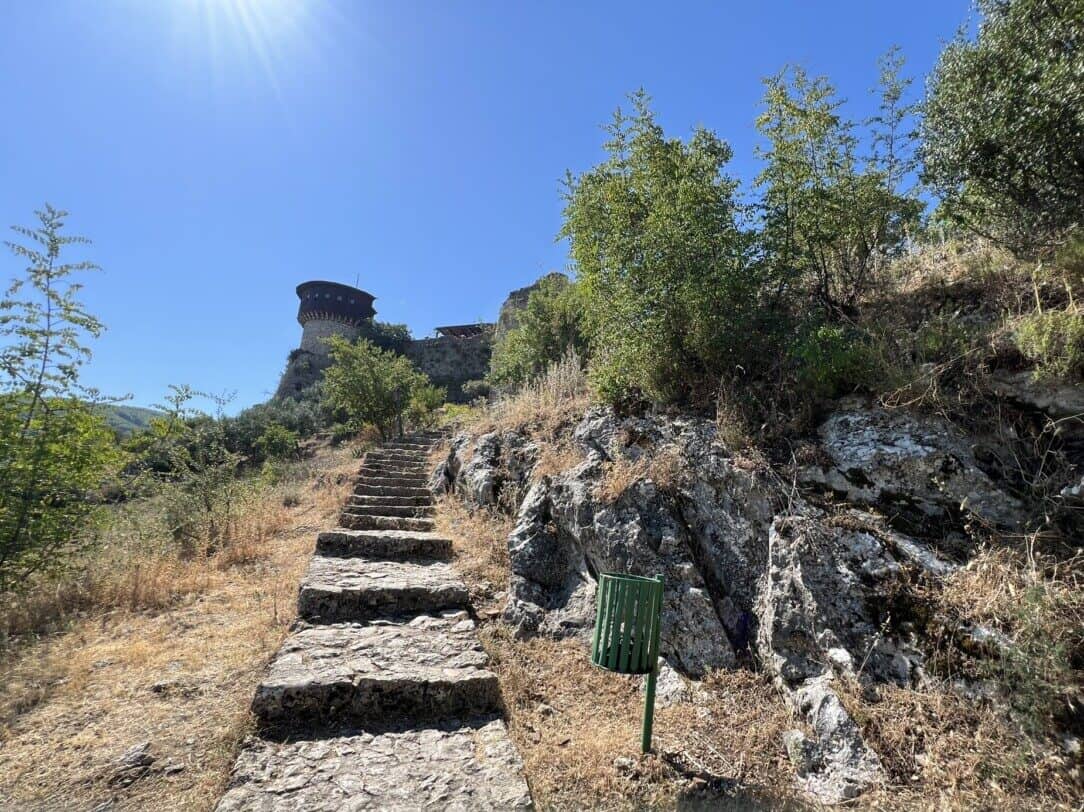
The path to the castle leads along a winding road, and at its end you will realize that the impregnable rocky peak and magnificent views of the surroundings are a clear prerequisite for the castle’s construction. You can spice up your castle visit with an adrenaline activity. Just a short distance from the castle, you can try Zipline Albania – Albania’s first zipline, over 1,250 meters long, the longest in the Balkans! It offers a flight lasting over one minute. Soar like an Albanian eagle over the river, with the wind in your hair and your heart full of excitement.
Before arrival, however, contact the staff and book a time slot just for you: +355674004444. There are no age restrictions. You just need to weigh between 35 and 130 kg and be at least 120 cm tall and no more than 205 cm. The elevation of the launch station is 778 meters above sea level and the landing station is 112 meters lower. During the flight you will reach a maximum speed of 80 km/h.
Praktické
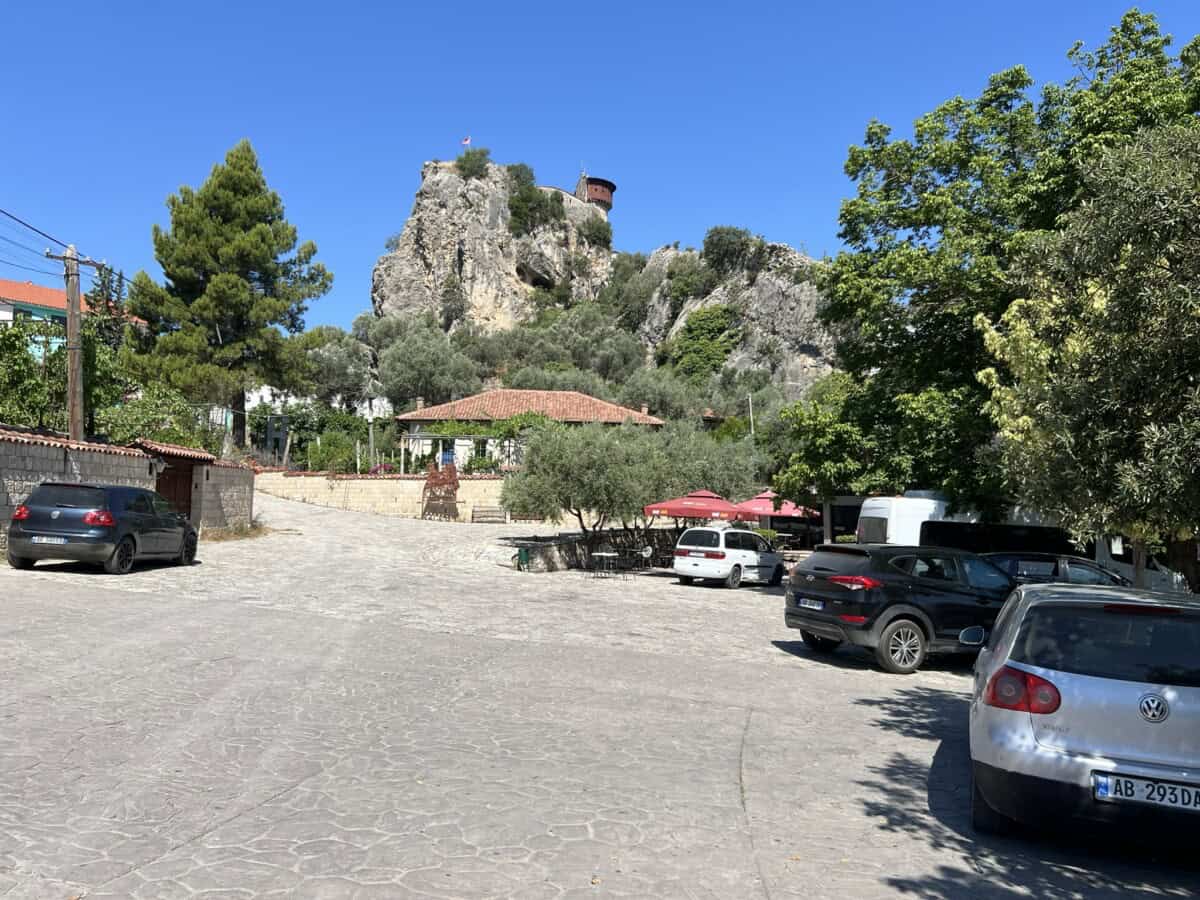
Parking under the castle in the square is absolutely hassle-free. A short distance from it is a family hotel with a restaurant Emblema, which offers accommodation and also an experience in the form of regional dishes served on a terrace with a view of the surrounding hilly landscape. We recommend visiting the restaurant after completing the Zipline – for certain practical reasons. You can of course drive directly to the hotel. However, a short walk to it from the central parking lot in the small square is very pleasant and besides, in season you may not find a free spot at the hotel.
Mapa







Plazhi i Gjeneralit
Více o Gjeneralit beach
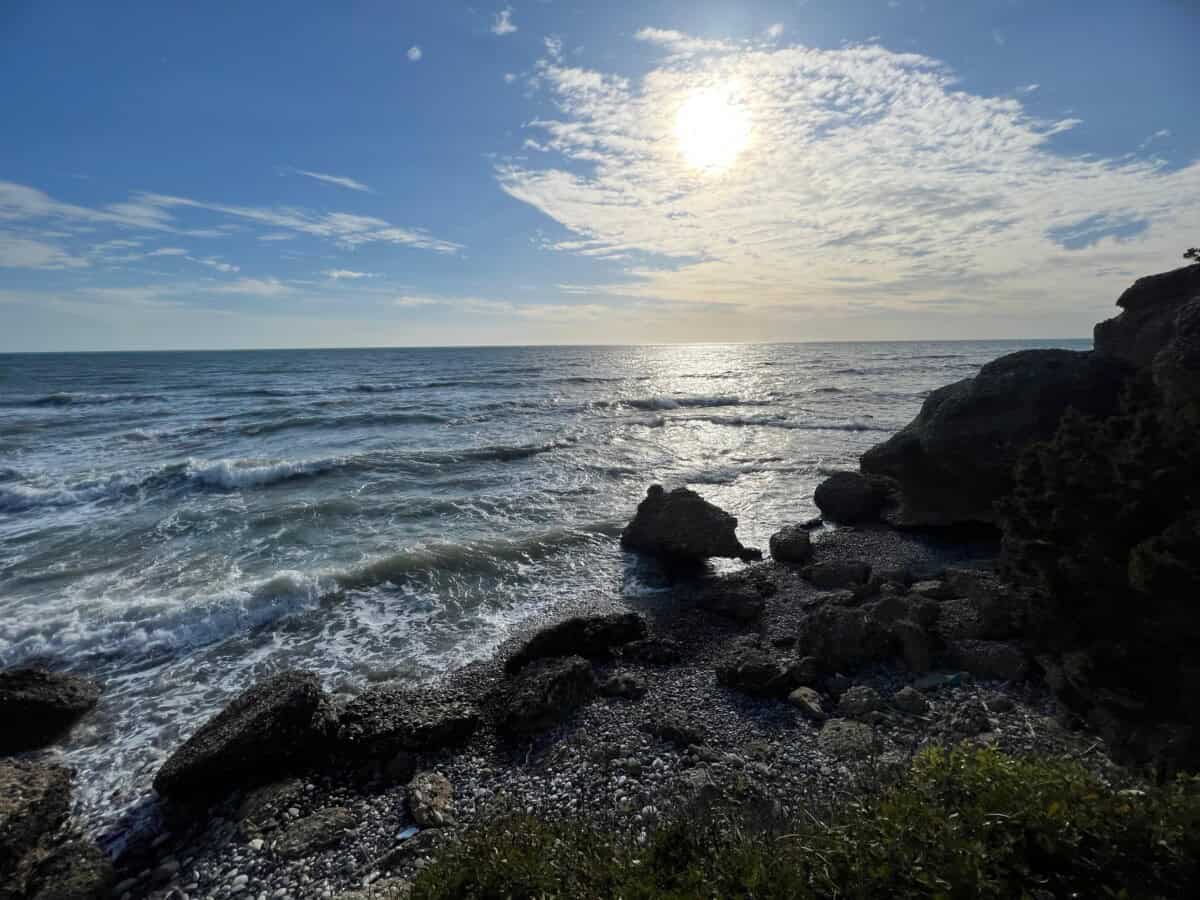
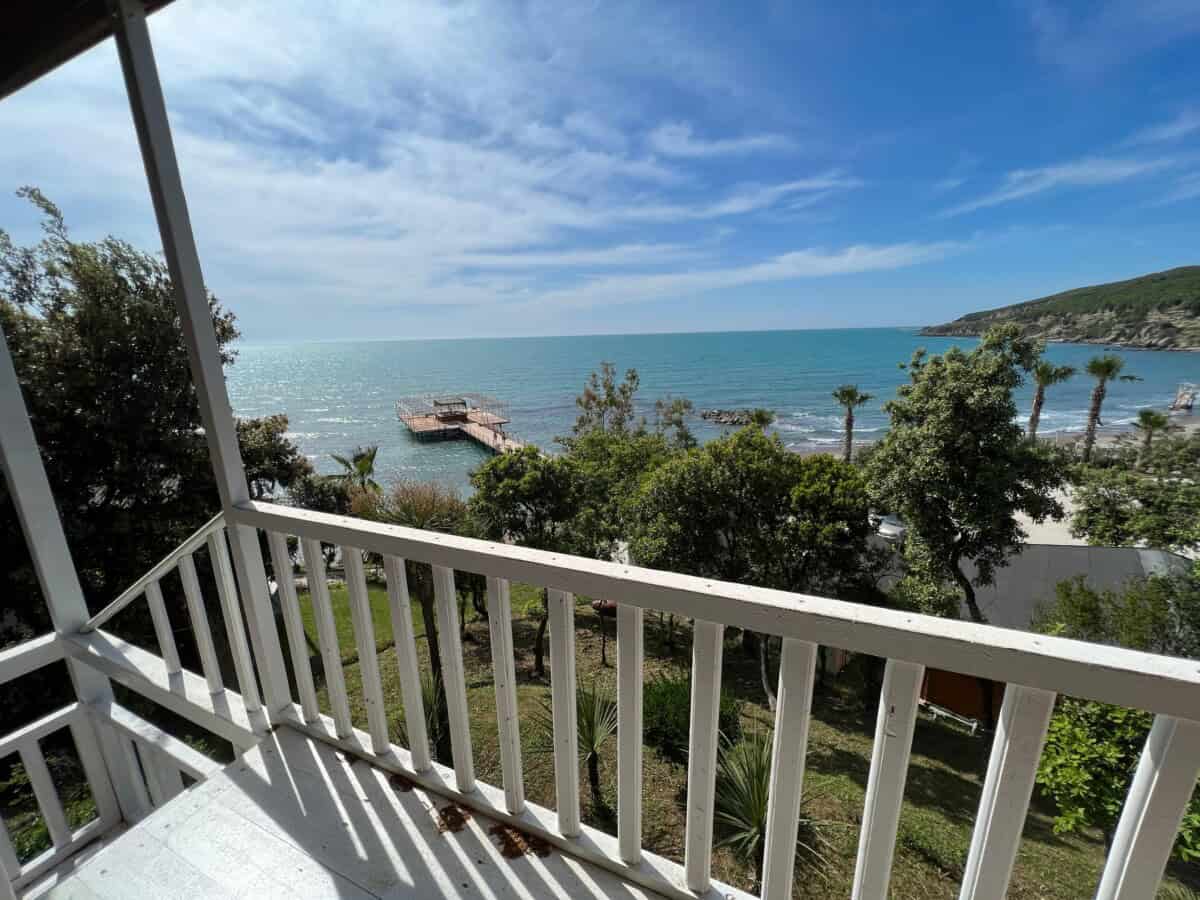
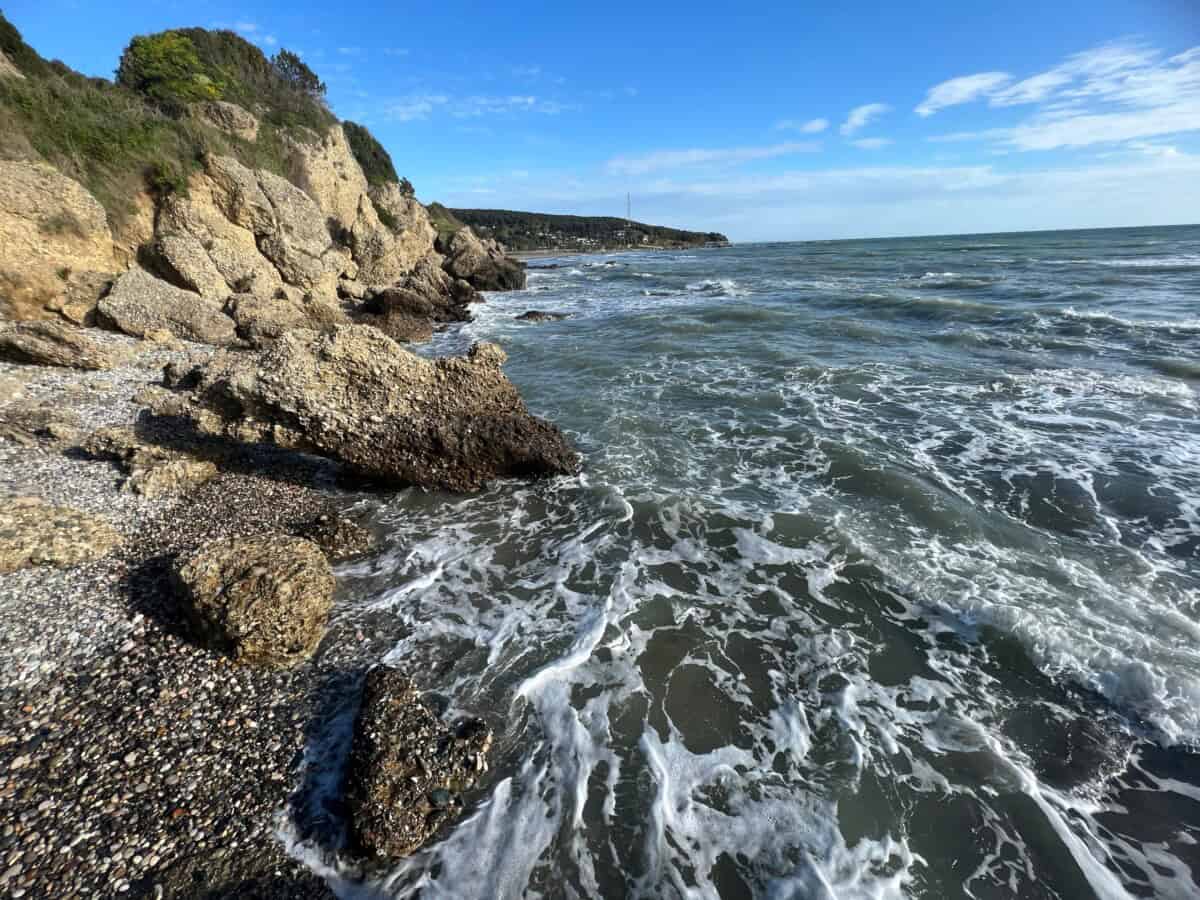
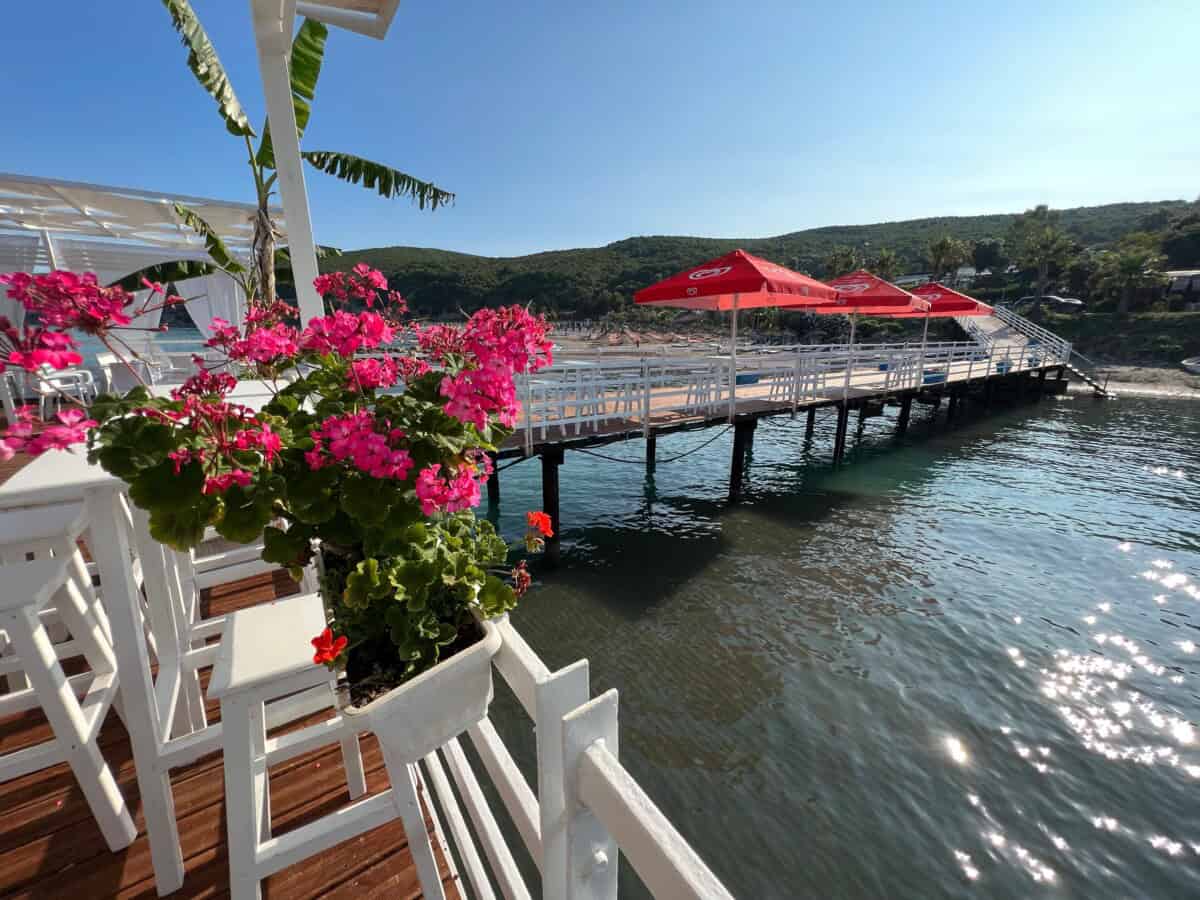
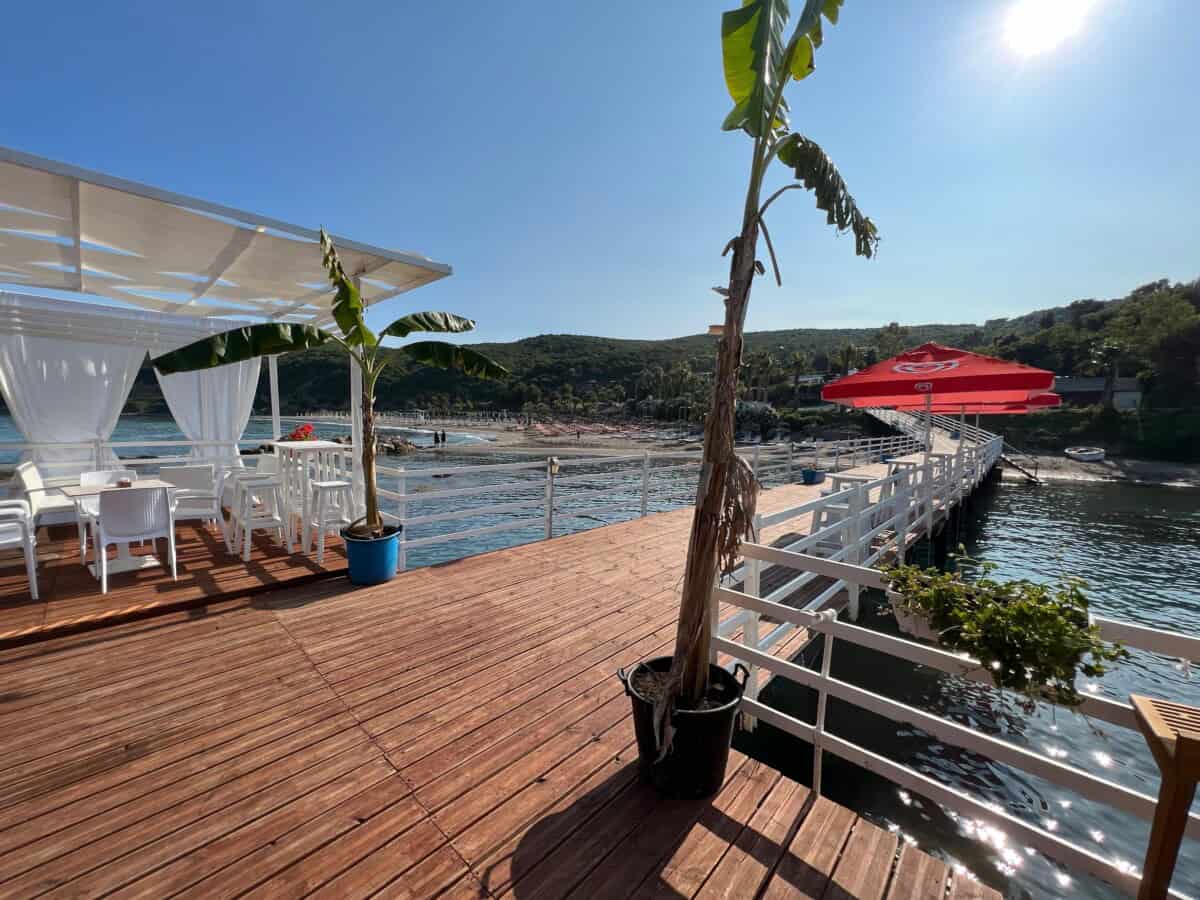
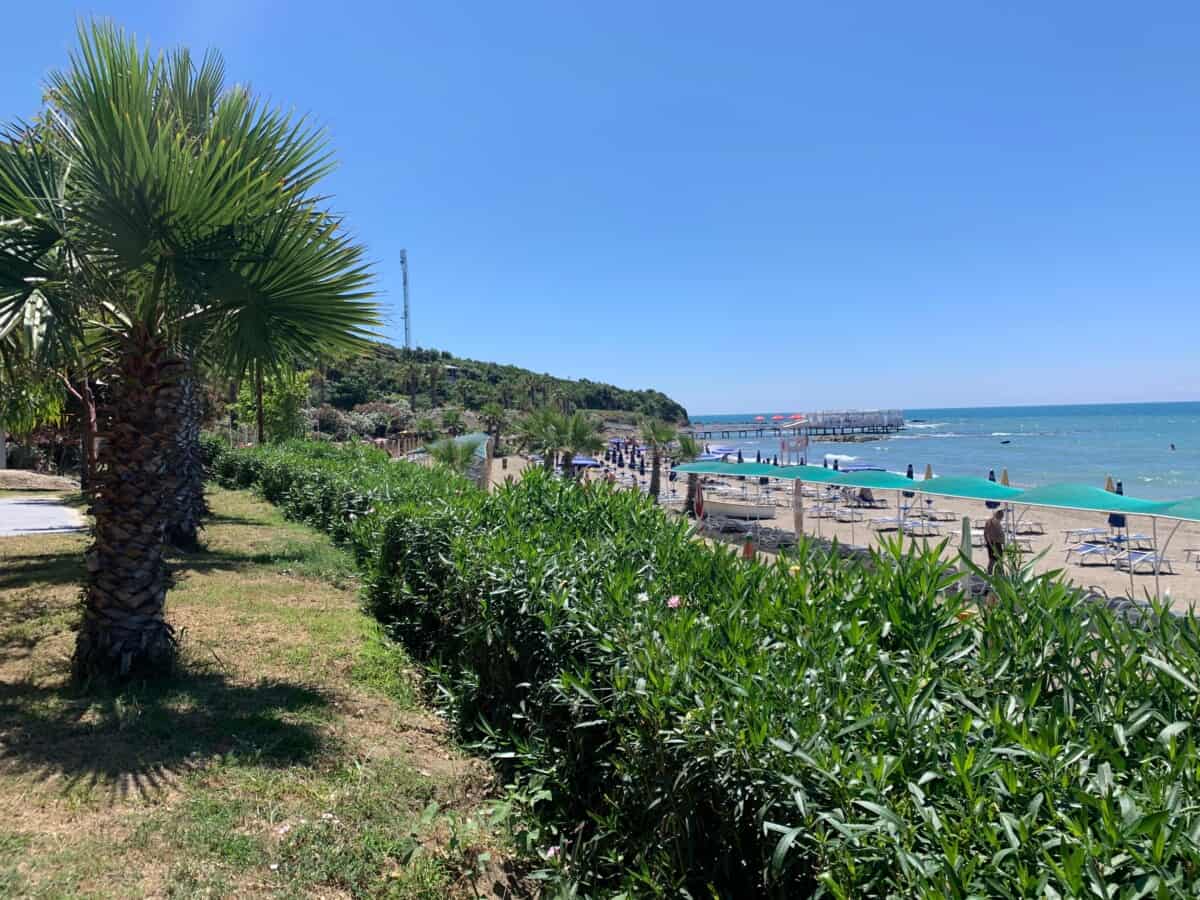
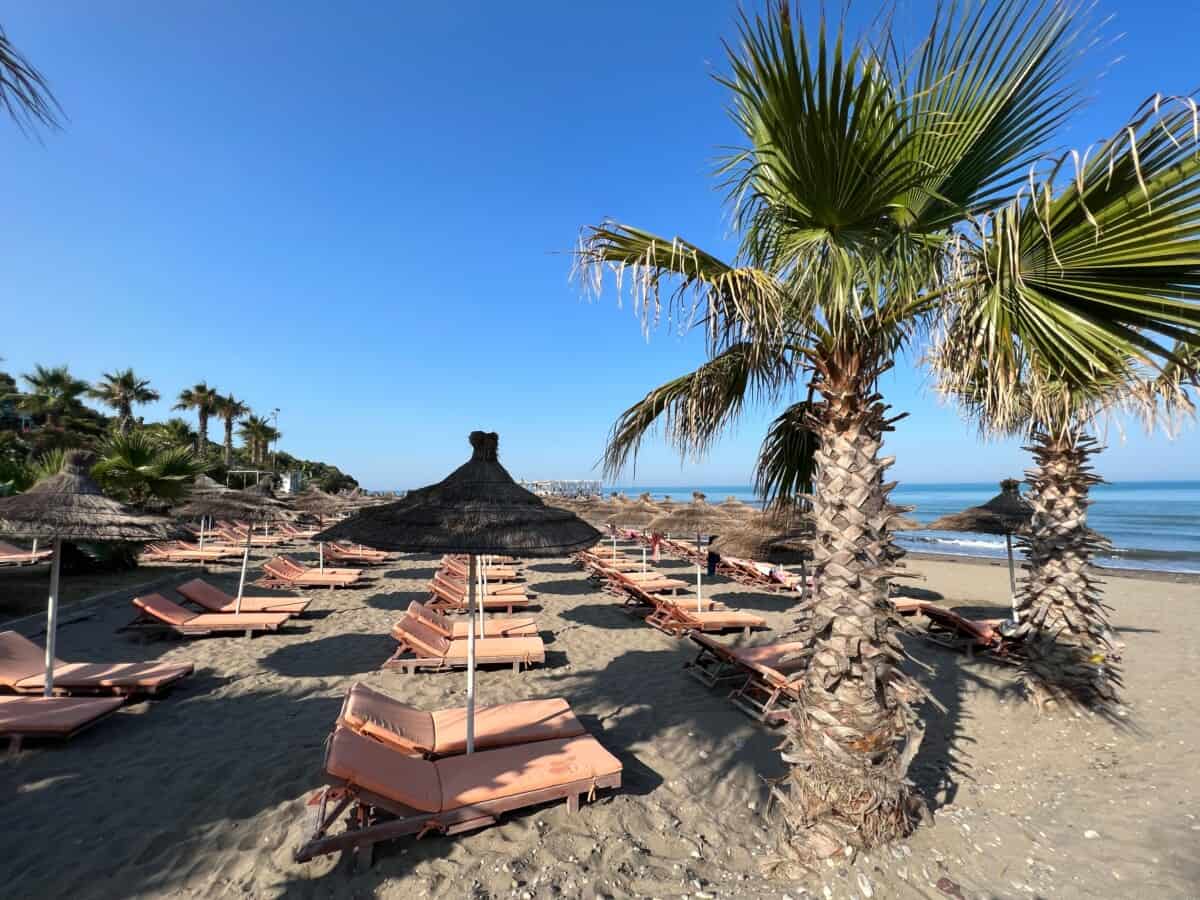
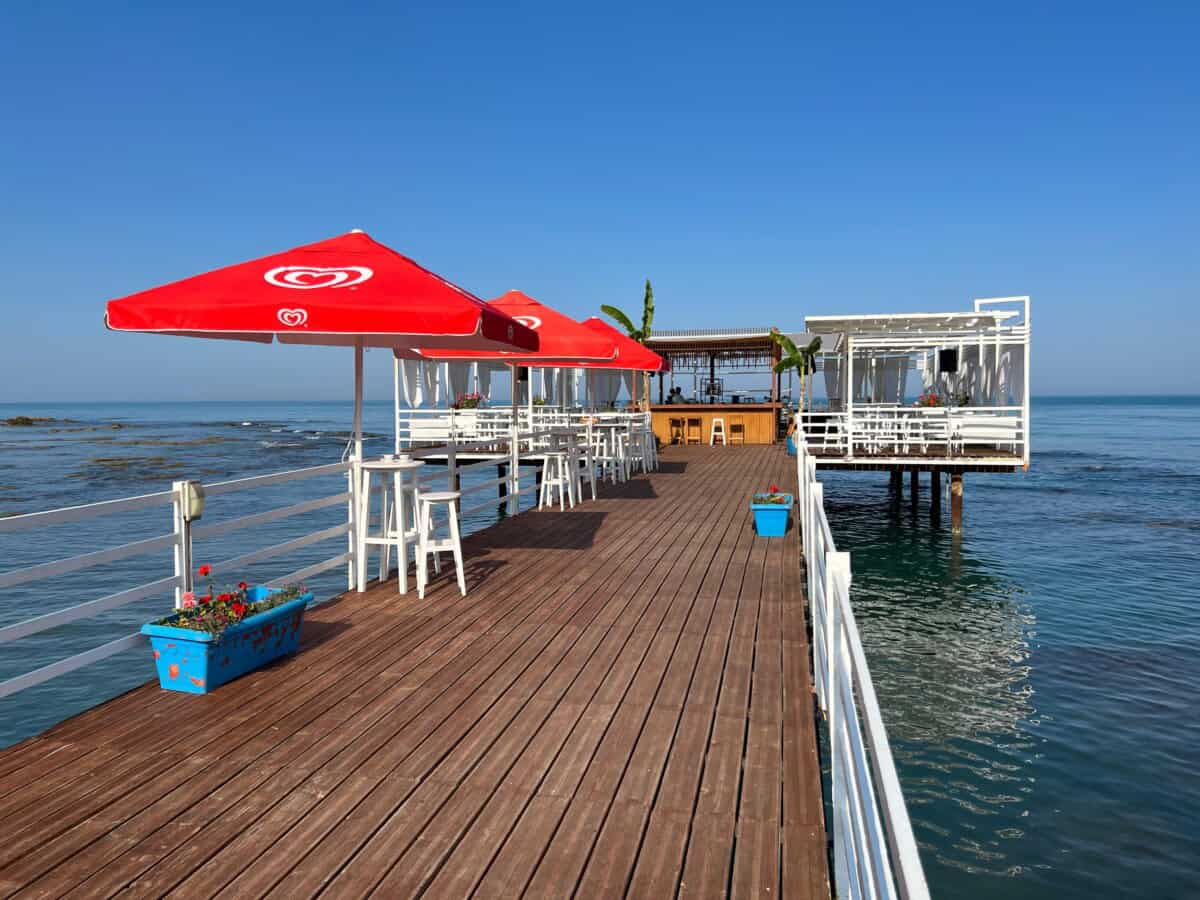
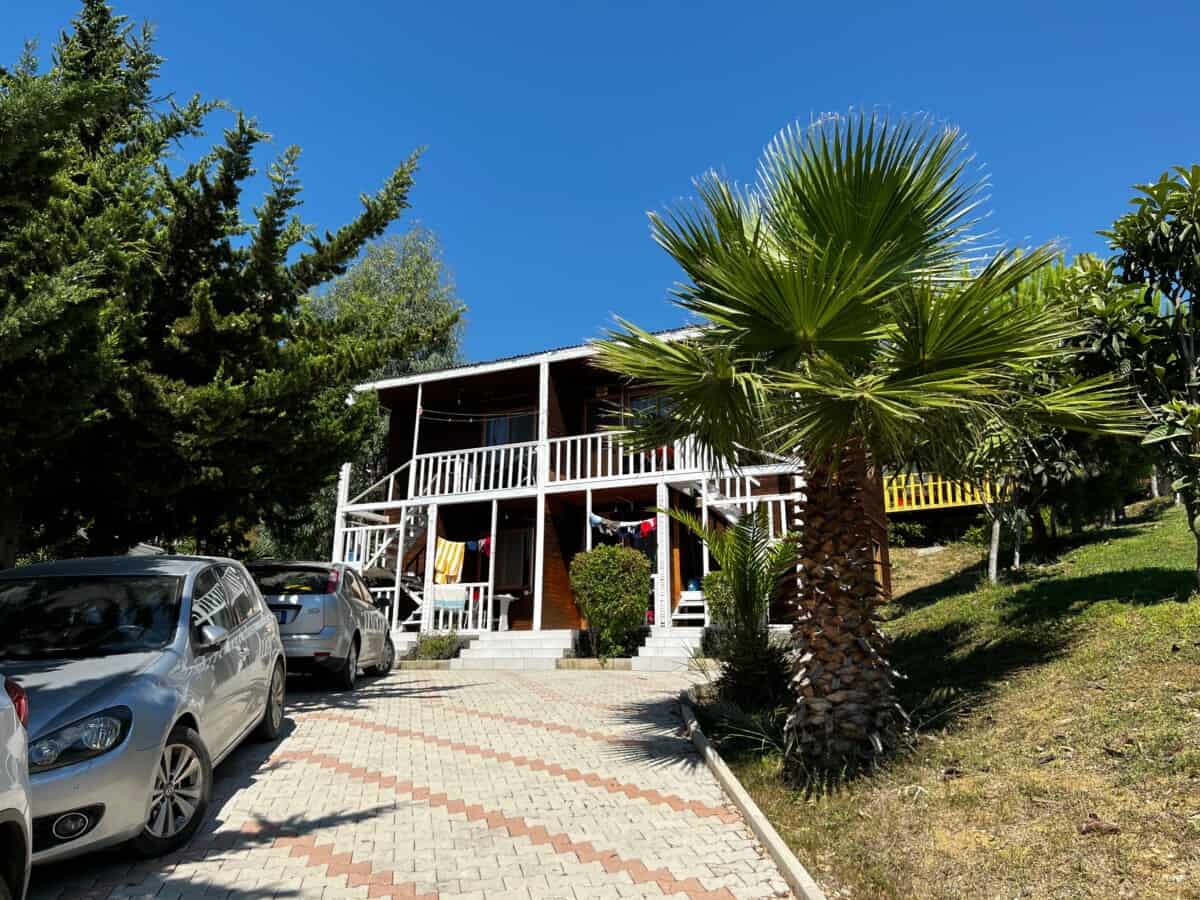
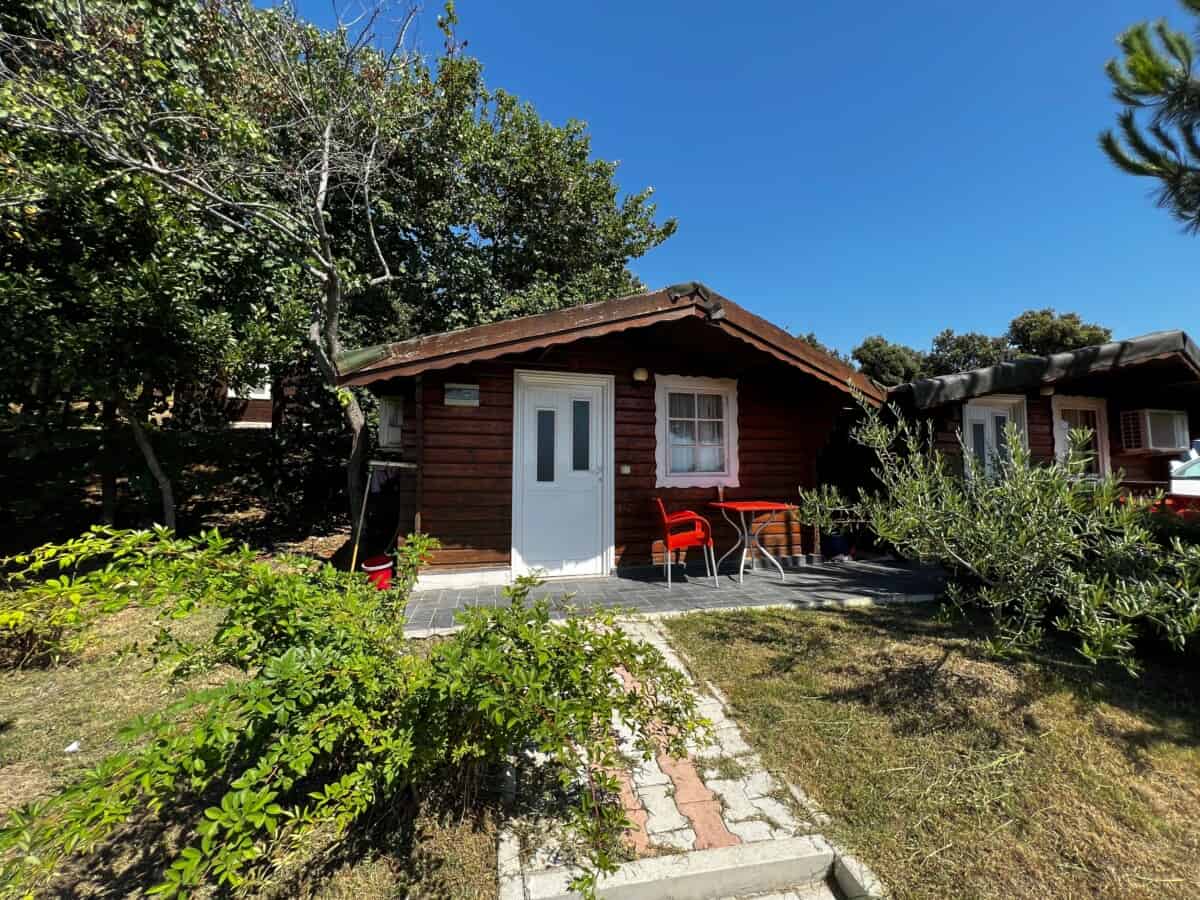
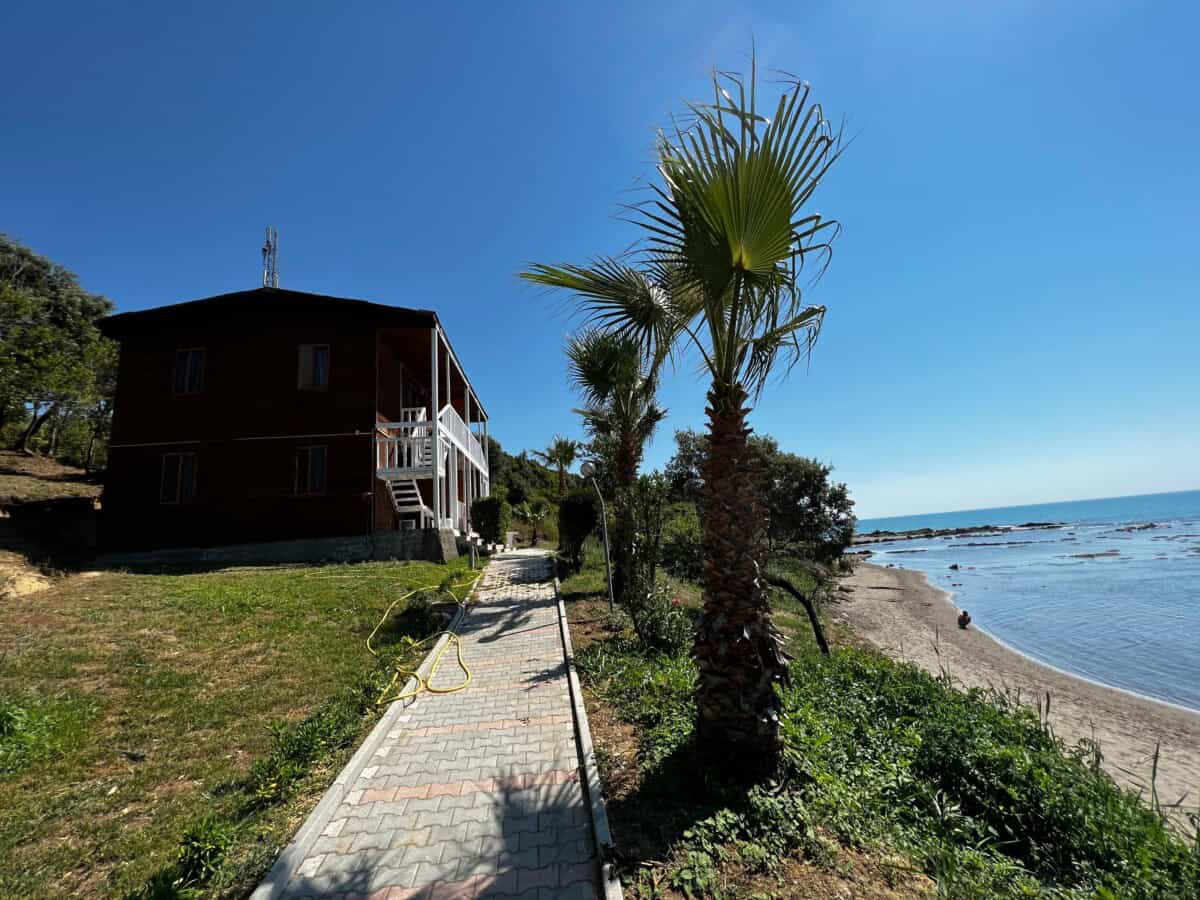
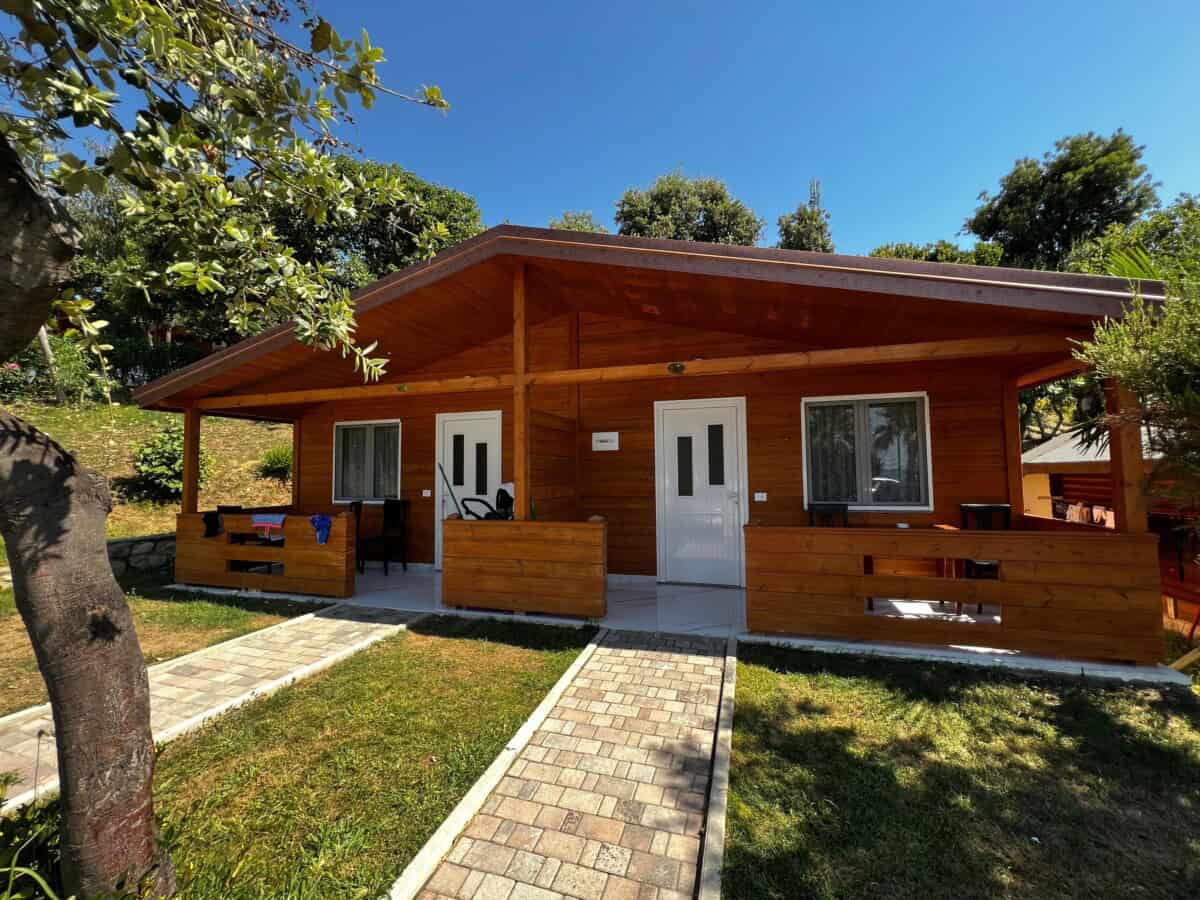
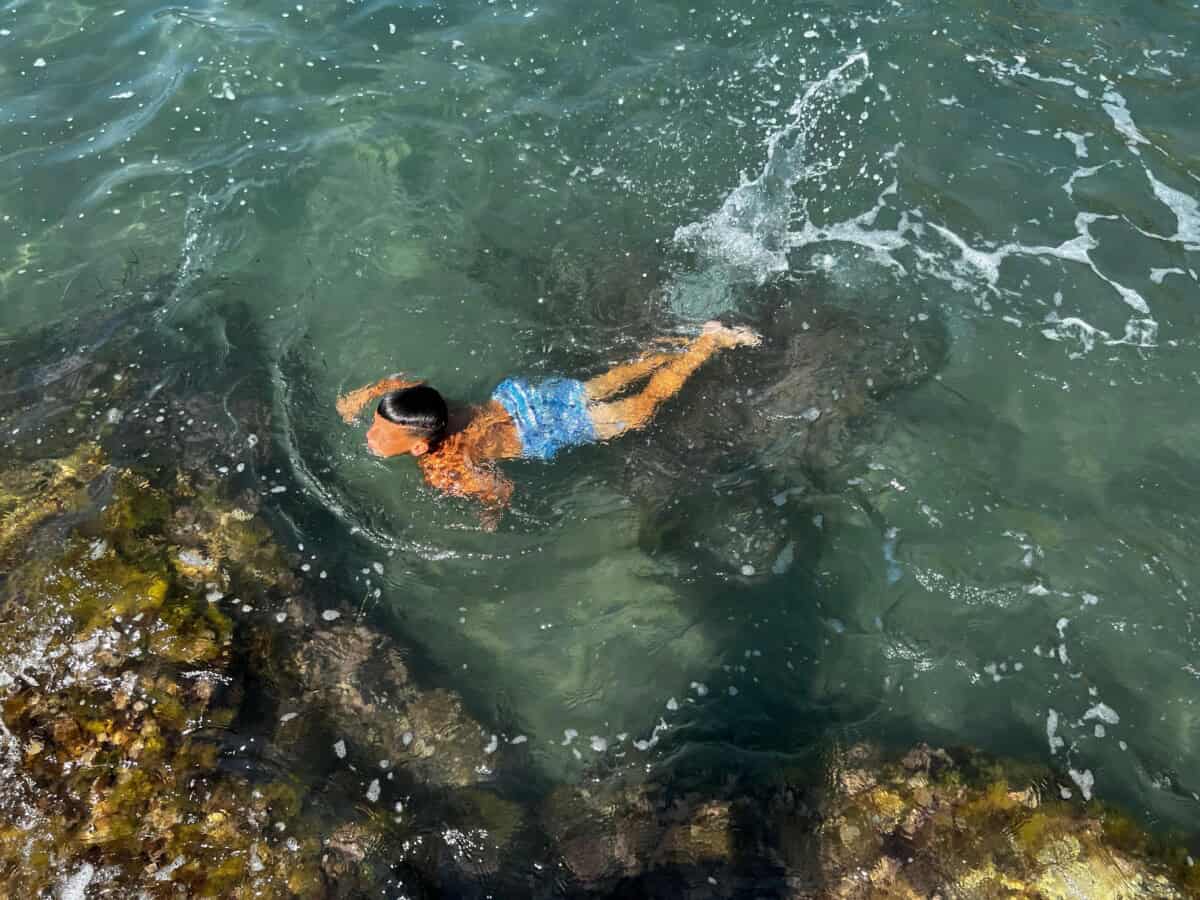
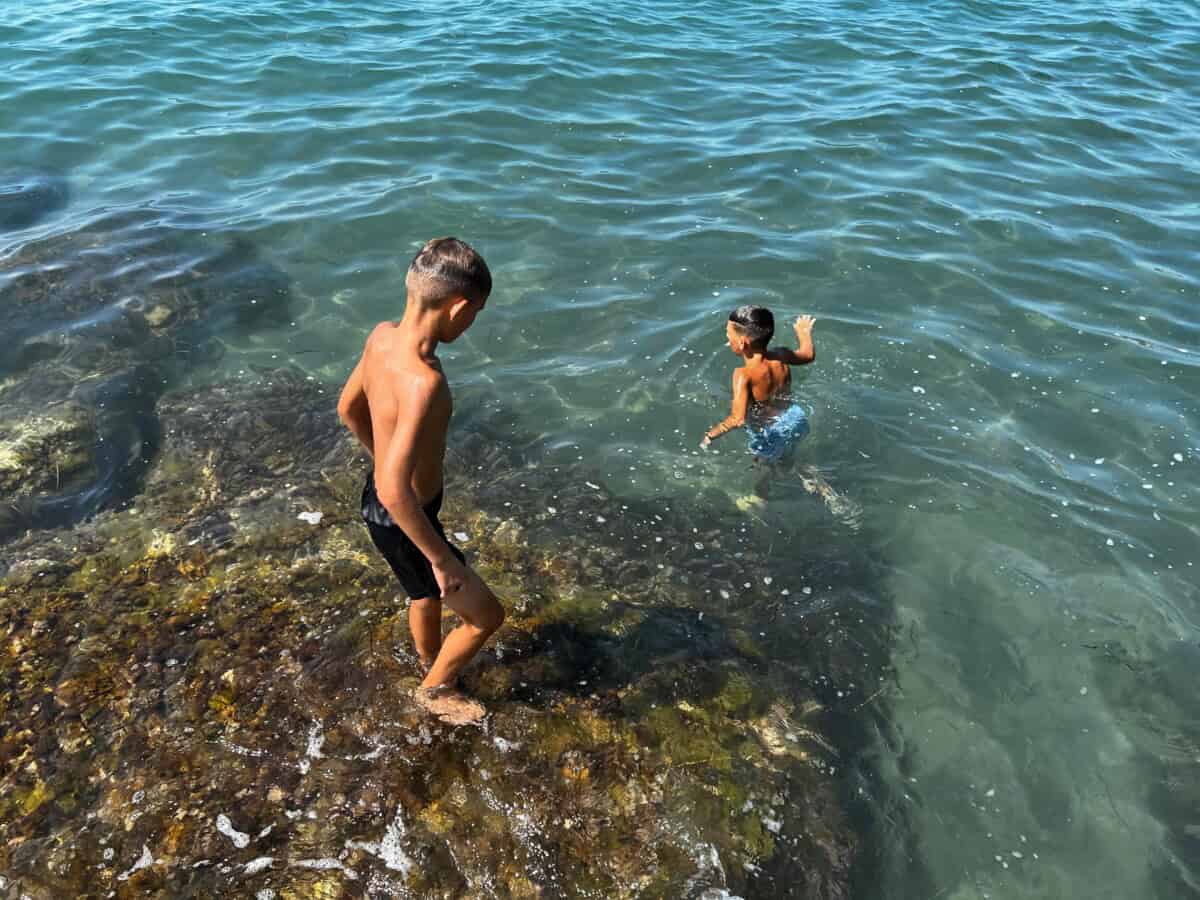
Near Durrës, beaches are crowded during the season and bustling with activity. In contrast, General’s Beach offers a somewhat more private vacation experience. The option of staying in bungalows is also great, which is not very common on Albanian coasts. You wake up in the morning, open the door and have the sea just a few meters from your bed. Prices are very favorable. Accommodation inquiries via WhatsApp at +355682067227.
Who is a holiday at General’s Beach suitable for? For couples who want romance with fewer people. For families who don’t want their children to get lost among millions of sunbeds and restaurants. For adventurers who love places “off the beaten path”. For everyone who likes beaches where you don’t have to fight for your spot.
Praktické
The road to the beach from Durrës is about 35 kilometers long, which represents approximately 40 minutes of driving. The road to the beach itself is an experience. The undulating landscape with views of nearby Durrës and Spille will enchant you.
The last part of the road, leading from Kavajë, goes along a gravel road. Although it is broken in places, it can be easily driven in an ordinary car. The parking lot at the beach is spacious, so there is usually no problem with space even at the peak of the season.
The restaurant and buffet have large capacity. If you decide to stay overnight, it is advisable to have a car available so you can occasionally take trips to interesting places in the area. The city of Durrës is available, Holta Canyon or the fairly nearby archaeological site Apollonia or the nature park Divjakë-Karavasta. Inquiries about accommodation via WhatsApp at +355682067227.
Mapa
What to see in Albania?
Albania offers plenty of beautiful and interesting places waiting for your discovery – stunning beaches on the southern coast, majestic mountains in the north, river canyons, lakes, well-preserved historic towns or remains of previous civilizations. Check out our tips for attractive places in individual regions of Albania. Whether you are tempted by adventure in wild nature, history or the charm of traditional Albanian villages, you will find plenty of places here that, in our opinion, are worth seeing! New places, as we visit them, will be gradually added. Just click on the map to select the area you are interested in.
How to enjoy vacation and not overspend
Live smart
Whether you are planning a trip to Albania or anywhere in the world, you can use the reliable Booking.com for accommodation reservations. You will find a huge selection of cozy private apartments, houses or hotels. The price range is wide and you will definitely find something to choose from.
Fly for reasonable prices
Do you need a flight ticket? Check out the well-known Kiwi or also the less known, but among seasoned travelers very popular Kayak. It's our favorite. It quickly compares offers from all airlines and shows you the most cost-effective flight combinations. You can also set up price alerts, so as soon as a ticket reaches a price that suits you, you'll get a notification.
Internet v mobilu
In the second half of 2026, Albania is promised free European roaming. Until then, you can get data with the YESIM application. You will get mobile internet on favorable terms.
Think of a back door
Quality insurance is the foundation of any travel. A trip to Albania is no exception. Insurance covers you in case of illness, injuries, and loss of belongings. We ourselves have ended up in a hospital in a foreign country a few times. Having good insurance will save you a lot of stress and, above all, money.

