
Kraj Elbasan
One of the attractions of the region is the city of Elbasan, which is somewhat inconspicuous, but boasts a rich history dating back to Roman times. Elbasan is known for its cultural festivals, for example during the Dita e Verës (Summer Day) celebration, which attracts visitors from the region, all of Albania and also from abroad.
The nature in the Elbasan region is also fascinating. The Shebenik-Jabllanicë National Park, located on the border with Kosovo, offers hiking trails leading to glacial lakes and peaks exceeding 2,000 meters above sea level.
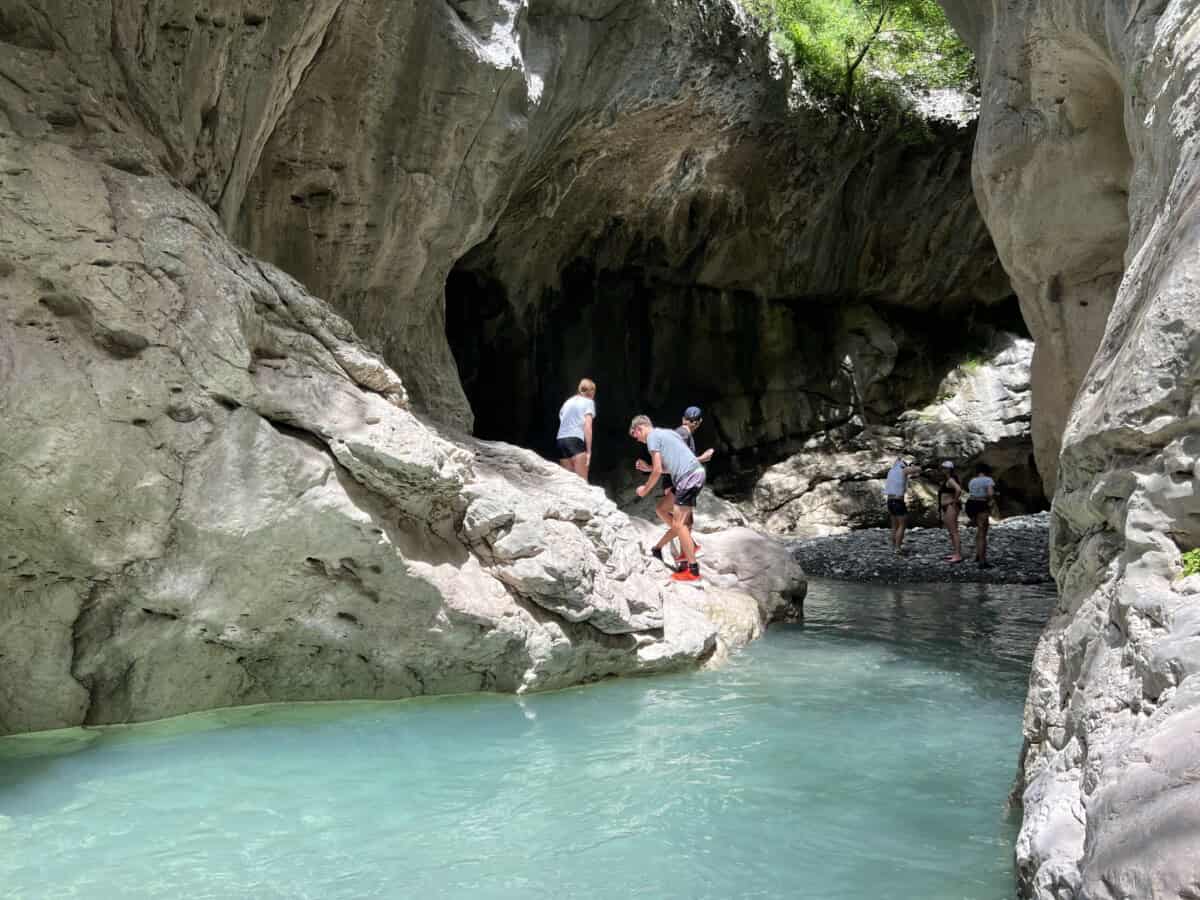
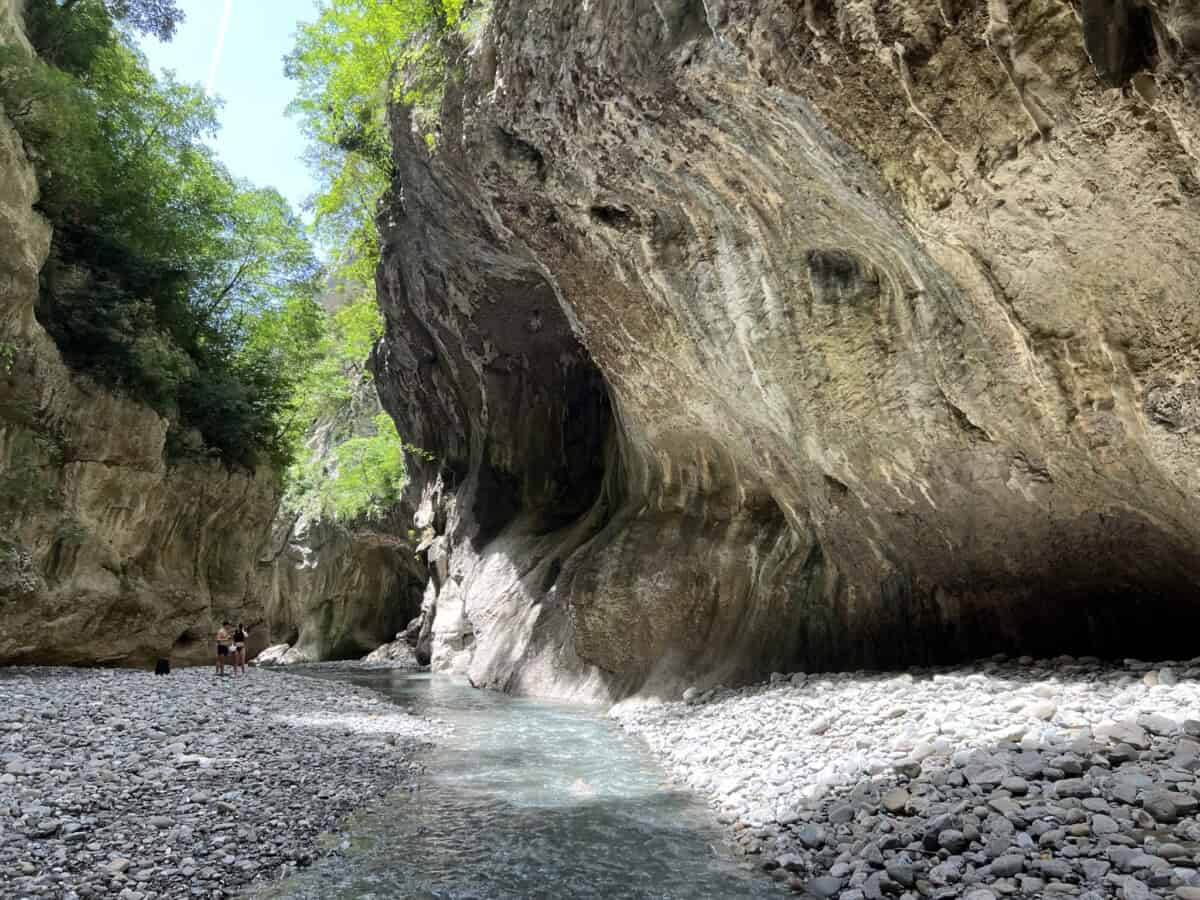
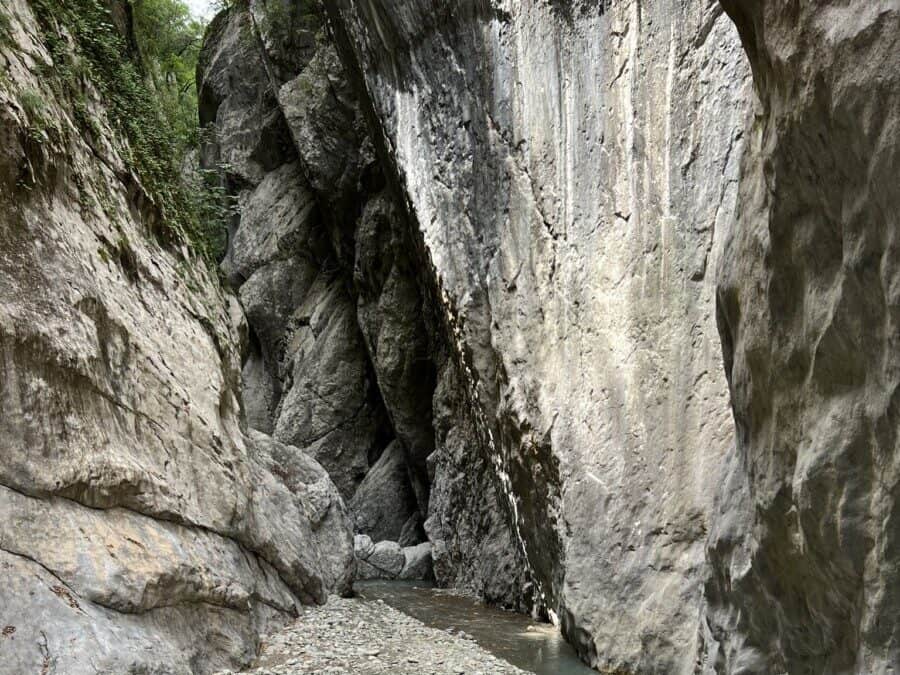
An extraordinary experience is a visit to the Holta canyon, where you can wade and also swim through the narrow gorge. The Sotira waterfall offers a great walk and refreshing coolness. The Elbasan region is another perfect choice for those interested in history, untouched nature and cultural experiences.


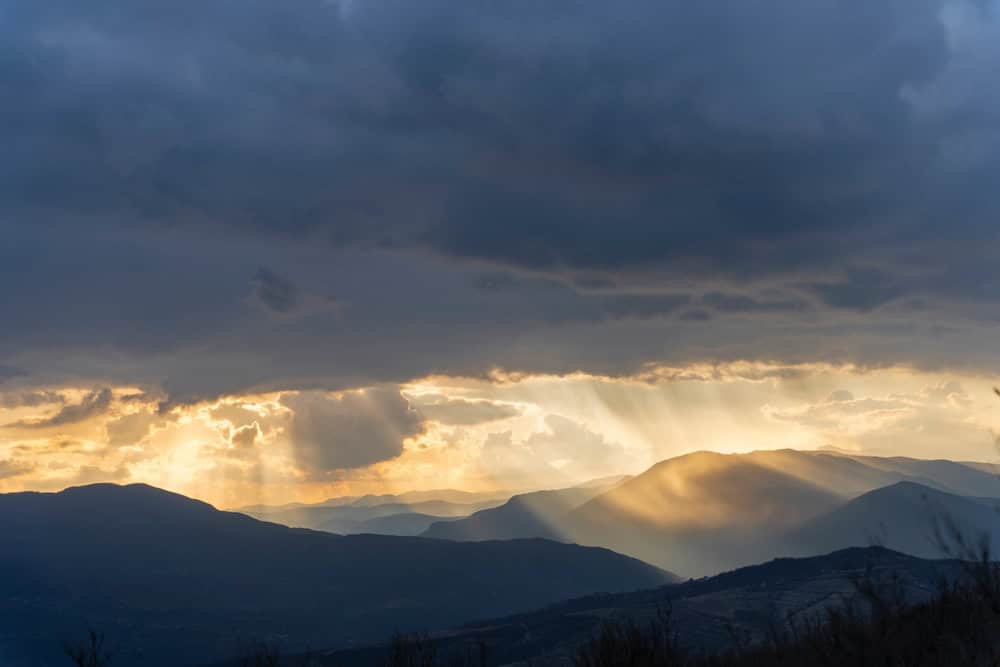
NP Shebenik-Jabllanicë
Shebenik-Jabllanica National Park (Parku Kombëtar Shebenik-Jabllanicë) is one of the places where Albanian nature has hidden its greatest treasures, and which tourists have yet to properly discover. This giant green paradise in the northeast of the country, right on the border with North Macedonia, covers over 34,500 hectares and is Albania’s second largest protected area – and its youngest national park (designated in 2008 and expanded in 2022).
Imagine a landscape with ancient forests that seem as if no one has entered them for thousands of years. It is surrounded by dramatic peaks above 2,000 m above sea level. At elevations of 1,500–1,900 m above sea level fourteen beautiful glacial lakes float. You will find dense coniferous and beech forests here, in which animals live that are hardly heard of anywhere else in Europe.
Více o NP
Nature has been preserved here in its original state also because it was a military zone for half a century (border area with Macedonia). Only in 2008 did Albania declare it a national park and open the door to ecotourism.
One of the parts of the park is the Rrajca Reserve (Rezervat Natyror Rrajcë), which consists of one of the last ancient beech forests in Europe. This forest survived the ice age and today is part of the UNESCO World Heritage! In 2017, this beautiful area within the Shebenik-Jabllanicë National Park was inscribed on the prestigious list due to its exceptional ecological value.
In total, it is 46 km² of virgin forest. For reference, the Boubín primeval forest in the Czech Republic has 6.6 km². The Rrajca beech primeval forests are thousands of years old – their story began about 12,000 years ago when beech was able to adapt to harsh climate changes after the ice age and spread throughout Europe. Rrajca is one of the few places where the original, untouched structure of the forest has been preserved with giant trees that remember generations without human intervention.
During the Communist era (1944–1990), much of Albania’s forests were intensively cut for wood and economic purposes, but Rrajca remained largely untouched due to its remoteness – and that saved it. Today it is a refuge of rich biodiversity, where you can admire ancient beeches, rare plant species and tranquility that hardly exists anywhere else in Europe. You can meet brown bears, wolves, Balkan lynx, wild goats or perhaps golden eagles here.
Praktické
Mapa
City Elbasan
Více o Elbasanu
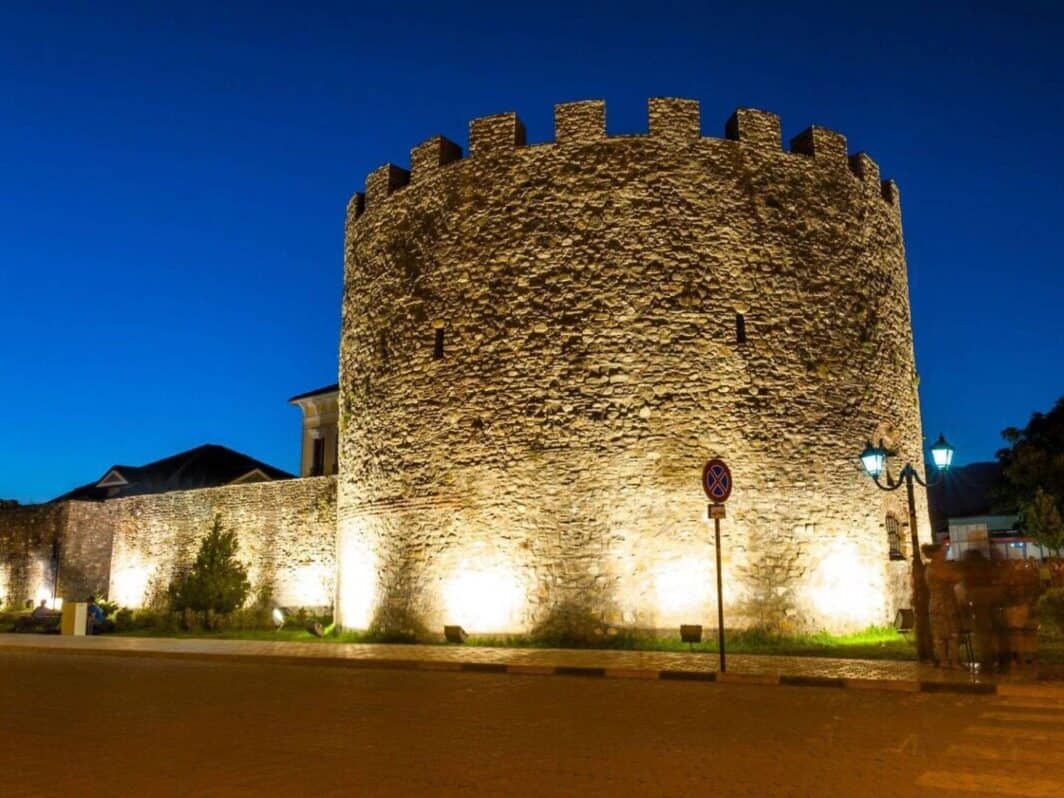
Why precisely Elbasan? In the Elbasan area, pagan rituals existed already in the time of the Illyrians. The celebration was connected with the worship of the goddess Diana, patroness of nature and fertility. According to local legends, a monastery dedicated to this goddess once stood in Elbasan. Even during the Ottoman and communist eras, the celebration was maintained more strongly in Elbasan than elsewhere. After the fall of communism in 1991, the celebrations were revived here for the first time and to this day are the biggest in all of Albania.
This important strategic road also served during the religious wars and crusades. After the Via Egnatia road was blocked by the influx of barbarians, the city ceased to be mentioned and was destroyed by the Bulgars and Ostrogoths during the Slavic-Bulgarian migration sometime between 6th and 7th century. The city was put back on its feet by the Ottomans.
Elbasan was refounded by Sultan Mehmet II and Ballaban Pasha in the 15th century. After the defeat that the Turks suffered in one of the sieges of Krujë, Sultan Mehmet II rebuilt the old original fortress here so that he would later have it as a stronghold in further conquests of the north of Albanian territory. The fortress was reportedly built in just 25 days and 150,000 people participated in its construction.
Praktické
Mapa







City Belsh
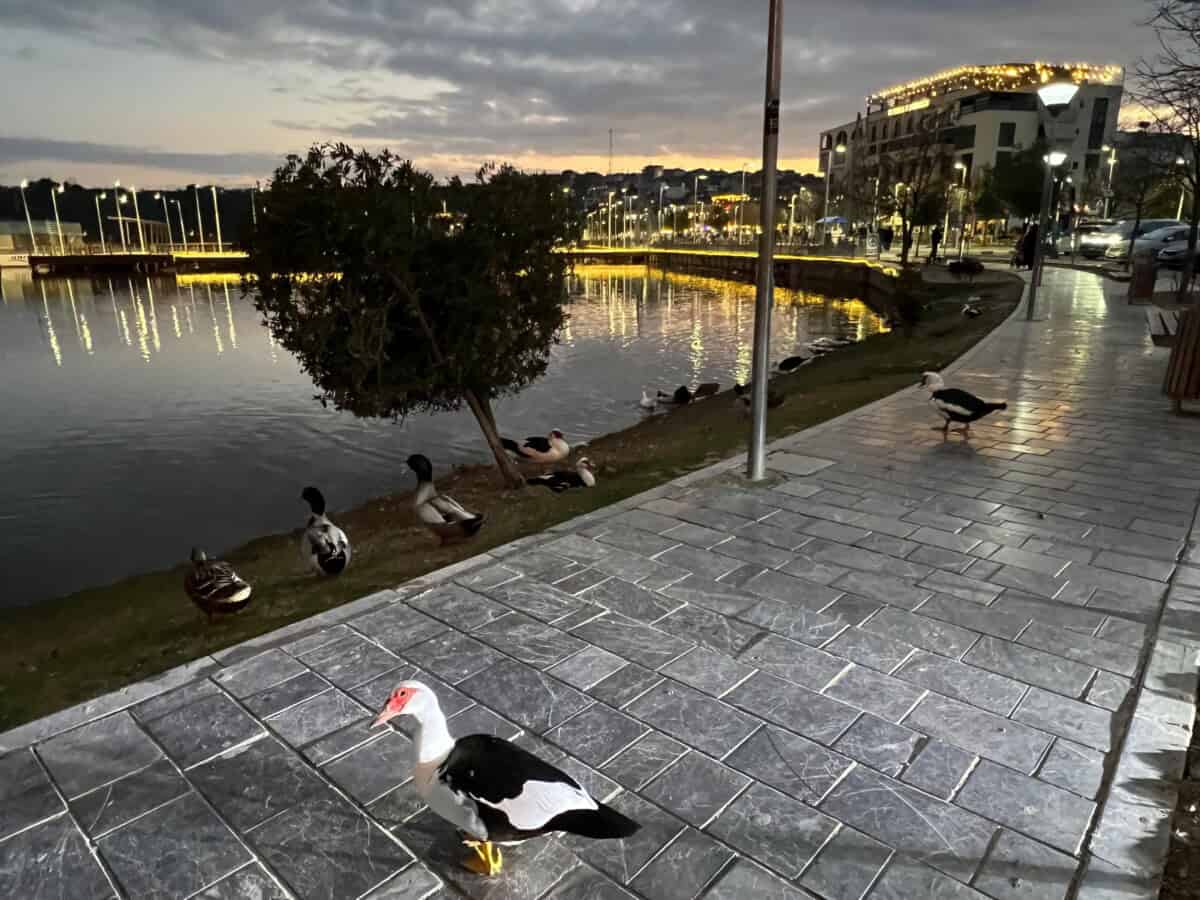
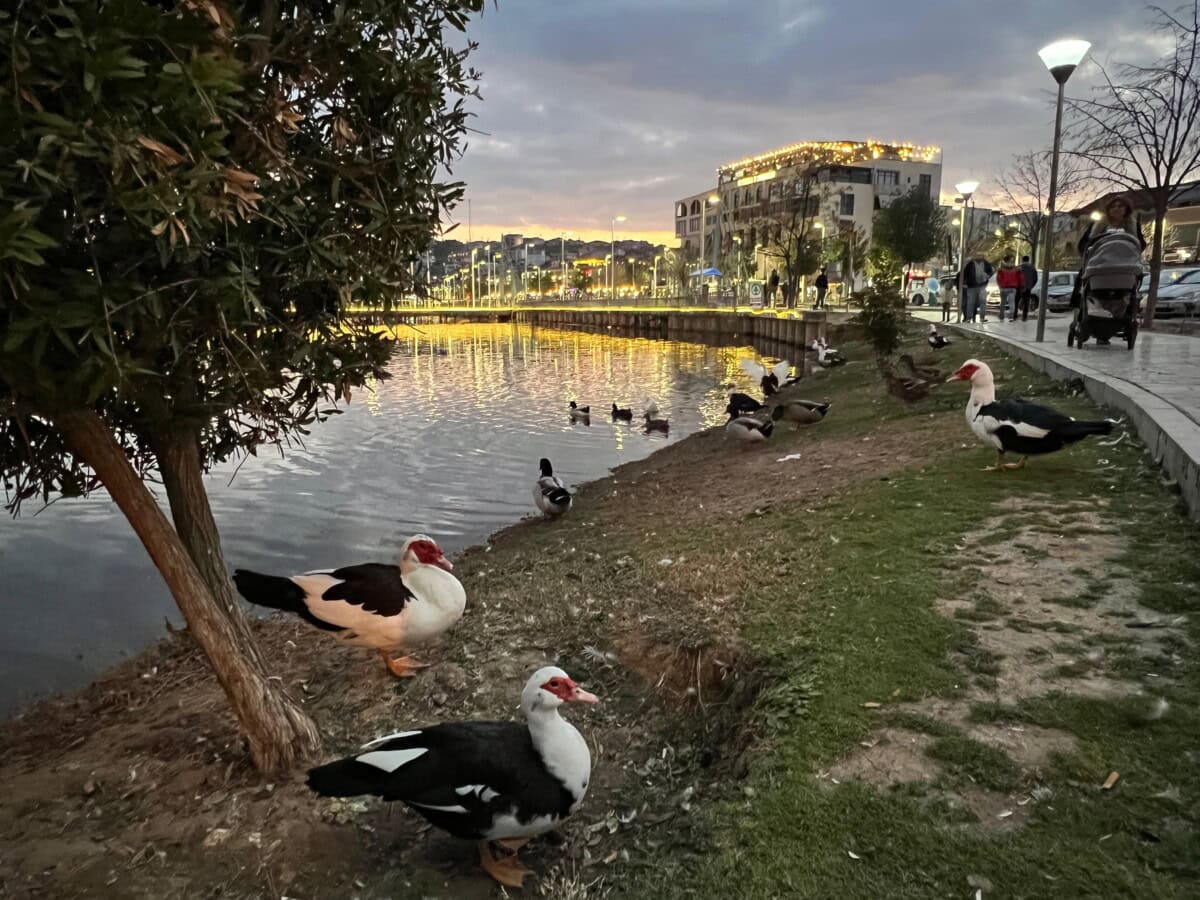
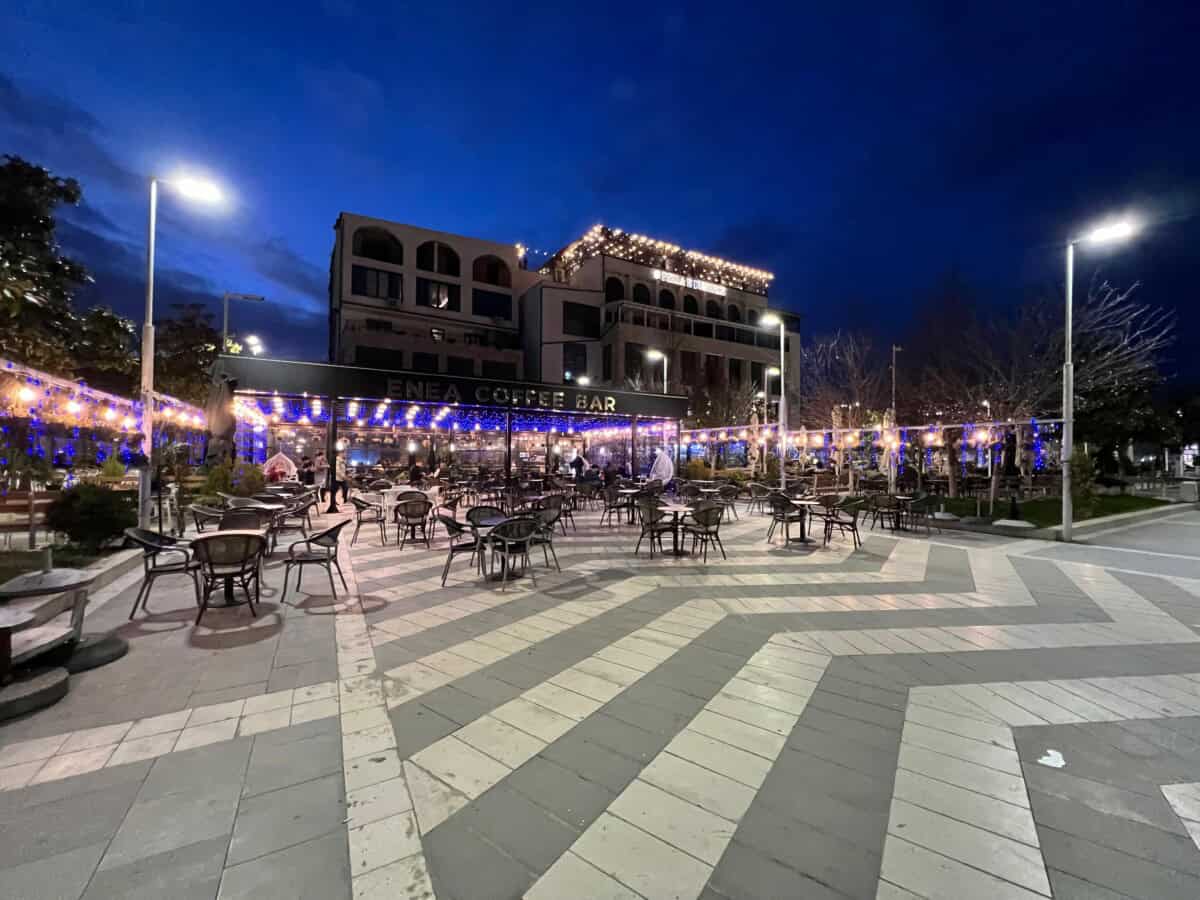
Belsh is a small, somewhat out-of-the-way town on the shore of the lake of the same name 30 km southwest of Elbasan. The atmosphere of the town is extremely pleasant and therefore worth a visit. Especially when the beach resorts are full of people and you need to get away a bit. During a walk around the lake you will be entertained by tame flocks of geese and ducks. On the main promenade, your children will surely enjoy cotton candy and sweet popcorn.
Its history is very deep and interesting. Archaeological excavations at nearby Gradište prove that there was an ancient Illyrian settlement here. In Albania, almost every metre of land is marked by history older than 2,000 years. This is why Albanians are so proud of their country.
Více o Belshi
In connection with Belsh, there is mention of the existence of an Illyrian prince called the Prince of Belsh, who was buried with great honours around 350 B.C. with all his equipment and ornaments. During archaeological excavations here, a princely tomb was found and some objects, such as a helmet, knee guards, a bronze cauldron, a bronze strainer, a krater with volutes (a vessel with an egg-shaped body and handles that project above the level of the vessel and curve into a volute – spiral shape). These artifacts are displayed in the Archaeological Museum in Tirana.
During archaeological excavations in Gradište (an Illyrian city near Belsh), many ceramic vessels (fired clay) from the 4th to 2nd century B.C. from the period of Illyrian civilization were found. Near the lake Seferani there was a sanctuary of Aphrodite. As gifts to the goddess, terracotta vessels were thrown into the lake. Ceramics with the head of Aphrodite held a special place in the cult of the inhabitants of the Illyrian city of Belsh. This ceramics became world-famous as the Illyrian Aphrodite of the Hellenistic period of Belsh. You can see some pieces in the Archaeological Museum in Tirana.
Praktické
A visit to the town of Belsh can be combined with exploring the nearby Holta Canyon. Ideally in the order Holta – Belsh. After an adventure in the canyon, relaxation on the shore of a lake with good food comes in handy. You can find a large city parking lot HERE.
Mapa
Canyon Holta
Více o kaňonu
On the way to the canyon from Durrës, you will enjoy beautiful views of the Banja reservoir, which you will have on your right side. The history of the lake begins in ancient times, when this area was part of a larger body of water, known as Lake Gramsh. Over the years, as a result of geological processes and the construction of a dam with a hydroelectric power plant, Lake Banja was created as we know it today. It is formed predominantly by the waters of the Devoll River, which flows through this mountainous region.
Praktické
The journey from Durrës takes about 1.5 hours and leads via a roundabout HERE near Rrogozhinë. At it you must turn left towards Peqin. However, you will pass it and continue further towards Gramsh. A few kilometers before Gramsh you turn left. The turnoff HERE is inconspicuous and very often missed. So be careful not to miss it. Navigation may pull you in another direction along a road that is not suitable for normal cars.
After a while of dusty but passable road (where you may encounter turtles), you join HERE onto an asphalt road and turn right. To the canyon HERE it will be just a few minutes drive.
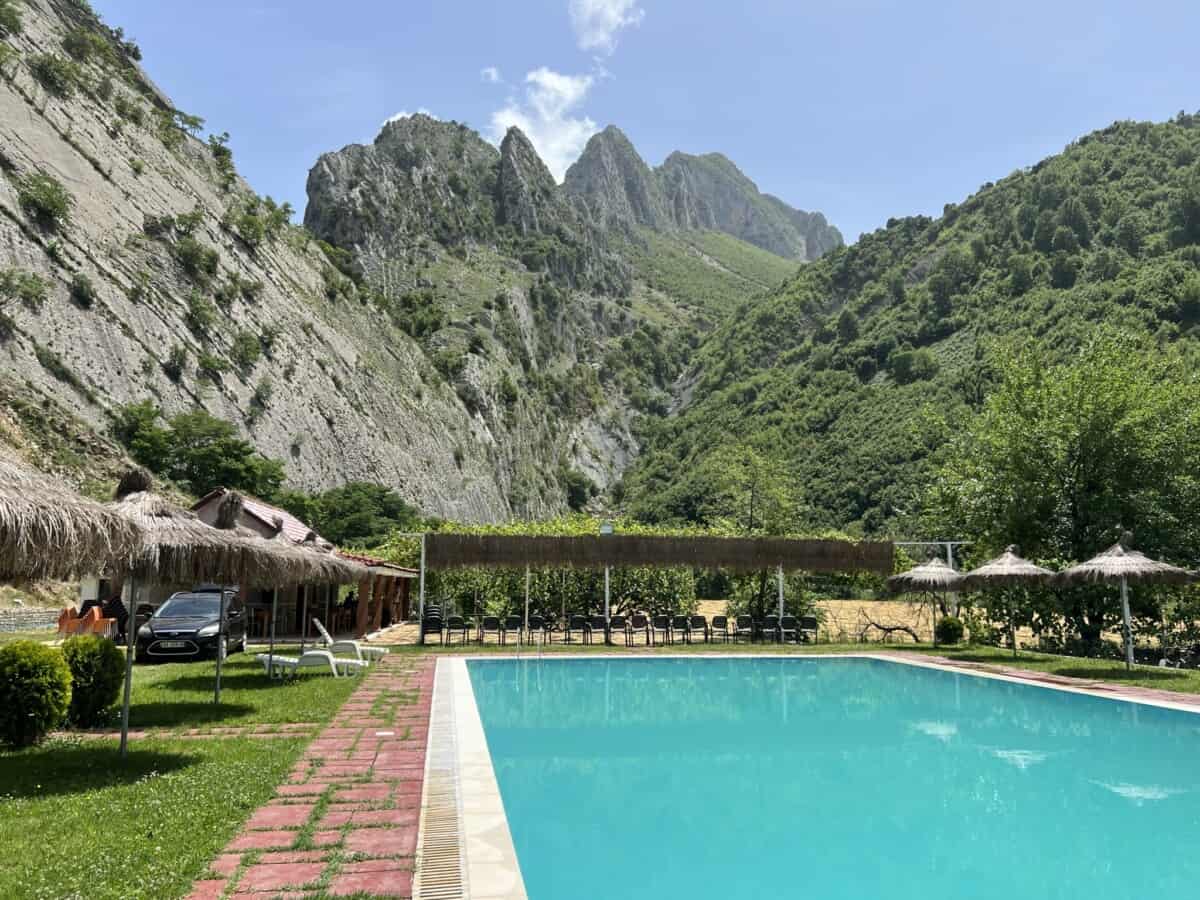
Upon arrival at the clay parking lot you can visit one of two restaurants. The first one also offers swimming in a swimming pool. The second one offers a somewhat more natural environment.
Mapa








Waterfall Sotira
Více o vodopádu
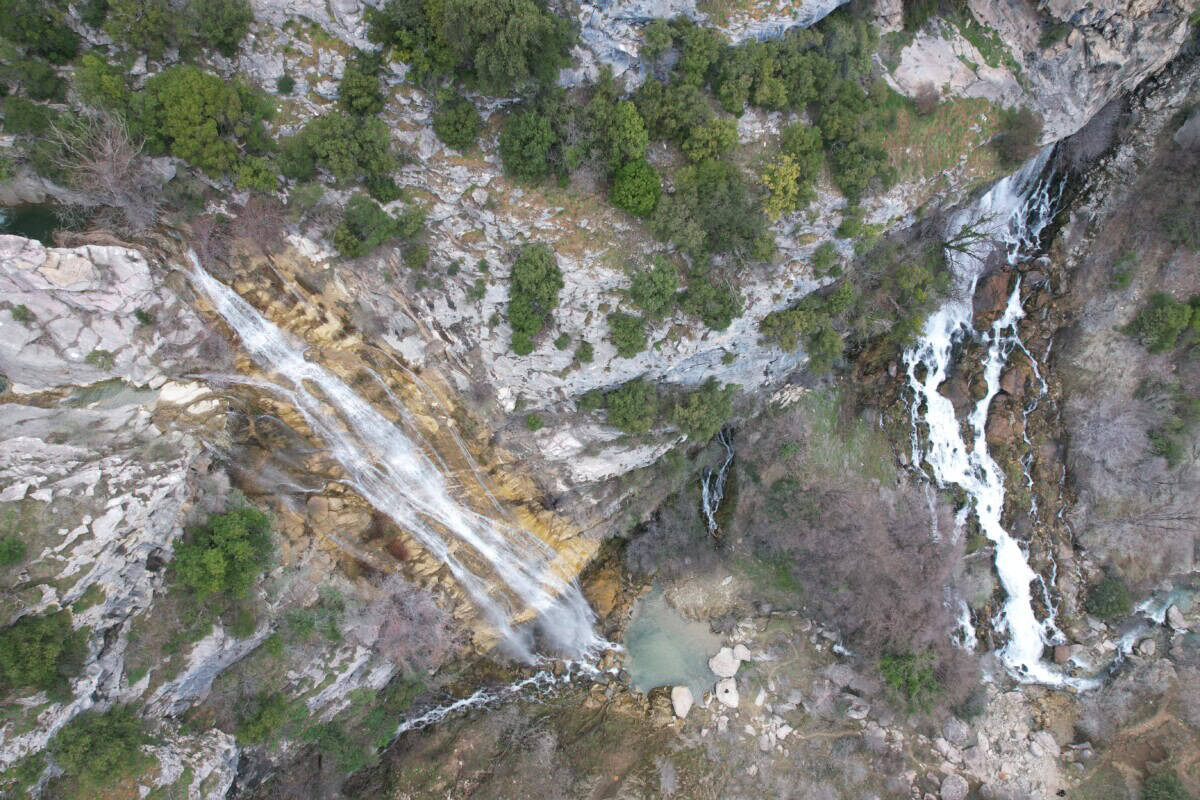
In the upper part of the left waterfall are additional cascades, which unfortunately are not visible from below. Sotira Waterfall is a wonderful testament to how much imagination nature has.
The waterfall has served and continues to serve local residents for relaxation and mainly as a water source, which people use downstream for agriculture and livestock farming. Now it is a destination for many tourists.
The area of the village of Sotira has responded to the influx of tourists and now offers small family restaurants with traditional cuisine and also small shops with fresh homemade products. On the way to the waterfall, you can soak in the atmosphere of mountain life. In autumn, nature offers one extra touch – the entire path to the waterfall is surrounded by autumn-colored nature.
Praktické
The path to the waterfall begins in the village of Sotirë HERE, where you can park. The path is flat and suitable for families with children. It’s about 4 km long and even the smallest ones can manage it. It takes approximately 40-50 minutes. Whether you’re with a terrain stroller, a dog, or a toddler on your back, you can get there without much effort. If you have an SUV or 4×4 vehicle, you can overcome the ford at the indicated parking spot and get by car to the immediate vicinity of the waterfall. But it’s a pity not to walk and miss the opportunity for a pleasant and easy stroll.
One of the routes also leads steeply through the Tomorr mountain range, but that one is also rather for 4×4 or at least SUV, although Albanians travel such a route comfortably even in a Fiat Punto and of course without any hesitation in a Mercedes.
It’s worth combining a visit to the waterfall with Holta canyon. You just have to count on considerable time requirements and some physical exertion. If you properly walk and swim through Holta canyon, it’s questionable whether you’ll still have the energy left for a walk to the waterfall or vice versa. But it is possible.
Mapa
What to see in Albania?
Albania offers plenty of beautiful and interesting places waiting for your discovery – stunning beaches on the southern coast, majestic mountains in the north, river canyons, lakes, well-preserved historic cities and remnants of previous civilizations. Check out our tips for attractive places in individual regions of Albania.
Whether you are drawn to adventure in wild nature, history or the charm of traditional Albanian villages, you will find plenty of places here that, in our opinion, are worth seeing! Just click on the map to select the area that interests you.
How to enjoy vacation and not overspend
Stay smart
Whether you are planning a trip to Albania or anywhere in the world, you can use the proven Booking.com for accommodation reservations. You will find a huge selection of cozy private apartments, houses and hotels. The price range is wide and you will definitely find something.
Fly at reasonable prices
Do you need a plane ticket? Check out the well-known Kiwi or also the lesser-known but very popular Kayak among seasoned travelers. It's our favorite. It quickly compares offers from all airlines and shows you the most cost-effective flight combinations. You can also set price alerts, so as soon as a ticket reaches a price that suits you, you'll get a notification.
Internet v mobilu
In the second half of 2026, Albania is promised free European roaming. Until then, you can get data with an app like YESIM. You will get mobile internet on favorable terms.
Think of a back door
Quality insurance is the foundation of any travel. A trip to Albania is no exception. Insurance covers you in case of illness, injuries, and loss of belongings. We ourselves have ended up in a hospital in a foreign country a few times. Having good insurance will save you a lot of stress and, above all, money.

