Where did coffee actually originate?
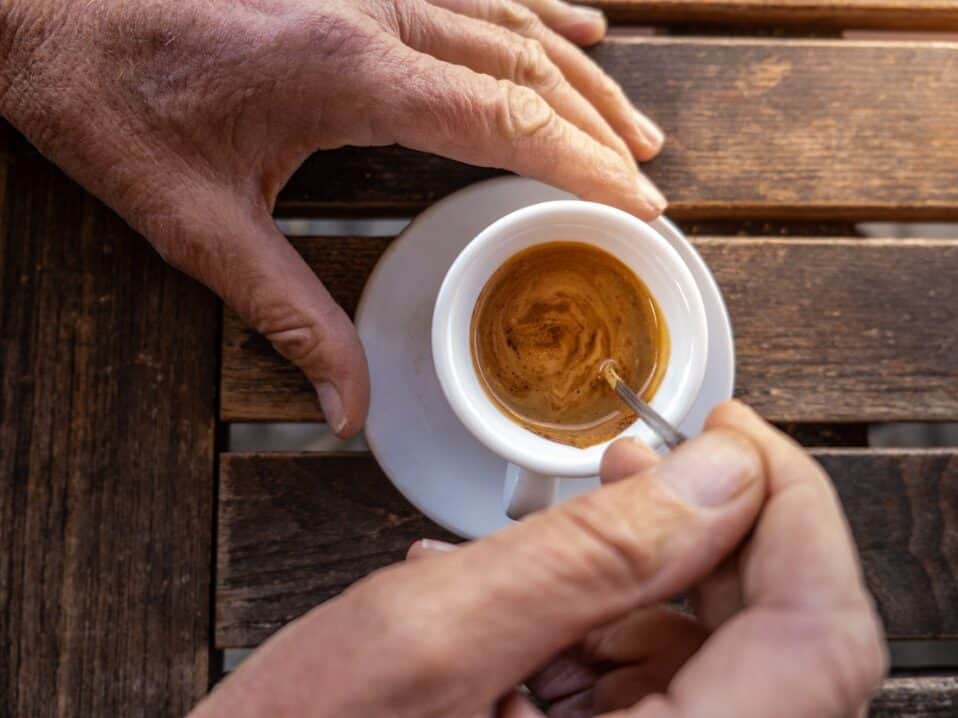
Coffee was first consumed in the 9th century, when local highlanders discovered it in the Kaffa region of Ethiopia (from which the name “kaffe” derives). Legend has it that a shepherd named Kaldim noticed his goats were more lively than usual and couldn’t sleep after eating berries from coffee plants. He then prepared a drink from the berries himself and tested its effects firsthand. So, thank you for the discovery, Kaldim…!
A heritage of two worlds and the Ottoman roots
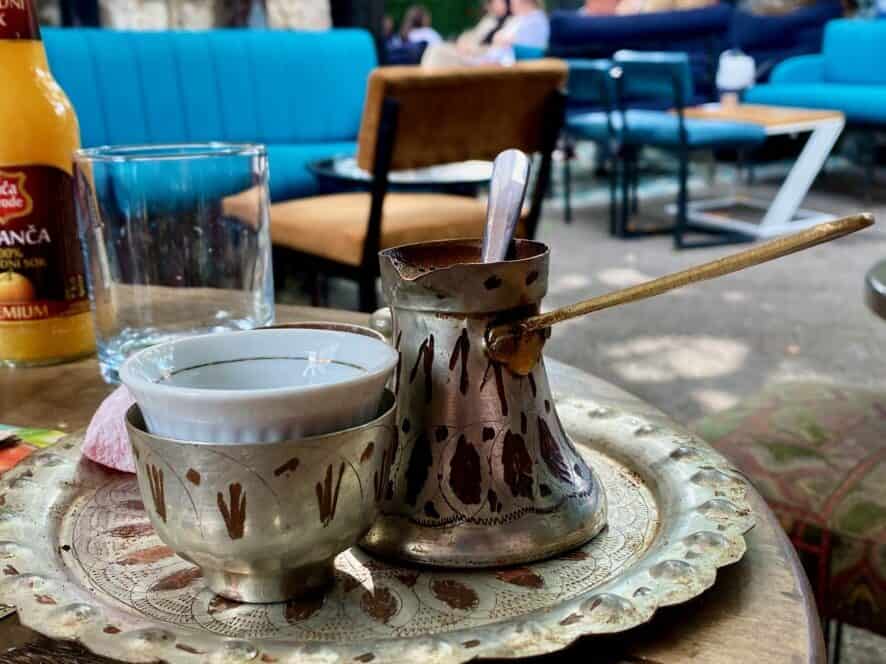
The historical origins of Albania’s love affair with coffee are a blend of Eastern traditions and Western influences. Coffee arrived in the country during the Ottoman Empire era. For centuries, preparation in a xhezve (a small long-handled pot) dominated — producing a thick, sweet coffee with grounds that is still enjoyed in Albanian homes to this day. However, with the fall of communism and the mass emigration to neighboring Italy in the 1990s, a new passion eventually made its way back to the country — Italian espresso. Albanians bridged these two worlds and crafted their very own coffee culture.
The art of slowing down and the philosophy of “avash-avash” or “ngadalë-ngadalë”
For foreigners, the sight of packed cafés during morning hours can be puzzling — but for Albanians, it’s proof that all is right with the world. The Albanian mindset leans on the concept of “avash-avash” or “ngadalë-ngadalë,” both of which translate to “slowly-slowly.” Drinking coffee in a rush is considered tasteless and almost disrespectful in Albania. When an Albanian sits down with their cup, the world around them ceases to exist. It’s time set aside for sharing news, strengthening friendships, or simply watching the street go by. Coffee here is the currency you pay for the time you give to another person — which is why it’s perfectly normal to see people sitting over a single cup for two hours or more. The average Albanian enjoys two to three cups a day, which raises the question of whether this intense coffee passion is a national symbol to be proud of, or a habit that perhaps deserves deeper reflection — at least from a health perspective.
The raki ritual
In Albanian villages, drinking coffee carries an even deeper social dimension. The café serves as an informal town hall, where everything of importance is decided. The traditional ritual, especially in the morning hours, is often accompanied by a glass of homemade raki — and not a particularly small one. This potent grape-based spirit is not seen as a drink for getting drunk, but rather as a medicine and a morning reviver. The combination of bitter espresso, cold water, and fiery raki forms the holy trinity of the Albanian morning. Both commodities — coffee and raki — are very affordable. An espresso costs anywhere from €0.80 to €2, and a generous shot of raki can set you back as little as €0.50. In cities, prices are naturally a bit higher.
The benefits of the ritual for body and soul
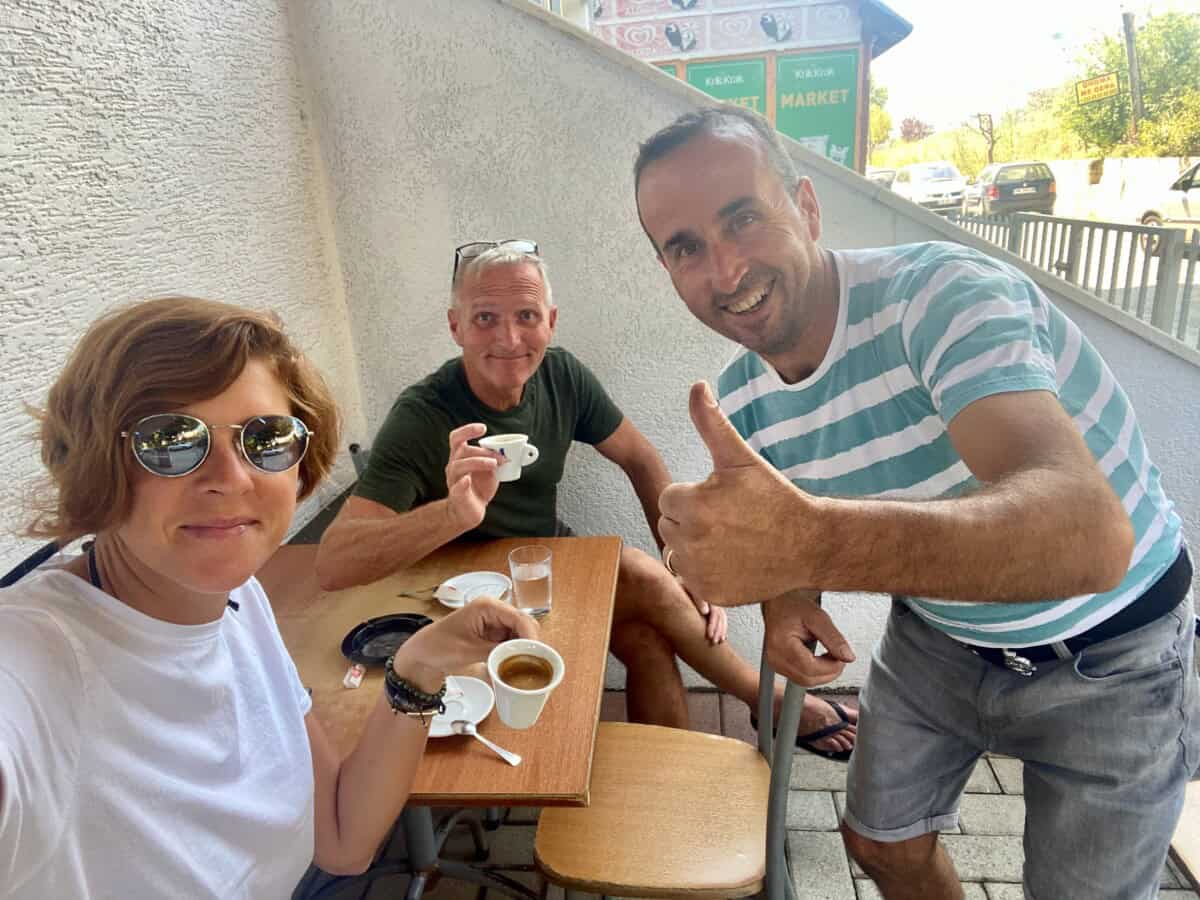
When consumed in moderation, coffee can be a true ally for the body. The caffeine it contains demonstrably boosts energy levels, improves focus, and thanks to its high antioxidant content, helps the body fight inflammation. Scientific studies even suggest a link between regular coffee drinking and a reduced risk of conditions such as type 2 diabetes and Parkinson’s disease. In Albania — and particularly in Tirana — in a fast-paced world filled with digital communication, coffee today acts as an antidote to stress. Those shared moments over a cup strengthen social bonds and contribute significantly to the mental well-being of city dwellers.
The flip side of the coffee passion
Despite its positives, excessive caffeine consumption does carry certain risks. High doses can lead to anxiety, sleep disturbances, heart palpitations, and digestive issues. A worrying trend in Albania is the early age at which people start drinking coffee — many begin as teenagers — which takes its toll later in life in the form of strong caffeine dependency. The health risks are further compounded by the traditional ritual, in which coffee is frequently accompanied by large amounts of sugar and, quite often, smoking as well. While this combination forms a firm part of the local colour, in the long run it places a considerable burden on the body. According to the latest statistics, 38% of Albania’s population over the age of 15 smokes. This is largely due to the fact that until recently, there was hardly a café in the country that was smoke-free. Today, you’ll come across non-smoking venues — or at least those with separate sections — quite frequently. Another contributing factor is the price of cigarettes: a pack costs around €3.50.
The café as an extended living room
Albania has long held a top spot in world rankings for the number of cafés per capita. This is because, in the Albanian sense, a café serves as an extension of the living room. Given that Albanians are an exceptionally social people, they need space for interaction. In cafés, marriages are arranged, land deals are struck, and politics is naturally discussed at length. This coffee ritual is, in essence, a democratic process that keeps communities together — whether it’s a gleaming bar in the heart of the capital or a wooden hut in the mountains or overlooking the sea. Whatever the health statistics may say, it seems highly unlikely that Albanians will be letting go of their beloved coffee ritual any time soon.