The Young Generation: Caught Between Tirana and Europe
For young Albanians, hope for a better future is often tied more to leaving the country than to building something at home. The phenomenon of “brain drain” has reached critical proportions according to relatively recent surveys. Studies from the turn of 2024 and 2025 show that over 50 to 70 % of young people are considering emigration, with the figure even higher among university-educated individuals — especially doctors and nurses. The main reason isn’t just low wages, but a general frustration with corruption, dysfunctional institutions, and the feeling that politics doesn’t address their needs — and that established leaders don’t want to let young people into politics, as they’re too busy managing their own clan affairs.
The European Union as a Light at the End of the Tunnel
That said, there is also a group of young people who see opportunity in Tirana’s growing digital sector and tourism industry, as the city is becoming a regional hub for innovation. The prospect of joining the European Union remains a powerful driving force for young people in larger cities. The current Albanian government, led by Edi Rama, has promised that Albania will be in the EU by 2030. The government has been moving at breakneck speed in fulfilling the required chapters and is working hard to keep that promise. Albania has been receiving consistently positive signals from Brussels, and EU leadership is not skeptical about the promised 2030 deadline.
The Older Generation: Nostalgia, Skepticism, and Abandonment
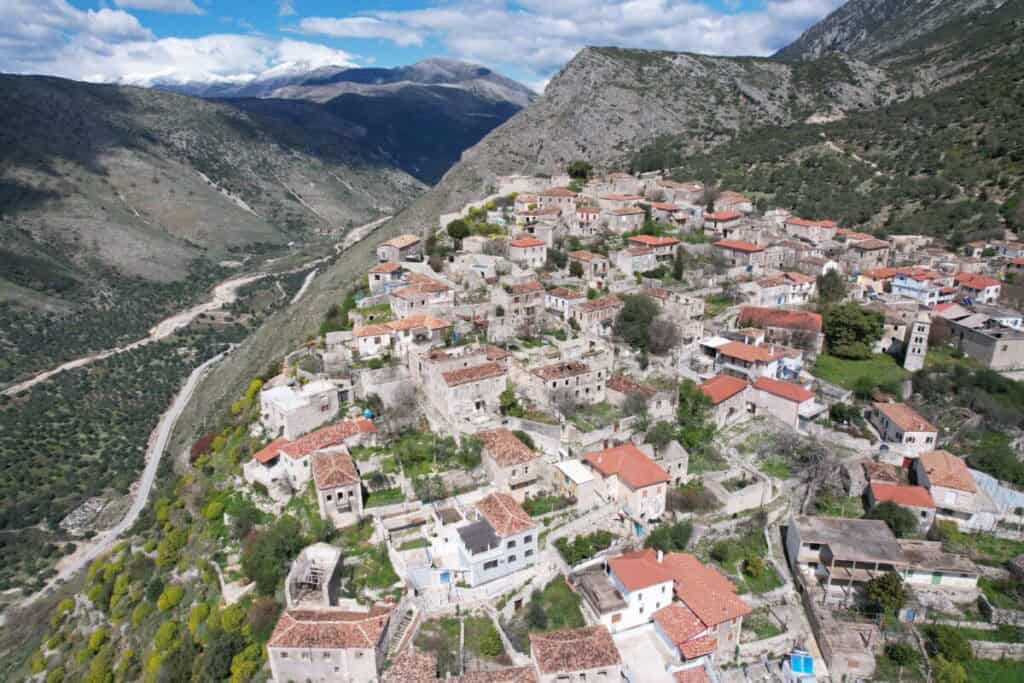
The older generation views politics and current developments with far greater skepticism, and often through the lens of loneliness. In many rural areas, such as the regions around Kukës and Shkodër, elderly people remain in half-empty villages as their children and grandchildren have left to work abroad. This leads to deep social isolation. Their perspective on politics and broader social trends is often deeply divided. Many older people regard government plans — such as the move to a fully cashless economy by 2030 — with great distrust, feeling lost in the digital world and preferring the security of traditional ways.
Despite their skepticism, seniors are paradoxically more politically active than the young, and they often remain loyal to traditional parties. For them, politics is less about clashing ideologies and more about the struggle between clans and influential figures. Among the oldest generation, a certain comparative reflex with the era of dictatorship still lingers. While they value freedom dearly, they perceive the breakdown of social security and community ties — once taken for granted — as a profound loss. It must be said, however, that even here the traditional Albanian stubbornness shines through: an inner strength to endure any era and an ability to adapt to new circumstances.
Societal Tension
In 2025, Albania finds itself at a crossroads — striving to project the image of a modern state while facing demographic collapse, with the population under 29 having shrunk by nearly half since 2011. For the young, the key question is “leave or stay?”, while for the old it’s “who will take care of us?”. This generational divide, combined with stark regional inequalities — wealthy Tirana versus an impoverished countryside — represents the defining challenge that will shape the face of Albania in the decade to come.