Where Did It All Begin?
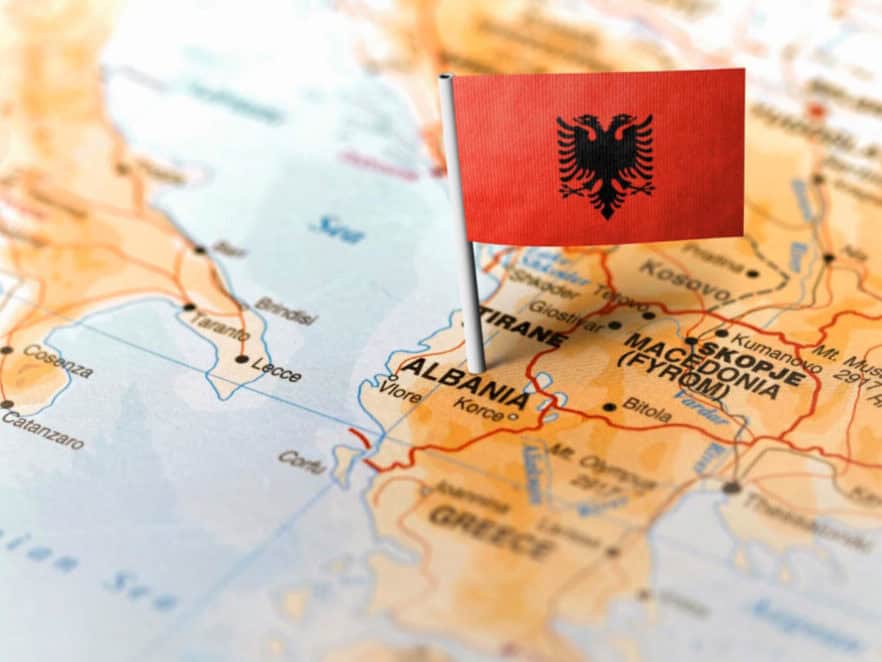
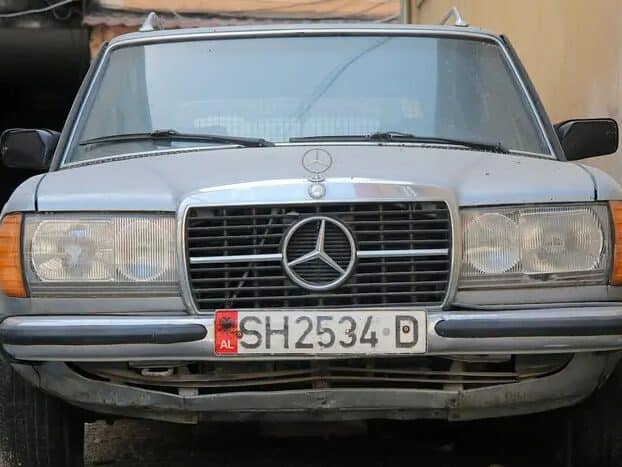
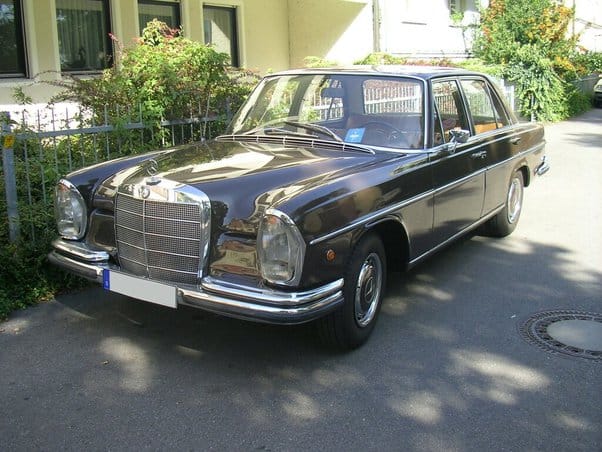
The Mercedes-Benz phenomenon in Albania is about far more than a car brand — it’s a fascinating window into history. The “obligation” to own a Mercedes was born in the hearts of Albanians at the moment communism fell. During the totalitarian regime, private vehicle ownership had been banned for decades, and the only cars allowed on the roads belonged to party elites — and they were, of course, cars bearing the three-pointed star. Communist leader Enver Hoxha himself reportedly owned several Mercedes, the most famous being the model m-250. Once the communist regime was toppled in 1991, the Mercedes became the ultimate symbol of success for every Albanian — a ticket to the top of the social ladder.
This fascination ran so deep that even if an Albanian lived in a modest, unfinished house without plaster or a proper roof, there would still be a Mercedes parked out front. To this day, the brand still holds nearly a third of the market share of all registered vehicles in the country.
An Indestructible Companion for Balkan Roads
Beyond the social status, there was also a very practical side to the story. Older Mercedes models earned a reputation as indestructible machines — the only vehicles that could survive the catastrophic state of Albanian roads in the 1990s. The Mercedes W123 and W124 proved to be the most reliable in such conditions. This dominance created a unique “ecosystem” where every village mechanic in the mountains could — and still can — fix a Mercedes with nothing more than a piece of wire. Spare parts can be found under every workbench in any Albanian garage. When a newly free Albania needed minibuses for public transport, it was an absolute no-brainer to reach for Mercedes.
Your Car Simply Must Be Clean
Life in Albania with a Mercedes — and really with any car — brought with it its own distinctive culture. One such unwritten rule is the “obligation” to keep your car spotless. A clean car signals success, setting you apart from those whose vehicles are caked in mud. Again, this is a mindset born in the 1990s that lives on to this day. The car wash — or “lavazh” — became not just a place for a practical chore, but something of a social hub. Albanians are genuinely obsessed with keeping their cars clean, and washing the car is a ritual accompanied by an obligatory excellent coffee and a lively chat with the staff or friends about politics or football.
Almost One in Two Albanians Owns a Car
Just how much Albanians love their cars is illustrated by the statistics: in 2025, nearly 100,000 vehicles were imported into Albania. Half of them were registered in the capital, Tirana. Since 2019, the number of cars in Albania has doubled. There are currently over 1 million vehicles on Albanian roads. Given that the real population of Albania is around 2 million people, that works out to statistically one car for every two Albanians. For comparison, the Czech Republic has approximately 6.8 million cars for nearly 11 million inhabitants — making it slightly “better” off by that measure.
Not Just Mercedes — Other German Brands Are Popular Too
So what cars are imported most frequently? Unsurprisingly, German brands dominate — Volkswagen, Audi, BMW, Mercedes-Benz, Opel, and Ford all feature heavily. But used and brand-new cars from other manufacturers also make their way to Albania, with statistics pointing to Toyota, Renault, and Fiat as notable mentions. In recent years, however, Albanians have also been increasingly drawn to electric vehicles. One of the reasons is the attractive price point — a new electric car can cost less than €12,000. Even as today’s Tirana and other cities gradually fill up with modern SUVs of various brands and Chinese electric vehicles, Mercedes will forever remain the king in Albanian hearts — a symbol that unites tradition and personal pride.