Rozafa Fortress and the Story of the Power of a Word
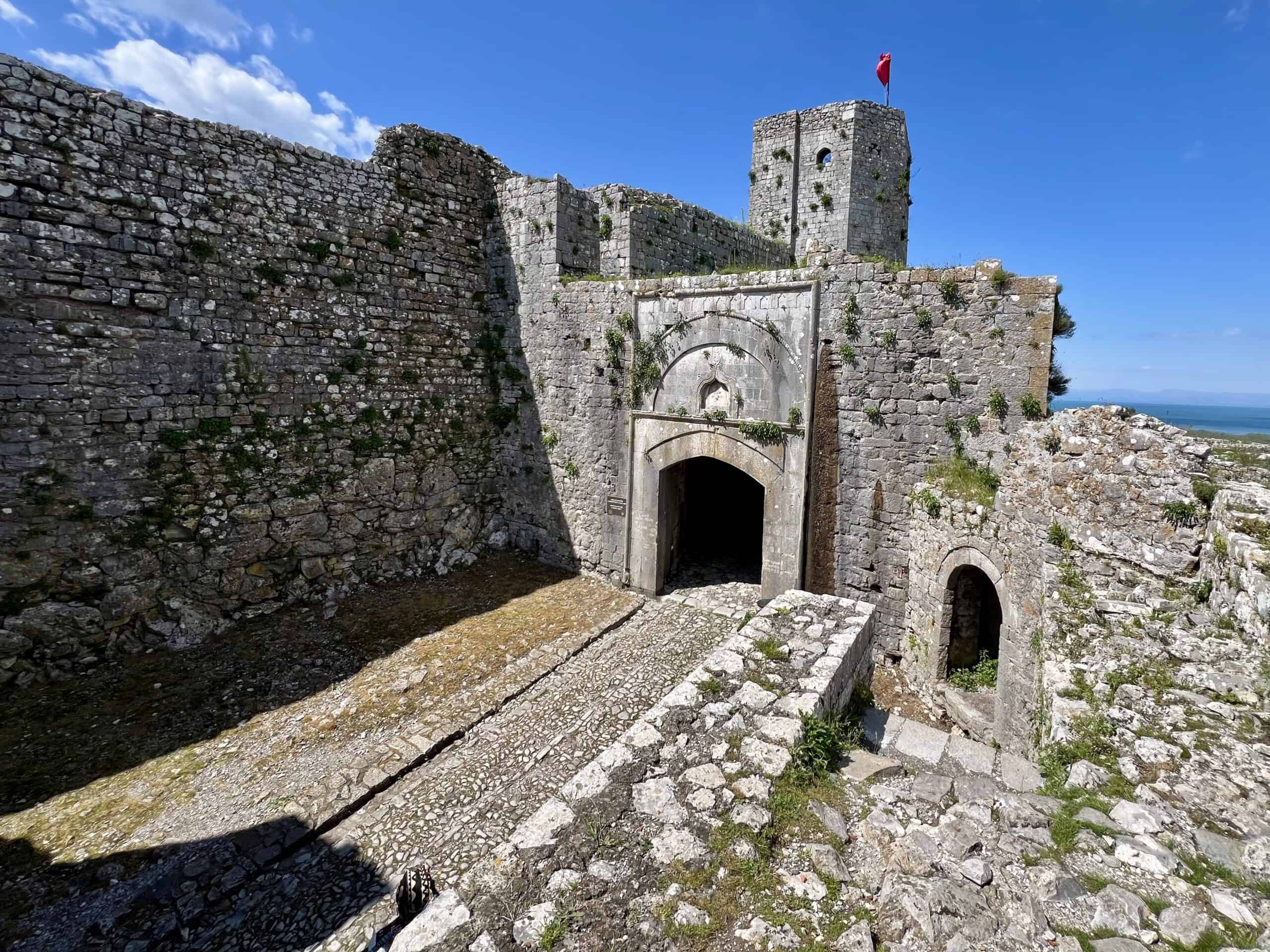
Above the city rises Rozafa Fortress like an eternal guardian, its walls telling stories over two thousand years old. This place is not just a historical monument, but a living symbol of the Albanian concept of “Besa” – a given word and a loyalty that goes beyond the grave. According to legend, a young mother named Rozafa was walled into the foundations here so that the walls would finally stop collapsing, and her only request was to leave openings in the stone for her breast, her eye, and her hand, so that even after being walled in she could feed and comfort her child. To this day, near the entrance you can see limestone drops trickling from the stone, which legend says is the milk of that brave woman, flowing from the castle walls even after her death to nourish her child. Local women collect it and drink it in the belief that it will help them conceive and give them strength and courage.
From the top of Rozafa, a breathtaking panorama unfolds before you. On one side stretches the surface of Lake Shkodër, the largest lake in the Balkans and a sanctuary for rare wildlife, while on the other side the jagged ridges of the Accursed Mountains are visible in the distance. Down in the valley you can also spot the unique Lead Mosque, one of the few that survived the communist campaign against religion. You’ll also notice the busy roads leading into Shkodër, and you’ll feel the contrast between the fortress’s timeless philosophy and the pulsating life below.
Italian Flair on Two Wheels
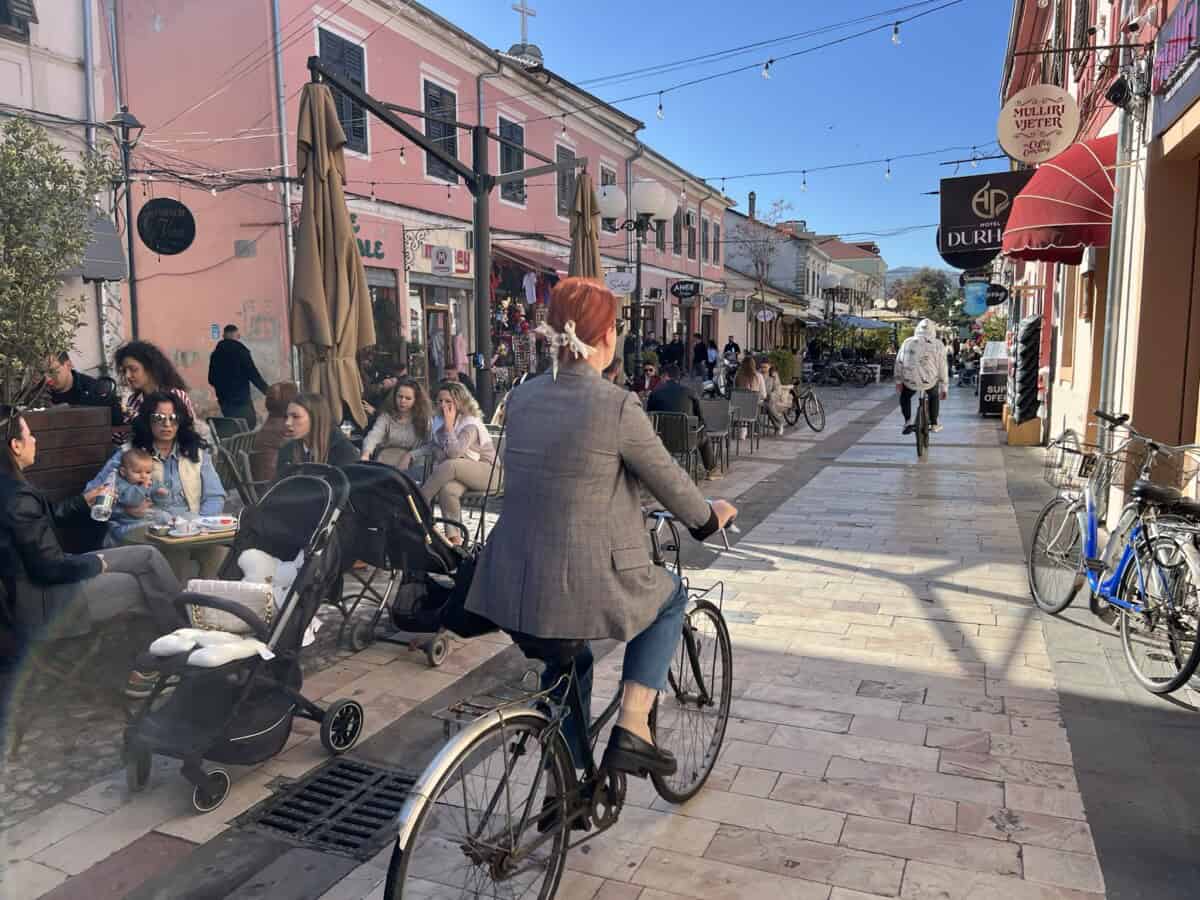
As soon as you descend from the fortress walls into the city streets, you’ll immediately sense the strong “Italian touch” that is so characteristic of Shkodër. The main pedestrian zone, Rruga Kole Idromeno, is a showcase of 19th-century Venetian architecture with facades in shades of terracotta and ochre. Shkodër is also the unofficial cycling capital of Albania – thousands of bicycles lazily weave between cars and cafés, giving the city an unexpectedly European, almost Amsterdam-like feel. It’s fascinating to watch elderly local men balancing on old bicycles with a cigarette dangling from the corner of their mouths.
If you want a glimpse into the true heart of Albanian history, don’t miss the Marubi National Museum of Photography, one of the most significant of its kind in the entire Balkans. Since the mid-19th century, the Marubi family has documented everything here, from royal families to rugged highlanders in traditional woollen costumes with silver pistols tucked into their belts. Viewing these archival photographs alongside the museum’s contemporary design will help you understand just how deeply Albania is a land of contrasts. This is a place where traditions are not merely a souvenir for tourists, but an integral part of the identity of everyone you’ll meet in one of the many local cafés over a cup of strong, honest espresso.
One Last Taste of Civilisation and Fishing Romance in Shirokë
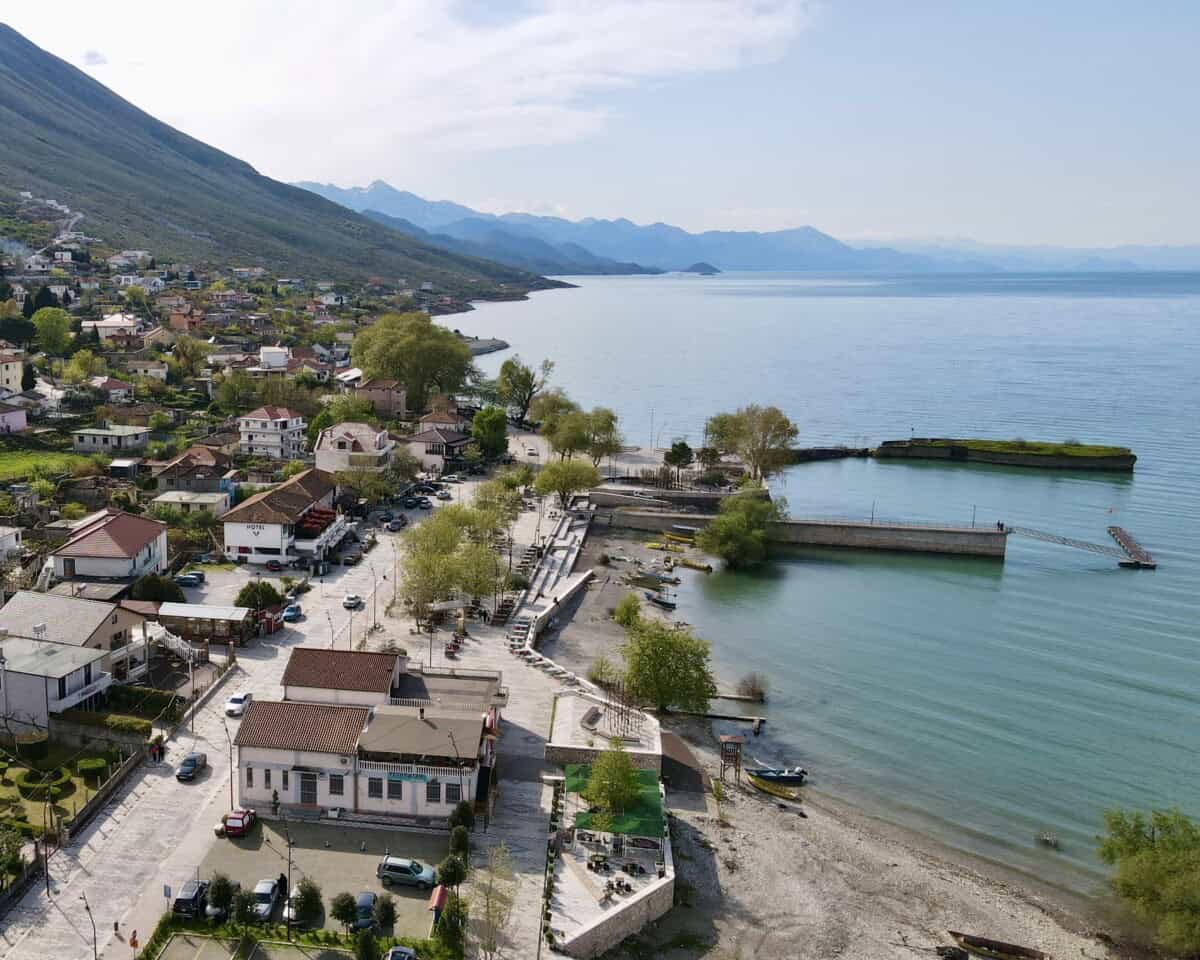
Shkodër is the perfect place for your last “civilised evening” before heading into the mountains. In the Shirokë area, situated right on the lakeshore near Rozafa Castle, you’ll find a newly renovated waterfront with viewpoints and excellent restaurants specialising in fresh lake fish. Once a dusty fishing village, it has transformed into a modern relaxation zone where you can soak in the views over the lake and recharge for the journeys ahead. Even as commercialisation gradually makes its way in, Shirokë still keeps its unhurried pace.
As you pack your bags in the morning and prepare for the journey to the village of Theth or the iconic ferry across Lake Komani, remember the sense of calm that radiates from the people of Shkodër. This city will teach you that progress doesn’t have to mean losing one’s memory – quite the opposite, it shows you that the old world and the new can come together with remarkable elegance. Shkodër is not just a stop on the map; it is a place filled with emotion, and for that reason it deserves far more than a fleeting glance from a car window.