The Era of Enver Hoxha: The Birth of Europe’s Harshest Totalitarian Regime
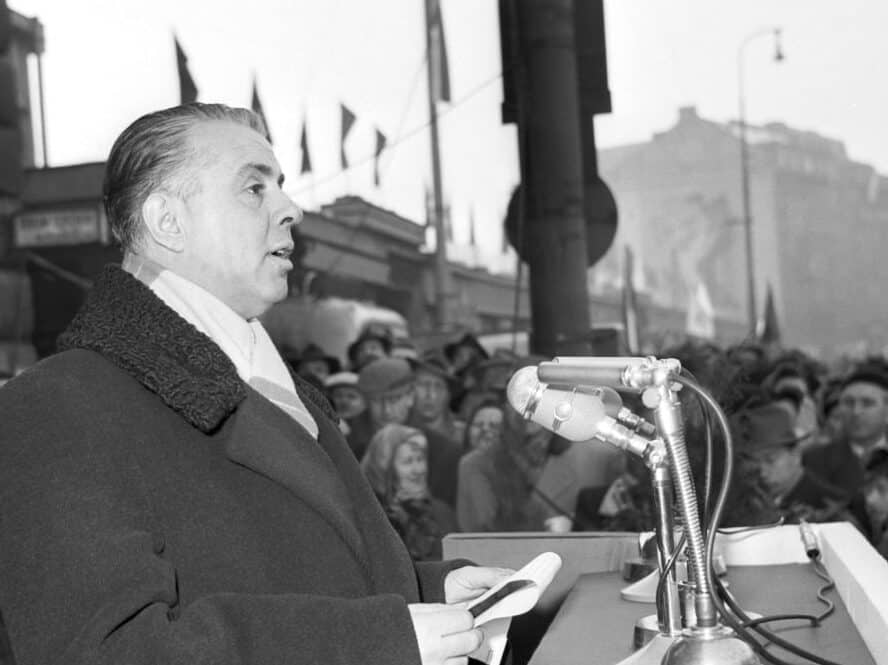
After World War II, in 1944, Albania fell under the rule of the Albanian Communist Party, led by Enver Hoxha. On November 29, 1944, the People’s Republic of Albania was proclaimed, and the country rapidly transformed into a totalitarian state. In 1948, the party was renamed the Albanian Party of Labour (PPSh). Hoxha pursued a rigid policy of centralizing power, suppressing opposition, and maintaining absolute control over society. The regime eliminated political opponents, censored freedom of speech, and enforced the ideology of Marxism-Leninism.
From Moscow to Beijing: The Road to Absolute Isolation
Enver Hoxha initially aligned himself with the Soviet Union. Following Stalin’s death in 1953 and the rise of Nikita Khrushchev, who criticized Stalin’s cult of personality, tensions with the Soviet Union began to mount — Hoxha could not tolerate the signs of de-Stalinization, viewing them as a betrayal of Marxism-Leninism. He was equally uncomfortable with the USSR’s growing dialogue with Tito’s Yugoslavia. In 1961, he severed ties with Moscow for good and turned to China. In 1968, Albania withdrew from the Warsaw Pact in protest against the Pact’s invasion of Czechoslovakia. Paradoxically, the Soviet invasion of Czechoslovakia was perceived by Albania as an act of Soviet imperialism — proof that the USSR was no longer faithful enough to the legacy of Marxist-Leninist communism. This move underscored Albania’s deepening isolation and its rejection of cooperation with the Eastern Bloc.
Economic Collapse and the Myth of Hundreds of Thousands of Bunkers
Communist Albania pursued a policy of economic self-sufficiency and collectivization that had devastating consequences for the economy. The collectivization of agriculture and the nationalization of industry led to a sharp decline in efficiency and productivity. Albania found itself in a state of chronic economic stagnation, plagued by shortages of basic goods and dependency on foreign aid — aid that was ultimately refused due to the country’s political isolation. A defining symbol of this economic policy was the massive construction of bunkers across the entire country, supposedly built to protect Albania from imaginary enemies. These concrete structures represented an enormous waste of resources and stand today as a testament to the paranoia of the regime. Estimated numbers vary widely, ranging from 200,000 to 600,000 — allegedly one bunker for every three Albanian citizens. But these are largely unverified myths. After Mao Zedong’s death in 1976, China under its new leadership began opening up to the world. Hoxha accused China of betraying Marxism-Leninism and abandoning the socialist path. In 1978, Beijing cut all cooperation with Albania, leaving the country in complete isolation.
The World’s First Atheist State and the Suppression of Tradition
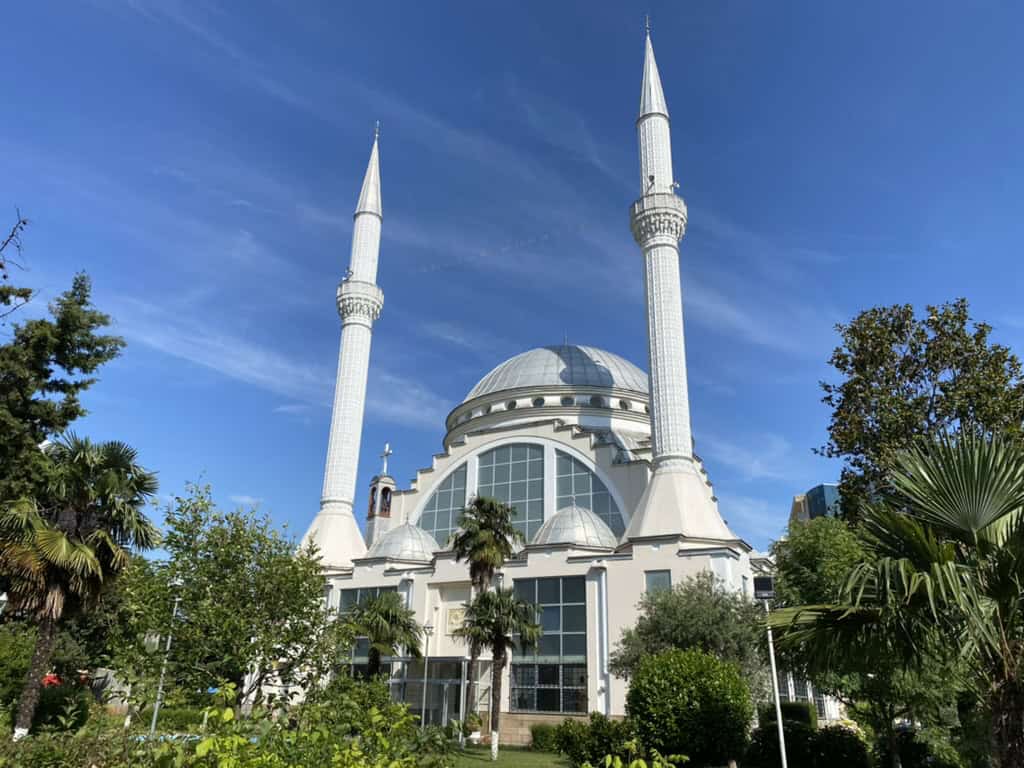
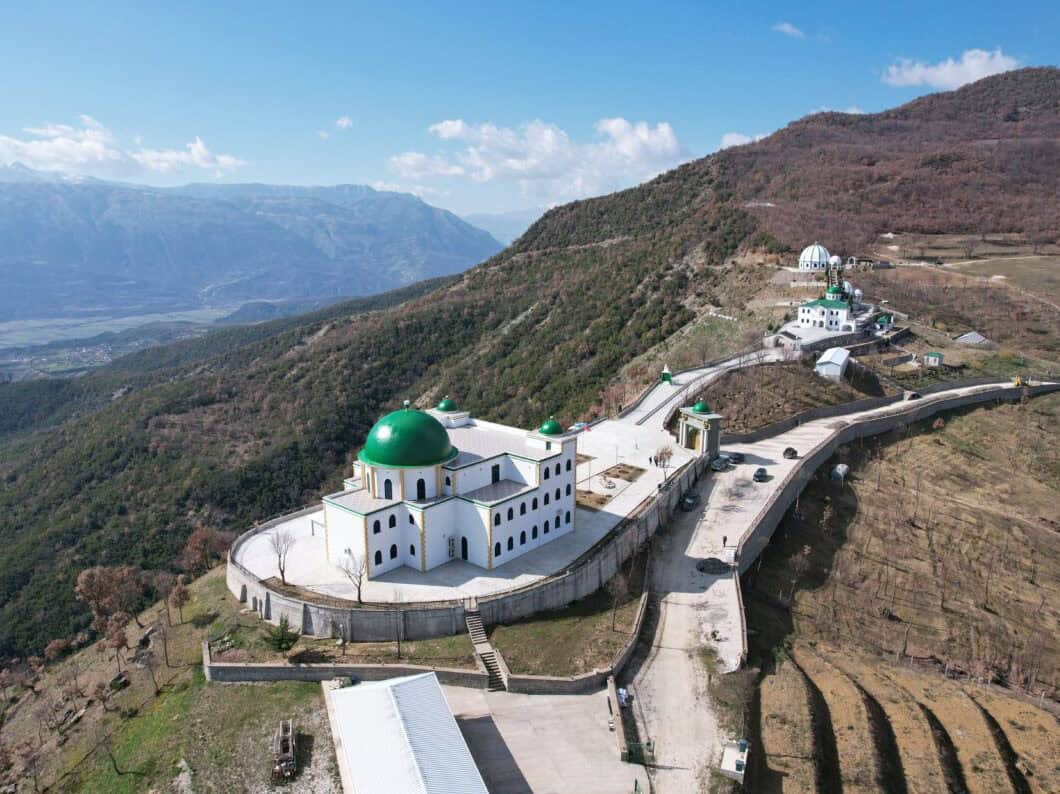
Throughout its existence, the communist regime sought to eradicate traditional Albanian culture and religion. The result was that in 1967, Albania was declared the world’s first atheist state. Mosques, churches, and other religious buildings were closed or destroyed, and religious practice was banned. The regime introduced new socialist values intended to replace traditional family bonds and cultural norms, with propaganda focused on building a collective identity. Many Albanians continued to quietly preserve their traditions in secret. Under Enver Hoxha, Albania experienced one of the most extreme international isolations in the history of modern Europe. Closed borders and strict surveillance of the population made travel impossible and cut off any contact with the outside world. This isolation caused Albania to fall far behind in technological and economic development. Enver Hoxha died in 1985. Power passed to Ramiz Alia, who recognized that Albania was in ruins and began to establish at least symbolic ties with neighboring countries.
The Fall of the Regime and the Rough Road to Democracy
While revolutionary movements swept through Eastern Europe, Albania remained the last orthodox Marxist-Stalinist regime — right up until the momentous year of 1991. In February 1991, protesters toppled a ten-meter statue of Enver Hoxha in Tirana’s Skanderbeg Square. After the fall of communism, the country slowly began to open up to the world. The transformation was difficult, marked by political unrest, economic collapse, and the emigration of hundreds of thousands of Albanians in search of a better life. The 1990s were brutal — in many ways simply a continuation of the plundering that had characterized the communist era. But that’s a story for another chapter.
Albania Today: The Scars of the Past and the Vision of 2030
The communist past continues to shape the country’s society and infrastructure. Many Albanians carry memories of the traumatic experiences of that era, and even after thirty-five years, the political elite has failed to instill much faith in state institutions among its citizens. The younger generation in the major cities is more optimistic, yet for economic reasons, many still migrate to Western Europe and beyond in search of work.
Communism left deep scars on Albania — scars that remain visible to this day, particularly in the economic sphere. Yet today, Albania stands at a crossroads between its complicated past and a future full of ambition — a confident nation looking firmly toward Western Europe. It is only a matter of time before Albania is fully integrated into European structures. The latest reports suggest that Albania could join the EU by 2030.